The Largely-Forgotten Tragedy of Fontane’s Effi Briest

Introduction – Germany’s contribution to the European realist novel

There are no two ways about it – Effi Briest is a sad and depressing book, and a deeply tragic one too. It tells the story of the marriage of a young girl to a much older man, and that marriage’s inevitable break down. I heard about it, as I imagine a few others may have done, because Samuel Beckett really liked it, and though I don’t like Beckett’s writing much his praise was enough to put Fontane’s novel on my radar. Beckett said of it: “I read it for the fourth time the other day with the same old tears in the same old places”, and while I can’t imagine reading it four times I do think I’ll come back to it one day, and maybe even be moved once more. It is, all in all, an excellent book.

A painting of Theodor Fontane, author of Effi Briest
Theodor Fontane (1819-1898) is the most well-known representative of German bourgeois realism. He turned to novel writing late in his life, using works like Effi Briest and Frau Jenny Treibel with their female leads to criticise the social structure and ideals of the newly unified German Reich.

But that’s where its problems begin. Effi Briest is a good book: it is meticulously well put together, pleasantly short for a 19th century realist novel, and has interesting characters whose fates are easy enough to be interested in. But it was published 1895, a few scant years after Tolstoy’s Anna Karenina, a book which it has a lot in common with, and a book which is Great where Effi Briest is only good. I know the Germanists have tried to make Effi stand among Anna and Flaubert’s Madame Bovary as one of the best realist novels of the 19th Century, but I can’t help but feel the comparison just leaves Effi looking silly, a little girl next to these older and more experienced women.

The Daughter of the Air – Effi Briest at home

“Poor Effi”, as the narrator on rare occasions breaks their neutral facade to call her, is seventeen at the story’s beginning, though there’s very little to indicate that. The girl is introduced more as a cheeky child than as an almost-adult, with her and her mother doing some handiwork together. Effi soon leaves to be with her friends, though, where they make a mess eating berries and sitting on the swing at Effi’s house. The swing is one of the recurrent leitmotifs of the story, one of those objects connecting Effi and a certain vision of her world. She is given the epithet “Daughter of the air” at one point, and it well describes the carefree attitude that she has at the novel’s outset.

But there are storm clouds ahead, even if Effi can’t see them. While they eat their berries she tells her friends about the guest to the family’s house, Baron Geert von Innstettin, who once was madly in love with Effi’s mother but was unable to marry her due to lack of funds, and who perhaps – we assume – still has some passion left over. He proposes to Effi as soon as she has finished with her friends, in spite of only having had a glimpse of her up till then, and with no small amount of pressure from her parents Effi agrees to let herself be married off.

Very little of this is described, which I suppose is one of my main gripes with Fontane. The wedding is not described, the first real meeting between Effi and Innstetten isn’t described, and the honeymoon trip to Italy is equally sparsely illustrated. You might say that this is impressive stylistic economy – Fontane knows what he doesn’t need to show. Furthermore, it surely adds a sense of mystery to the novel, making us ask ourselves what might have happened and look for clues in the rest of the narrative. Up to a point I’d agree with both of these views. But only up to a point. For I suspect that Fontane’s economy is due to a lack of funds too – I can’t help but feel he just doesn’t have the talent or confidence to attempt certain scenes, such as going inside Effi’s head while she’s giving birth.

Kessin and its ghouls

After some shopping in Berlin, Effi is whisked away to the fictional town of Kessin, out on the Baltic Sea, where Innstettin has his home. It is a quiet, isolated town with an oppressive atmosphere that leaves Effi longing for her own home. One of the best scenes in this section of the novel is one where Effi sees the train heading West and cries – it is excellent precisely because the connection between home and trains is one we have to make for ourselves. Throughout the novel trains are constantly mentioned – they always point to another life that seems to be running away from us.

A picture of the Baltic Sea
The Baltic Sea. In Effi Briest the town of Kessin becomes a hugely oppressive place for young Effi, who finds its populace close-minded and hostile, and the sea equally cold.

Even with Innstettin, who Effi does love, or thinks she does, there is difficulty. He goes away regularly for work, leaving her all alone. The townsfolk, bar one, are no company, and the house may have a ghost in the attic who prevents Effi from sleeping well. Another brilliant moment that reveals just how isolated Effi is is when she confesses to the maid about how she didn’t sleep well the first time the ghost appears. This information, given privately, is then immediately passed on to Innstettin by his servant – it shows where the real power in the house lies, and how Effi is completely without anyone to trust.

“An Affair” of sorts

Eventually an old friend of Innstettin’s comes to town to occupy one of the various beaurocratic posts created by the new German Reich. He is, like Effi’s husband, in his forties, but Major Crampas is also a far more youthful man than Innstettin is. Innstettin is a man who is absolutely blinded by various conceptions of duty, order, and what is proper – his career is everything to him, and even though he cares for Effi it’s hard to see much passion in his interaction with her.

Meanwhile, Crampas knows poetry, and dazzles Effi by introducing her to Heine’s works. Even though he has a wife, that doesn’t stop him from seducing her. The consummation of their affair takes place in a carriage, deep in the woods late one night on the way back from a dinner – a thoroughly Romantic location. It lies at the centre of the novel in terms both of structure, and in terms of pages.

But after it, there’s almost no hint that the affair took place. Effi meets him a few more times, and we forget about him. It may be that I didn’t understand the nuances of the German I read the novel in, but that really did seem to be all there was to it. There aren’t any more chapters devoted to him. He just fades out. Effi, for her part, doesn’t really seem to be all that into the affair. Like a leaf floating the air, she just seems content to be blown around by his passions.

Growing up and its Consequences

With the prospect of an imminent promotion Innstettin decides, much to Effi’s relief, to move to Berlin with her. She goes ahead to choose a flat, but deciding she doesn’t want to see Crampas again, she feigns illness until Innstettin himself comes out, a few weeks later, having finished up at home in Kessin. Her illness is a key incident because it shows how Effi has gone from being a carefree dreamer to having something akin to a cunning nature of her own. From being a child who it is easy to like, I found myself turning a little bit against her.

But time passes, and everybody gets on with life. Effi’s daughter, Annie, grows up a little, and Effi herself reaches about twenty-five years old before anything else happens. It is then, quite by chance, that Innstettin discovers Crampas’s old love letters to Effi. Even though the whole thing lies deep in the past he decides that his honour still demands he duel with Crampas, so he arrives in Kessin and kills him in single combat in another sparsely described scene – “The shots came; Crampas fell”. Crampas tries to say something, but dies before he can have any last words. Innstettin goes home, having already sent Effi away, and gets on with his life. Fontane’s realist style does well to take any kind of magic away from the conflict.

The Ending of the Story

Effi can’t go home – her parents forbid it – but she does get a little money from them and rents a small flat, also in Berlin. She has few visitors, except for one of Innstettin’s servants whom she had been responsible for hiring, and who now decides to carry on serving her. Only twice does she see her own child, but the second time, in a meeting organised with Innstettin’s blessing, Annie is completely monotonous and shows no signs of affection towards her mother. Effi sends her away after only a few minutes, and cries. But her inner turmoil is avoided by Fontane – another moment where he seems to have lacked the confidence to go inside her head.

Eventually though, Effi gets to go home after her parents take pity on her. She has some happy moments, then dies of a chill. It is a frustrating ending because there really is no reason for her to die. Both Anna Karenina and Madame Bovary had relatively good reasons to justify their tragic fates. But with Effi, I can’t help but feel like Fontane was just shrugging his shoulders and saying “well, I have to finish the novel somehow”. I also am not sure I am a fan of the implications of the end, which seem to suggest that death is inevitable for adulterers. It’s strange to me because Fontane is generally a champion of progressive social changes in the novel. It’s like he can’t bring himself to have an ending that fully goes against convention.

A photo of a girl on a swing.
A little girl on a swing. If only Effi had chosen to stay on her swing instead of marrying at such a young age her life would not have ended in misery and tragedy. But as with both Anna Karenina and Madame Bovary social pressures proved greater than Effi’s own resistance. We can only hope that in our own day the situation is no longer so.

The one thing I did like about the ending, though, was the glimpse we get of Innstettin. He now has served a short stint in prison for the duel and is back at work, having also had the promotion he wanted. But all his love for his job has vanished. He is tormented by the feeling that all of his career ambition is actually meaningless, that the duel was a mistake too. I didn’t want to see him have a gruesome comeuppance, but I was glad to see him face the consequences of his own actions. In much the same way Effi’s parents express the beginnings of doubts concerning the whole marriage, once she is back at home and dying. Even though Fontane isn’t willing to keep Effi alive, I suppose he does make the most of her death.

Conclusion

I suppose I can recommend Effi Briest, but only with reservations. If you are going to dip into Fontane, it seems to be an excellent place to start – but given how few of his works are translated, there’s not much choice to begin with. He called Effi his “first real success”, and it is a success. But as much as we often like to read good books, variety also seems to be pretty important in considering what to give our time to. And unfortunately there is another novel which involves trains, adultery, parents and children, and the battle of the individual against social pressures – another novel which is, I think, far better than Effi Briest. That’s the unavoidable problem here. If it weren’t for the book being useful for my German exams next year, I’d be feeling a little disappointed that I hadn’t just read Anna Karenina another time through.

Am I completely wrong here? Have you read Effi Briest and did you enjoy it? Comment below!

Picture of the Baltic Sea by Mantas Volungevicius [CC BY 2.0 (https://creativecommons.org/licenses/by/2.0)] is used without changes.


The Magic and Mystery of Gogol’s “The Nose”

“The Nose”: Introduction – Not just a Strange Idea

What an odd idea it is to write a story about a man who loses his nose! After all, no one has ever woken up to find theirs has vanished unless I am much mistaken. But this is precisely the starting point for Nikolai Gogol’s story “The Nose”. In this piece I’d like to share a summary and interpretation of Gogol’s story, and my own thoughts on why it’s absolutely worth reading.

A daguerreotype of Gogol, showing his magnificent nose
Nikolai Gogol (1809-1852), writer of strange tales of Saint Petersburg, and himself a bearer of a fantastic nose!

“The Nose” does have a strange premise. The completely surreal idea of losing one’s nose reminds me a little bit of the sort of modern art that we foolishly claim our children could have painted. Anybody can come up with a strange idea – that’s ultimately not hard that hard if you’re sleep deprived or have access to drugs – and even writing about such an idea doesn’t take too much doing. The challenge, and the sheer genius of Gogol, lies in taking a strange and simple idea and extending it, through understanding it and its implications fully, into a full story. The spark of genius is not a good metaphor here – rather the spark is the strange idea, and Gogol’s talent is all the wood he is able to gather together for the fire. Though it’s a story about a nose, “The Nose” has a lot of depth and flavour to it.

Translations from the Russian are all my own.

The Story of “The Nose”

Part I: Ivan Yakovlevich

One morning the barber Ivan Yakovlevich wakes up and has his breakfast as usual. However, to his great surprise, he finds that in the middle of the loaf of bread he has just cut there is a nose. “A nose, that was exactly what it was! And what was more, it seemed to belong to someone he knew…” Already the initial strangeness of finding the nose is compounded by the absurd logic of Gogol’s world, where a man can recognise the nose of another with such certainty. (In much the same way, Kafka’s “Metamorphosis” begins with a strange event, but the true strangeness comes in the reactions of Gregor Samsa’s relatives).

The nose belongs to a civil servant, Collegiate Assessor Kovalev, whose whiskers Ivan Yakovlevich trims a few times each week. Threatened with the police by his wife, Ivan runs outside and throws the nose in the river, only to be caught anyway by a passing policeman. At this point the narrator intervenes to say: “But at this moment the whole matter was completely covered in fog, and I have absolutely no idea what happened next”. Thus ends the first part of the story.

Part II: Collegiate Assessor Kovalev

Next we wake up with the man with the missing nose, Collegiate Assessor Kovalev. After noticing a small spot on his nose the night before, he now discovers the whole thing is missing. After a brief detour into social status in Imperial Russia, Gogol then takes us and Kovalev out onto the street, where he has to cover his face to avoid being recognised by his acquaintances – since, as we learn, nothing is more embarrassing for a man of society than being seen without his nose either by women or by co-workers. But then he sees on the street ahead none other than his own nose! One thing that must be mentioned here is that we never learn what a walking nose looks like – Gogol only talks about the uniform of the organ. But to Kovalev’s dismay the nose has a higher rank in the civil service than he does.

Still, he needs his nose, so he goes up to “him” inside a cathedral where “he” has gone to pray. Very awkwardly, Kovalev approaches and begins to speak. “It’s awfully strange, my dear sir… but it seems to me… you should know your place. Suddenly I find you here, and where else but a church? You must agree…” In spite of a few pages all about Kovalev’s rank and pride, everything collapses into gibberish in front of a superior. Funnier still, are the puns Gogol sprinkles around the dialogue. “You should know your place” appears to refer to the nose’s place on his face, but it is just what would be said by a superior to an inferior too. The nose, naturally, is unimpressed by Kovalev, and furrows its brows before departing in a hurry. Once again, Gogol plays with our idea of what the nose must look like.

A picture of Kazan Cathdral's interior. In "The Nose" Kovalev meets his missing nose here.
Kazan Cathedral in Saint Petersburg. It is here that Kovalev and his nose have their main encounter. One thing to think about in Gogol’s works is always the role of religion, and especially the devil. What does it mean for “The Nose” that the nose itself is pious?

Kovalev is left alone, and now he tries to find some way of tracking down the nose again. He tries the police, he tries to place an advertisement in a newspaper. This last one is particularly funny, as Kovalev’s pride demands that he cannot let his name go into the paper. Instead, he falls back onto his acquaintances. “Look, a lot of people know me: Chekhtareva, wife of the state councillor; and Palagea Grigorievna Podtochina, wife of staff officer Podtochin. If they find out about this, God help me!” Which leaves the public to identify the nose without even knowing whose it is, and thus what it looks like. Another absurd moment. Kovalev goes home, writes a mad letter to a woman whose daughter he’d been flirting with, accusing her of using witchcraft to remove his nose, though naturally he has no evidence for it.

But just when all hope seems lost, the policeman from Part I arrives to say that the nose has been apprehended. What was the nose doing? It had been trying to flee the city and escape to Riga. As you do. The mad suggestion that the nose would flee Petersburg is first suggested by Kovalev’s addled mind a few pages earlier, and most readers (like me) will probably dismiss it as ridiculous. But this is just further evidence that Gogol’s world does not run on the same logic as yours or mine. The rest of Part II consists of Kovalev trying to reattach his nose, but to no avail.

Part III: Back to Normal?

And then one morning, April 7th to be precise, Collegiate Assessor Kovalev wakes up and his nose is reattached. That’s it. It reattaches itself just as magically as it vanished. Kovalev is overjoyed, and heads out into town, determined to do all of the things his nose’s absence had prevented – flirting and performing his duties as a civil servant.

The story ends with the narrator having a brief commentary on the theme of his own story. “Whatever you may say, such things do take place – not too often, but they do”. Is Gogol having one final laugh at the reader? Absolutely. Almost every story is a little ridiculous, a little unbelievable, a little too reliant on coincidences. But most are at the very least possible. “The Nose” is not, and the veneer of factuality given by its use of dates – because we’re also told at the beginning of Part I, reasonably enough, that the story begins on March 25th – is just teasing. But who are we to say what’s real and not real, possible and impossible?

That’s the story of “The Nose”. Now for a few suggestions as to what this all means – because it has to mean something, right?

Magic, Mystery and Meaning: The Themes of “The Nose”

Clothes and Respectability

For a story that is from its title onwards apparently concerned with our bodies Gogol’s focus in much of “The Nose” is oddly enough not on our skin and blood but on the things we use to cover them up. Clothes are at the centre of social rank in early 19th Century Saint Petersburg, and Gogol satirises that in his story. By dealing so much with clothes, Gogol shows how vapid and superficial people were in their interactions – they don’t care to reach the person beneath the suit. This is played with most in the case of the nose itself. Kovalev encounters his nose, but the only physical description is of what the nose is wearing, not what the thing itself looks like.

The deliberate confusion as to what exactly a nose looks like is further played up when the nose is caught by a short-sighted policeman who only recognises that it is a nose and not a man once he has put is glasses on – otherwise, he says, he would have let him pass out of the city and escape to Riga without a hitch. People are overly willing, in Gogol’s world and perhaps our own, to look no further than the rank and respectability indicated by our clothing when interacting with others. Decorum is an important part of society, but we should be wary of letting it absorb all of our attention, lest we and others become nothing more than the clothing we are wearing.

A picture of an early version of the Table of Ranks. In "The Nose" social class plays a big role
The Russian Table of Ranks created by Peter the Great is indirectly a cause of much woe in Gogol’s stories. In “The Nose” Kovalev’s anxiety about approaching his nose is in part due to the fact that it appears to be of a higher rank than him.

Women and Sex

One of the most infamous works of Gogol criticism is Simon Karlinsky’s The Sexual Labyrinth of Nikolai Gogol, which goes through Gogol’s works and finds that the key to understanding them is his repressed homosexuality. I’m not sure how far I agree with Karlinsky, but I think that thinking of “The Nose” as being about sex can prove fruitful. First of all, consider the object itself. Human noses are generally phallic in shape, and in Russian the word “nos/нос” is a masculine noun. The uses of noses, both smell and taste, are also important parts of sex. Furthermore, it’s also worth mentioning that in his correspondence Gogol regularly notes his awkwardness over the size and shape of his own. The shame that Kovalev feels at having a missing nose is directly connected with a much-reduced desire to flirt and see women. So perhaps it’s not a stretch, after all.

The Narrator and The Reading Public

It’s hard to avoid the narrator in “The Nose”. He’s a cheeky one, always appearing at the most inconvenient times with a wink. When Ivan Yakovlevich heads to the bridge the narrator decides to stop the action and tell us a little about him. The same thing happens, a few pages on, with Kovalev. And then there is the matter of the use of dates in “The Nose”. I think one layer to the story’s meaning is satirising the reading public’s demands for what a story must look like. After all, the public like prose narratives to have an element of factuality to them, in contrast to the more explicitly artistic verse narrative also popular then in Russia.

Gogol provides us with the outward appearance of veracity – clear dating, lots of unnecessary details about characters – while contrasting it with a clearly fantastic and absurd tale. Furthermore, at key moments he reveals the inadequacy of this factual veneer, such as when discussing the nose’s independent life – we learn a lot about what he wears and what rank he has, but as to what the thing actually looks like we are left completely in the dark. Gogol is poking fun at us here, and what we need to think of a story as “real”. Simply representing reality as we see it, “The Nose” seems to say, doesn’t get to the heart of things. We never learn why the nose disappears, no matter how much detail Gogol gives us – some mysteries go deeper.

Body Positivity

What I think is the most convincing overall interpretation of “The Nose”, though, is that it is about making us value our bodies more. A nose is something we can live without, but Gogol is keen to show that that doesn’t mean it is worthless. Throughout the story there are descriptions of food, flowers, and snuff – all of which we know Kovalev is unable to enjoy because of his absent nose. Furthermore, a lot of the language centres around our bodies. For example, the introduction of Kovalev – “Collegiate Assessor Kovalev woke up rather early and made a “brrr…” noise with his lips” – shows that from the moment we wake up our bodies are important to our character. When one of Kovalev’s attempts to track down his nose fails, the rejection is felt “not like a hit in the brow, but one right in the eye”.

We don’t think about our bodies until they begin to fail us, or until one morning we wake up and find a part of them has gone missing. Gogol’s story, at least to me, seems to bear the message that we ought to care about them and be grateful for them the whole time. They do a lot of good things for us.

Conclusion

The magic and mystery of “The Nose” lies in the fact that the story is so strange that, like with Kafka’s tales, it’s very hard to find an interpretation that rules out every other one. The more time we spend thinking about it, the more ideas come into our heads for what exactly the whole thing means. Ultimately though, that’s not a reason to read the story – the best reason is that it’s actually quite funny, and completely absurd. It’s short too. Give it a go.

Here’s a translation of “The Nose”. I might make my own in due course too. For more strangeness, I’ve translated Kafka’s “Before the Law” here.

Conrad Meyer’s The Marriage of the Monk and the Challenge to Truth

I confess I only read The Marriage of the Monk (“Die Hochzeit des Mönchs”) because it was mentioned a few times in the general criticism on German novellas in the 19th century I’d been reading and it sounded like it would be a good fit for my exams at the end of next year. But, all things considered, there’ve been worse reasons I’ve read books. And worse books I’ve read for better reasons. For it actually turns out that The Marriage of the Monk was actually worth reading to begin with, even in the original German as I did. I thought I’d share a few of its interesting features here, since it’s impossible to find a translation online and hard enough in the real world too, and they aren’t worth being lost along with the novella.

A photo of Conrad Meyer
Conrad Meyer (1825 – 1898) is chiefly known outside of the German-speaking lands for nothing, because hardly any translations of his works exist. But The Marriage of the Monk is one of his many well-crafted little historical stories

The Frame Narrative

The story is made up of a frame narrative, the outer layer of which takes place in Verona, where a group of friends are gathered round the fire and telling stories. Their head is Cangrande della Scala, an Italian nobleman best known now for his patronage of the poet, Dante. He summons Dante from the back of the room and asks him to tell the group a story, and the story of The Marriage of the Monk is his choice. How does a monk get married? The title already contains the central tension – a monk is someone who has renounced worldly passions including love and marriage, so it is only by breaking one’s vows of chastity that such a man can return to the world. Dante details the consequences of this.

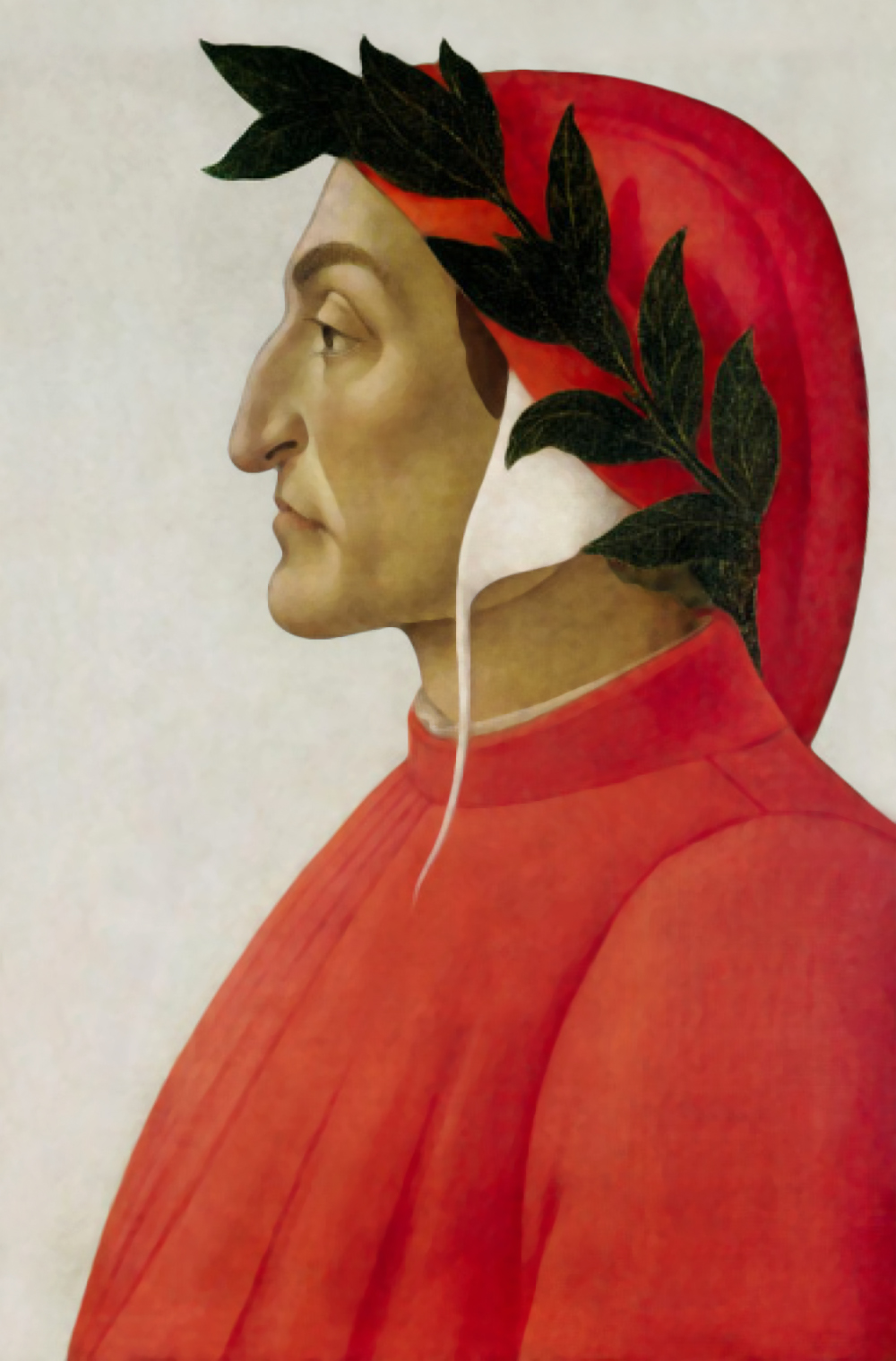
A painting of Dante, the story's primary narrator
Dante Alighieri, world famous poet. By choosing him as a narrator Meyer already raises questions about what kinds of “truth” he as a writer can represent.

The Marriage of the Monk – Plot Summary

Dante’s tale begins with the sinking of marriage boat as it goes along a river in Padua. The husband and almost every male in his family is on board, in the chaos they all perish. Diana, the wife, is rescued by the monk, Astorre, who appears from one bank of the river just as from the other there comes the famed tyrant, Ezzelino III da Romano. It turns out that the monk is the last male heir of the groom’s family, and the old patriarch, on his deathbed, begs the monk to renounce his vows and return to the world, so that his accumulated worldly wealth will not be wasted. A Papal letter grants permission to return only if Astorre agrees to by his own free will, but he is against it. Only with pressure from the old man does he eventually relent and agree to marry his brother’s widow.

Obviously, love in those days counted for very little. A date is set for the exchange of rings, and the marriage itself. Astorre meets old friends and finds himself more than a little out of his depth in the world of cutthroat tyrants and backstabbing. But he successfully goes and buys a ring for his future wife, only to realise that he doesn’t know her finger size, so he gets two gold rings instead of the one. As he walks home he drops one of these rings, and this finds its way into the hands of a young girl, Antiope, who he had once met at the beheading of her father. Her mother, driven mad by the incident, declares that the monk must wish to marry her daughter, and decides that they must go to his parties to see him.

This happens, and a fight takes place between the three women of the story. As Astorre walks the young girl home, however, it becomes clear that he loves her instead of his betrothed. His friends are against it, especially since the widow’s brother is one of them. But eventually the widow relents, agreeing to give return the old ring to Antiope so that the monk no longer has any divided loyalties. But there is a condition. At the fancy dress party taking place that evening Antiope must come to the widow, Diana, herself and take the ring off, humiliating herself in front of high society. When she comes, however, Diana (who is dressed as her divine namesake) takes an arrow and kills Antiope. The monk, arriving too late to save her, tries to get revenge but is cut down. They die in each other’s arms.

That’s the plot, so now for the cool things about how The Marriage of the Monk is made.

Interpretation: Playing with Truth

Storytelling

Even if you didn’t get that Cangrande was a real figure, it’s hard not to have heard of Dante. Meyer uses real figures in all of his novellas, but we should immediately ask ourselves the question – Why? It is easy enough to answer why Ezzelino is included: he is a splash of local colour, tying the story down to a concrete place and time and thus adding to the verisimilitude of it just as namedropping a few landmarks helps in modern historical novels. But why use Dante and Cangrande?

I think, at least in part, it has to do with a sceptical attitude towards truth that runs through the whole of the story. When I imagine Dante, it’s as a grand poet, dressed in his magnificent red robes, as in the portrait. By having him be a slightly scrawny figure, uncomfortable in the world, Meyer undermines our idea of Dante, leaving our footing uncertain. The same is true of his story – this is a simple tale, hardly comparable in scale or scope to the Divine Comedy. As Dante himself says, “I am developing this story from an inscription on a tombstone”. Is this what Dante would tell? I think we are supposed to be left dissatisfied and questioning.

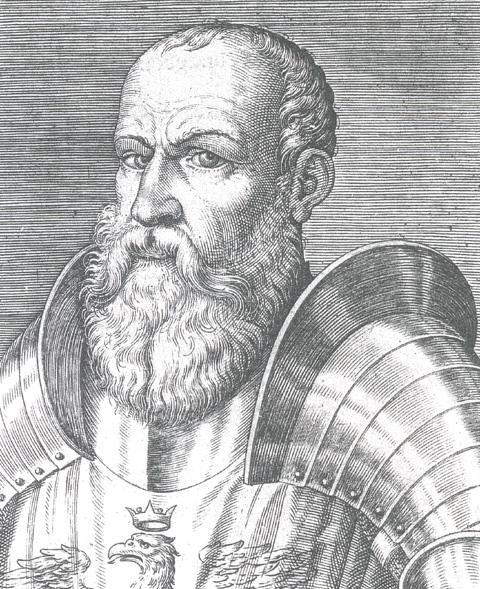
A woodcut of Ezzelino III da Romano, one of the novella's characters
Ezzelino III da Romano, another one of the historical figures used by Meyer. Is he just a splash of colour or does his inclusion mean something more?

More importantly, there is the question of how Dante would tell a story. I don’t mean in tercets. The Marriage of the Monk does some other cool things that challenge our usual idea of stories and storytelling. For one, Dante often admits that he doesn’t know something or a concrete detail. He challenges his own authority as the teller by drawing the reader’s attention to the fact that his story is only one of many possible interpretations of the event. There are also regular interruptions from other characters in the frame narrative, either to challenge something that Dante said, or even just so that people can shuffle about by the fire. The cumulative effect, though, is to make us aware both that this is really just a story, and that it is being told in a way that is far from any Truth.

There are other contributing factors to this critique of truth. For one, Dante takes the names of the characters around the fire for the characters within the story. Naturally, Ezzelino retains his name, but there is a Germano in both the frame narrative of The Marriage of the Monk and in its main story. The same is true of the women. Though Dante freely admits “I leave your innermost feelings untouched, since I can’t see into them”, the use of names still strikes us as strange. It means that the characters within the story are obviously not entirely the people they are supposed to be, because when we imagine people their names are a big part of their identity. Once again, we’re only getting a half-truth as a story.

Dante also leaves out the moral at the end of the story, a key element of fireside tales. After finishing he just stands up and leaves. This is particularly jarring because he is otherwise a very chatty storyteller, regularly listening to the interruptions and giving his opinion on them. The ending, then, comes as a shock and leaves us alone to decide for ourselves why it is that the monk is punished. Is it just because he removed his cowl? Or because he went against society by abandoning the woman he was supposed to marry?

Authority and Truth, inside and outside of the narrative

This critique of truth, indicated by the various formal features of the narrative, now lets us look at the story in a new light as we try to answer the question of Astorre’s fate. The consciousness of authority’s weak support base in truth is now revealed. In part the story does this by regular use of doublings. To the sinking boat come from one side the monk, representing a pure and Christian world view, and from the other Ezzelino, representing a worldly and scheming world view. There are two women. Antiope is pure and loved while Diana is the daughter of a rich man and so has more worldly value. The two rings bought by Astorre convey a sense of his divided loyalty to both the world and the divine.

When Dante describes Antiope finding the ring, he draws attention to his own sceptical storytelling by asking the listeners why they would believe in the fantastic overturning of the boat, but would not believe that from Antiope’s perspective she was perfectly correct in taking the gold ring as a sign that Astorre loved her and wished to be married. Dante shows that the worldview where we build stories around coincidences often leads us down paths that can be fatal, as in Antiope and Astorre’s case. He seems to suggest that is dangerous to believe too much.

Conclusion

What then kills Astorre? I think it is his divided loyalty between too many different truths. He cannot decide whether to commit to love, or whether to commit to worldly power and his duty as a nobleman. As one of his friends says before the monk dies, “Go back to your cloister, Astorre – you never should have left it”. The man is right – by leaving his cloister Astorre has to make a choice about what truth he believes in, while so long as he stays inside he is safe with only his duty to God. The Marriage of the Monk thus becomes a cautionary tale about the danger of naivety in a world where truth no longer matters. In our own modern world, where considerable scepticism is necessary to survive the modern news landscape, it remains surprisingly relevant in its message. If you can read German, give it a go.