Evgeniy Baratynsky – Four Translations of his Poetry

Evgeny Baratynsky is one of the great poets of the Golden Age of Russian poetry, but he is generally overshadowed by A.S. Pushkin and M. Yu. Lermontov, both of whom are more accessible, in part because of their prose works, and in part because of their easily-digestible content. Baratynsky is a solitary figure compared to those others because of his pessimism, comparable to that of Leopardi in Italy. Where Lermontov might look sadly upon his generation, he nonetheless lived a life of action, of active revolt. Baratynsky often gives the impression he doesn’t think it’s worth even trying. He is bitter, but what makes him interesting is that he is also intellectual in vision, where other poets are more emotional. He is not always easy to read in Russian, but teasing out his meanings is a pleasant exercise. Each reading leaves you feeling you’re a little closer to understanding him.  

These translations are only my first attempts at trying to pin down the poet’s soul. I like Baratynsky enough that I can see myself returning to him later, but for now I’ve only prepared these four pieces. After each poem I’ll leave a few words, describing the poem and anything I found interesting about it.

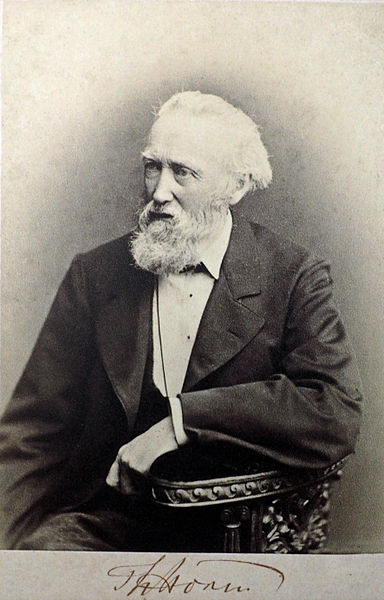
A sketch of Evgeniy Baratynsky
Young and unhappy, as most of us these days are, Evgeniy Baratynsky spent some time in Finland as a soldier, married, then died in Italy at the age of 44, which is pretty old for a Russian poet.

The Poems

Prayer

Lord of Heaven, grant your peace
To a soul ill at ease.
For the errors I've seen
Send oblivion's dark screen;
And to rise to your height,
Give me strength to do right.

This is short and sweet, the kind of prayer that you really can mumble to yourself going to bed. Baratynsky doesn’t seem particularly interested in God – He’s rarely mentioned elsewhere – but I still like this poem. It seems a prayer for our own times, with its sense of anxiety and unease. The divided hopes of the poet – both for strength and for forgetting – reflect his ultimate lack of confidence. An alternative translation for comparison is here .

The unusual anapaestic “- – / – – /”meter and rhyme are the same as are used in the original.

“O thought…”

O thought, your fate’s that of the flower
Which calls the moth with every hour;
Draws in the golden bumblebee;
To whom the loving midge does cling
and whom the dragonfly does sing;
When you have seen your wonders flee
And in your turn have faded grey -
Where then those wings that blessed your day?
Forgotten by the host of flies -
Not one of them has need of you -
Just as your failing body dies
Your seeds bring forth another you.

Baratynsky here shows an interest in the nature of thought. However much an idea may hold interest, that interest often turns out only to be temporary. Ideas come in and out of fashion. But what those who look beneath the surface see is that even a brief contact with an idea can be enough to lead to the creation of a new one from out of the old, so that even apparently forgotten thoughts are never truly in vain.

To a Wise Man

Carefully between our lives’ storms and the cold of the grave, o philosopher,
Hope you to find a safe port - "Calm" is the name that you give it.
We, who are called from the void by the tremulous word of creation
- Our lives are worries alone: life and our worries are one.
He who’s escaped common turmoil will think up a care
For himself: palette or lyre or the words of a pen.
Infants, the world’s newest entrants, its laws as if sensing,
Cry in their cradle the instant they’re born.

This is probably my favourite of Baratynsky’s poems, but of course that doesn’t mean I’ve successfully translated it. The theme is the suffering of existence. We may try to find calm, but ultimately all of us will struggle, whether from our own minds or from the external world. That’s all there is to it, probably. The meter is weird and Classical though, which is cool.

Baratynsky spent a formative period in his youth up in Finland. The picture shows part of Karelia, now Russian but once partially Finnish. The landscape is the same on both sides of the border. I was there last week.

“What use to those enchained…”

What use to those enchained are dreams of being free?
Just look – the river flows, and uncomplainingly,
Within its given banks, according to its course;
The mighty fir is powerless before the force
That binds it where it stands. The stars above are caught
Within the paths an unknown hand believes they ought
To go. The roaming wind’s not free – for it a law
Dictates the lands in which its breath has right to soar.
And to the lot which is our own shall we submit –
Rebellious dreams accept as dreams or else forget.
We, reason’s slaves, must learn obediently to bind
Our deep desires to all those things fate has in mind –
Then happiness and peace shall demarcate our time.
What fools we are! Is it not boundless freedom’s sign
That gives us all our passions? Is it not freedom’s voice
We hear within their torrents? O how hard’s for us the choice
To live while feeling in our beating hearts the fire
That rages in the bounds set by our fate's desire!

Another particular favourite of mine. Baratynsky here does not argue for freedom, as do those rebellious Romantics. Instead, he sees us as failing to follow the subservient example of nature, which happily obeys the limits it has been assigned at birth. But are doomed to suffering precisely because this is something we cannot do. We have passion, which fights against our fate, leading us to our downfalls. This poem is fun because of its form and punctuation and whatnot.  Baratynsky shows how enchained nature is by controlling when he begins and ends the sentences, relative to the line.

Conclusion

Anyway, I like Baratynsky, just as I like Leopardi. Both of them went against the grain with their pessimism, but I like it as an antidote to the baseless optimism we sometimes encounter in our own days. There is a kind of glamour in despair that both capture, and though it is dangerous to wallow, there can certainly be some pleasure in spending time in the poets’ company.

Here are two articles providing more information about Baratynsky. This one includes a translation of Baratynsky’s awesome long poem, “Autumn”, which I could not possibly attempt to translate myself. The other, meanwhile, compares two recent book translations and gives some information about Baratynsky’s life.
Georg Trakl and the Poetry of Spiritual Twilight (Translations)

I came to the Austrian German poet Trakl depressed and didn’t leave any happier. His short oeuvre, written in the final years before the first world war, is not for the faint of heart. There is very little joy to be found here, and what beauty there is in his poems is tainted by an overwhelming sense of decay. But what Trakl does offer, above and beyond his despair and endless talk of decline, is a unique view of the world, and a unique language of symbols for appreciating it. Each of his poems is a mysterious mood-piece, filled with images whose interpretations are never definite. Rilke’s view, that reading Trakl is like being “an outsider pressed against panes of glass”, looking into a space of experience which “like the space in a mirror, cannot be entered”, hits the mark.

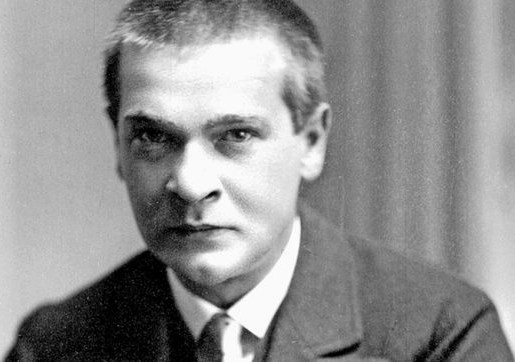
Georg Trakl. Intensely sad, his poems reflect a sensibility that felt deeply the spiritual turbulence of his age. A turbulence that continues into our own and leaves his poetry mysterious and fresh even now.

Trakl is a strange poet, but he is also one whose work is tragically beautiful, and I hope to show that in these few translations below. His concerns seem perfect for our own age. The empty spiritual gulf left by religion’s decline, the feeling of foreboding as the world enters a new era without any ballast or sense that we are prepared for its challenges, and even the loss of a deep understanding of and connection to the natural world – all these are just as relevant now as they were as the First World War erupted. To face Trakl’s dark world is to be given a way of visualising the darkness of our own. So let’s begin.

The Poems

Trakl’s poems are made up of short and simple sentences, that are nonetheless often hard to understand. There’s a lot of ambiguity due to the syntax and punctuation, and whenever I’ve met something unclear, I’ve aimed to convey that same uncertainty in the English. After all, I’m trying to translate a mood and an atmosphere, not a technical document. If I have managed that, then I can be happy with how these have turned out. Following the poems is a bit about Trakl’s life and a conclusion.

Song of a Captive Blackbird (DE)

Dark breath in green twigs.
Blue blossoms float around the face
Of the lonely one, his golden step
Dying under the olive tree.
The night is filled with the fluttering of drunk wings.
So quietly bleeds out humility,
Dew, which slowly drips from the blossoming thorn.
The mercy of shining arms
Embraces a breaking heart.
A painting showing a night time landscape. Munch's early and middle work reflects a similar sensibility to that of Trakl.
This painting (Starry Night), by Edvard Munch, strikes me as a good representation of my feeling as I read the final two stanzas of “Spiritual Twilight.” Munch was working at about the same time as Trakl and I feel like both of them are often similar in tone and image.
 Spiritual Twilight (DE)

Silence encounters at the forest’s hem
Its dark quarry.
On the hill the evening wind ends quietly,
 
The blackbird’s cries are stilled,
And the soft flutes of autumn
Go silent in their pipes.
 
On a black cloud
You sail, drunk on the poppy,
The ponds of the night,
 
The stars in the heavens.
The sister’s lunar voice is always calling
Through the spirit’s night.
The Sun (DE)

Daily comes the yellow sun across the hill.
The forest, the dark beast, man – hunter or shepherd –
All are beautiful.
 
Reddish rises the fish in the green pond.
Under the round heavens
The fisherman quietly rows in his blue boat.
 
Slowly ripens the grape, the grain.
When the day silently ends,
A good and an evil is prepared.
 
When the world becomes night,
The wanderer quietly lifts his heavy eyes;
The sun breaks out of a gloomy chasm.
The Sun, also by Munch, shows a sun.
The Sun, also by Munch. I wonder if, had Trakl lived to grow older, he too would have found way of looking at and representing the world that moved beyond fear and anxiety.
In Spring (DE)
Softly sank from dark steps the snow;
In the shadow of the tree
The lovers raise their rosy lids.
 
Star and night always follow
The dark calls of the mariners;
And the oars beat softly in time.
 
Soon on the ruined wall blooms
The violet;
The temples of the lonely one silently grow green.
Autumn Homecoming (DE)

Remembrance, a buried hope,
Preserves this brown wood frame,
Where dahlias hang above -
An ever stiller homecoming;
The ruined garden, the dark reflection
Of childhood years,
So that from blue lids the tears plunge
Unstoppably.
Now swim the glassy minutes
Of gloom
Over and into the night.

Who was Trakl? Biography and its Absence

Georg Trakl was born in 1887 and died towards the end of 1914, likely by his own hand. He was born in Salzburg to a family of not great financial means, but all the same this is where he was most happy. His relations with his sister Grete, herself a musical prodigy, may well have been incestuous. In his poems Trakl often writes about the “sister”, but it’s difficult to know what to make of that. What is more clear is that Trakl developed a drug addiction that he supported through becoming a pharmacist. Once war broke out Trakl joined the Austro-Hungarian army as a medical officer on the Eastern Front. By this point his mood was extremely unstable and the experience of the battle of Grodek, though it led to perhaps is most famous poem, also led to Trakl’s final breakdown and probable suicide of a cocaine overdose.

Yet all of this is almost irrelevant in the poems. As is clear above, Trakl hides himself from view. The experience of reading his work is rather like floating through a deep fog. There is nothing so solid as an “I”, even a lyrical “I”, to hold on to. The places of his life certainly make their appearances, including Grodek itself, but always more as symbols and maps of an internal world than as real settings, at least it seems that way to me.

The lovely German edition of Trakl’s work from Reclam which I’ve been reading also includes many of his letters. But these, too, are not of much use for understanding his poems. We can hear Trakl’s own voice, always in pain, and always suffering. It only caused me to feel a terrible and futile desire to help the poor man, but the poems remained – perhaps thankfully – impenetrable. “I was terribly sick for a few days, I think from a mourning that cannot be put into words”. Shortly before he dies he writes “I feel like I’ve already almost passed over into the beyond”. What I like about him so much is that his sensibility really does seem to belong to another world, no matter how much suffering seems to be involved. 

Munch's painting, Self Portrait in Hell, shows the artist naked in a fiery room.
“I feel like I’ve already almost passed over into the beyond.” The painting is Munch’s Self Portrait in Hell. Trakl’s work, like Munch’s, is filled with religious symbolism. Ultimately, any positive message in Trakl lurks within this Christian impulse.

Conclusion – Religion and the Poppy

Probably my favourite pieces here are the first two. The image of the blackbird, of the innocent forced to suffer its way through the world, lies at the heart of Trakl’s whole project, and the bird’s short and brutal poem strikes me as being particularly beautiful. But it also contains within it a rare hint at redemption. Trakl’s religious inclinations are, as with so much else about him, not entirely clear. But for me at least, this poem has a spiritual angle to it: the suggestion that for all our suffering there may lurk at the end of the tunnel a kind of salvation. It’s not unlike Dostoevsky, in its way.

As for “Spiritual Twilight”, I love its tone and sense of mystery. For me it really conveys that world of abstract rumination we fall into somewhere in the depths of our despair. It is a weightless poem, just as we, in our thoughts, are weightless too. But one day we must open our eyes. And that is where the challenge lies.

The last word on all this should go to Trakl himself. This is how he describes himself, towards the end of his life: “Too little love, too little justice and mercy, and always too little love; too much hardness, pride, and all sorts of transgressions – this is me. I am certain that I only refrain from evil out of cowardice and weakness and in doing so shame even that part of me.”

I hope, having read a few of his poems, you have a sense that for all the mercy and love he did not receive himself, he was more than willing to give plenty of it out to those who needed it in his work. The strange thing is, for all his despair, I find myself feeling less alone for reading in his company. And that’s why I think he’s a fantastic poet.

What did you think?

Theodor Storm’s Poetry of Love and Death (Translations)

I really like Theodor Storm as a poet because he seems to me to be incredibly conventional. There is almost nothing special about either the form or the content of Storm’s poetry, but these little pieces are (forgive the translations if they don’t convey this) perfectly crafted all the same. There is no danger of ambition getting in the way of the message. While it is true that Storm wrote longer poems that I haven’t translated here, even those are all limited in formal and thematic scope. It seems he understood his talents and never thought it was worth the danger of trying to move beyond them, something he did in the formal experimentation of his novellas.

A photo of Theodor Storm
Theodor Storm, author of poems and novellas, was born and lived most of his life on the shores of the North Sea. His most famous poem “The Town”/Die Stadt (not translated here), takes his hometown of Husum as its setting.

Storm was born in 1817 in Husum, a small town in the duchy of Schleswig, at that time ruled by the Danish crown, even though it contained a sizeable German population. He studied law further south, wrote poems and novellas (I’ve written on Aquis Submersus here, and Immensee here), and returned to Husum after it had come under Prussian rule following a brief war with Denmark. There is a political slant to his work at times, but this doesn’t come across in the selection I’ve translated. I don’t feel the patriotism translates well without notes and I’m not sure it’d be enjoyable with them either.

Storm died at the age of 70 from cancer, shortly after completing “The Rider on the White Horse”, perhaps his greatest novella.

The Poems

I’ve translated several of Storm’s poems. His topics within them range from life and love to death and decay. My only regret with them is that I haven’t yet translated his more nature-based poems. I find them particularly beautiful. But that means I’m harder on myself – I want to do them justice. Since I myself grew up by a grey and northern coastline, I’m especially fond of Storm’s poetry dealing with his homeland.

But anyway, here are the poems. Following them will be a few comments.

 Beginning of the End

It's just a point, not even pain -
It's just a feeling you perceive -
And yet it hangs around your thoughts,
And yet it makes it hard to breathe.
 
And when you try to tell your friends,
You find you cannot find the words.
You tell yourself: "this is no end."
And yet there's no peace from its birth.
 
And now the world becomes so strange,
And quietly your hopes depart,
Until you see at last - at last! -
That death's dark arrow's found your heart.
 

Insomnia
 
I woke from dreams in worried fright -
Why is the lark's song out in the night?
 
The day's gone by, the morning's still far,
Down onto my pillow there shines a star.
 
Yet on and on there floats the lark's song -
O voice of day, what has gone wrong?
 

Early Morning


Above the roof the sun's gold shines,
And cocks begin to crow the time;
The one crows here, the other there,
Their call rings out from everywhere.
Now in the distance dies the cry -
There's nothing more to fill the sky.
Oh brave old cocks, sing on your song!
They are still sleeping, sleeping on.
 

A Whisper
 
It is a whisper in the night,
And yet it set my peace to flight.
I feel it's there, it wants to say
Some thing but cannot find the way.
 
Is it love's words, their secrets thrown
Into the wind, blown far from home?
Or is it pain from future days
That hopes to help me change my ways?
A photo of Husum, showing the water and a few of the waterfront houses, which are much the same as they were during Storm's time.
Husum, Storm’s birthplace and home for much of his life. It’s a lovely little town and the Storm Museum there is worth visiting if you’re ever in the area. Photo by Bernd Untiedt (CC BY-SA 3.0)
 
"One body and one soul..."


One body and one soul, as once we were,
- Seen thus, how great your death to me appears.
As you, alone, within the grave decay,
So too feel I, myself, decay up here.
 
"A man held once..."


A man held once by loving arms,
Need never ask in life for alms.
If he must die far off, alone,
Still yet he'll feel those blessed hours,
When her mouth loved with all its powers,
And now in death she'll stay his own.
 
Consolation
Whatever happens, come what may!
If you still live I'll love this day.

The feeling goes, the world to roam -
Wherever you are, that's my home.

I see your lovely face before me,
And know the future cannot hurt me.

Closing Remarks

If I had to write about these in an essay, I’d find more to say than I will say now. But essays are always unnatural; they just get in the way of enjoying the simplicity of the poetry. Storm’s poetry is often about love, about the changes in love brought by death and separation. In this he seems quite similar to another major German poet of the same period, Eduard Mörike. But Storm’s poetry, at least here, also has a much greater sense of apprehension and anxiety about it. Death is always just around the corner, and however beautiful the natural world is there’s also a sense that Storm is not always certain that he can correctly interpret the world’s symbols. The gap between perception and his understanding seems to torment him, as in “Insomnia” and “A Whisper” – both end in questions.

I hope you enjoyed my translations. If you have any comments, why not leave a comment? If you want more German poetry, I have a piece on Hugo von Hofmannsthal here.