Evgeny Baratynsky is one of the great poets of the Golden Age of Russian poetry, but he is generally overshadowed by A.S. Pushkin and M. Yu. Lermontov, both of whom are more accessible, in part because of their prose works, and in part because of their easily-digestible content. Baratynsky is a solitary figure compared to those others because of his pessimism, comparable to that of Leopardi in Italy. Where Lermontov might look sadly upon his generation, he nonetheless lived a life of action, of active revolt. Baratynsky often gives the impression he doesn’t think it’s worth even trying. He is bitter, but what makes him interesting is that he is also intellectual in vision, where other poets are more emotional. He is not always easy to read in Russian, but teasing out his meanings is a pleasant exercise. Each reading leaves you feeling you’re a little closer to understanding him.
These translations are only my first attempts at trying to pin down the poet’s soul. I like Baratynsky enough that I can see myself returning to him later, but for now I’ve only prepared these four pieces. After each poem I’ll leave a few words, describing the poem and anything I found interesting about it.
Young and unhappy, as most of us these days are, Evgeniy Baratynsky spent some time in Finland as a soldier, married, then died in Italy at the age of 44, which is pretty old for a Russian poet.
The Poems
Prayer
Lord of Heaven, grant your peace
To a soul ill at ease.
For the errors I've seen
Send oblivion's dark screen;
And to rise to your height,
Give me strength to do right.
This is short and sweet, the kind of prayer that you really can mumble to yourself going to bed. Baratynsky doesn’t seem particularly interested in God – He’s rarely mentioned elsewhere – but I still like this poem. It seems a prayer for our own times, with its sense of anxiety and unease. The divided hopes of the poet – both for strength and for forgetting – reflect his ultimate lack of confidence. An alternative translation for comparison is here .
The unusual anapaestic “- – / – – /”meter and rhyme are the same as are used in the original.
“O thought…”
O thought, your fate’s that of the flower
Which calls the moth with every hour;
Draws in the golden bumblebee;
To whom the loving midge does cling
and whom the dragonfly does sing;
When you have seen your wonders flee
And in your turn have faded grey -
Where then those wings that blessed your day?
Forgotten by the host of flies -
Not one of them has need of you -
Just as your failing body dies
Your seeds bring forth another you.
Baratynsky here shows an interest in the nature of thought. However much an idea may hold interest, that interest often turns out only to be temporary. Ideas come in and out of fashion. But what those who look beneath the surface see is that even a brief contact with an idea can be enough to lead to the creation of a new one from out of the old, so that even apparently forgotten thoughts are never truly in vain.
To a Wise Man
Carefully between our lives’ storms and the cold of the grave, o philosopher,
Hope you to find a safe port - "Calm" is the name that you give it.
We, who are called from the void by the tremulous word of creation
- Our lives are worries alone: life and our worries are one.
He who’s escaped common turmoil will think up a care
For himself: palette or lyre or the words of a pen.
Infants, the world’s newest entrants, its laws as if sensing,
Cry in their cradle the instant they’re born.
This is probably my favourite of Baratynsky’s poems, but of course that doesn’t mean I’ve successfully translated it. The theme is the suffering of existence. We may try to find calm, but ultimately all of us will struggle, whether from our own minds or from the external world. That’s all there is to it, probably. The meter is weird and Classical though, which is cool.
Baratynsky spent a formative period in his youth up in Finland. The picture shows part of Karelia, now Russian but once partially Finnish. The landscape is the same on both sides of the border. I was there last week.
“What use to those enchained…”
What use to those enchained are dreams of being free?
Just look – the river flows, and uncomplainingly,
Within its given banks, according to its course;
The mighty fir is powerless before the force
That binds it where it stands. The stars above are caught
Within the paths an unknown hand believes they ought
To go. The roaming wind’s not free – for it a law
Dictates the lands in which its breath has right to soar.
And to the lot which is our own shall we submit –
Rebellious dreams accept as dreams or else forget.
We, reason’s slaves, must learn obediently to bind
Our deep desires to all those things fate has in mind –
Then happiness and peace shall demarcate our time.
What fools we are! Is it not boundless freedom’s sign
That gives us all our passions? Is it not freedom’s voice
We hear within their torrents? O how hard’s for us the choice
To live while feeling in our beating hearts the fire
That rages in the bounds set by our fate's desire!
Another particular favourite of mine. Baratynsky here does not argue for freedom, as do those rebellious Romantics. Instead, he sees us as failing to follow the subservient example of nature, which happily obeys the limits it has been assigned at birth. But are doomed to suffering precisely because this is something we cannot do. We have passion, which fights against our fate, leading us to our downfalls. This poem is fun because of its form and punctuation and whatnot. Baratynsky shows how enchained nature is by controlling when he begins and ends the sentences, relative to the line.
Conclusion
Anyway, I like Baratynsky, just as I like Leopardi. Both of them went against the grain with their pessimism, but I like it as an antidote to the baseless optimism we sometimes encounter in our own days. There is a kind of glamour in despair that both capture, and though it is dangerous to wallow, there can certainly be some pleasure in spending time in the poets’ company.
Here are two articles providing more information about Baratynsky. This one includes a translation of Baratynsky’s awesome long poem, “Autumn”, which I could not possibly attempt to translate myself. The other, meanwhile, compares two recent book translations and gives some information about Baratynsky’s life.
Ask any Russian who their great 19th century women writers were and you’ll get little except confused looks. After discussing it with several Russian friends we decided to discount Nadezhda Teffi and Zinaida Gippius, both of whom really flourished in the early 20th century, leaving us with nobody at all. Russia had no George Sand, no Jane Austen, no Annette von Droste-Hülshoff. However, with the republication of Barbara Heldt’s translation of Karolina Pavlova’s A Double Life, alongside a new afterward by Daniel Green, the scene is set for Columbia University Press’s Russian Library to finally tell the Russians once and for all what they were unable to work out for themselves – that they had a great writer after all, and her name was Karolina Pavlova. A Double Life, her novel of 1848, is apparently her masterpiece.
When it appeared on my reading list, I was sceptical, to say the least. A Double Life is mentioned nowhere; there is no Russian edition published later than the days of the Soviet Union; it is impossible to buy it within Russia. But now that I’ve read it, I’m coming round. Pavlova is not a great writer of fiction, however much we might nobly wish that she were. (I’ve not read her poetry so can’t judge it). But nor is she talentless, shoehorned into my upcoming exams solely on the basis of her sex. A Double Life is an interesting book, it is an hilarious and tragic book, and most importantly it’s a valuable, eye-opening book. It may not stack up to Tolstoy, or Dostoevsky, or Gogol, but we shouldn’t hold that against Pavlova. Few of us, whatever our background or sex, can do that.
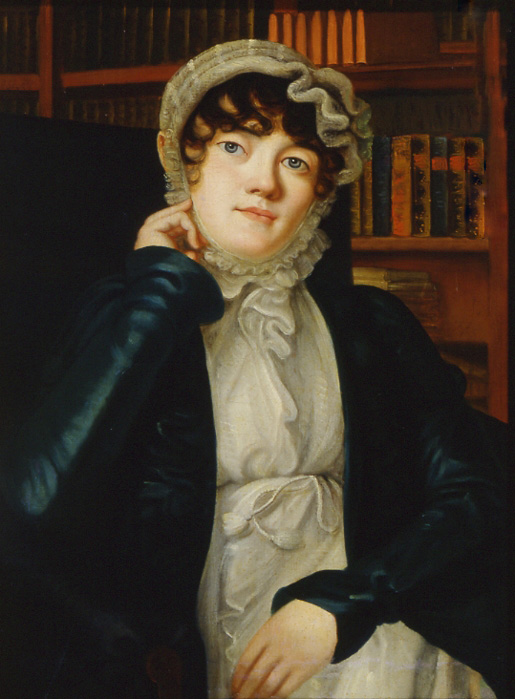
Karolina Pavlova, author of poetry and the novel A Double Life, as painted by V. F. Binemann
What follows is a summary of the plot of A Double Life, an overview of its main themes, and finally a brief look at Pavlova’s life.
A Double Life – Plot Summary
Our heroine is Cecily von Lindenborn, an 18-year-old girl who has only just entered society. Her life’s goal, as it was for most young women in those days, is to get herself a good husband. The man she’s settled on is the alluring and rich Prince Viktor. Cecily has been trained her whole life long to live and succeed within high society’s bounds, with the result that she cannot commit or conceive even a single “peccadillo”. She’s about as interesting as we all were at that age, which is to say that she scarcely has a personality at all. This may perhaps be jointly blamed on her upbringing and on her environment. Her closest friend, Olga, is even more dull than she is.
Although Cecily thinks she’s in charge of her fate, she is much mistaken. She is unwittingly a pawn in a much greater game, played between the adults of A Double Life – the men and the mothers – to ensure suitable matches are made. And Olga’s own mother, Madame Valitskaya, has her own plans in mind involving the prince. Soon enough, Cecily will learn just how little control she really has.
A Double Life is by the standards of the 19th century Russian novel, awfully short. There are ten chapters, in all, and their structure is the same throughout – a daytime, waking scene, focusing on the banalities of aristocratic life, is then followed by an introspective bedroom scene where our heroine is alone, and then finally a few pages of poetry as she falls asleep. This contrast between day and night as two different “lives” is suggested both by the title and by the epigraph from Byron at the beginning of A Double Life.
Conversation and Propriety
A Double Life is built on conversation. So much is obvious from the novel’s very first words, “But are they rich?” But this is not the speech of Dostoevsky or Tolstoy, that tortured desperate working out of questions like “what must I do?” and “how must I live?” In A Double Life there is not one moment where the dialogue serves to answer great questions. It’s purpose is the opposite – to suppress questioning, to control the tone, and to pass the time. People are incessantly talking, and Pavlova skilfully weaves her narration through different groups, giving us snatches at a time, which further lessen any chance of meaningful development of spoken ideas. What I noticed straight away was just how much blank space there was on the page. Pavlova’s characters are always uttering a few remarks, without expansion. They are simply filling the air.
“But are they rich?” Money, of course, is the most important thing for a young man or woman and the thing at the forefront of their minds. But not just money. People are obsessed with their appearance too. When mourning a dead woman, all Prince Viktor has to say is “She was not at all bad looking.” A Double Life’s world is a world in which people have forgotten how to express true feelings. Or rather, one where society forbids them too. When trying to assess Cecily as a match, one man says “I’ve never discussed anything with her except the weather and dances”. Later on, the narrator writes “How and by what means may one in an aristocratic drawing room distinguish the vulgar man from the brilliantly intelligent one? Surely only by the fact that the former usually seems more clever”. There is no way even to judge successfully.
The Language of A Double Life
Even if we cannot rely on people’s conversation as a source of truth, that doesn’t mean the spoken language of A Double Life is pointless. After all, it does show character. In addition to the vapidity of mourning, above, I was shocked and amused (a common feeling, reading this book), by the words of Dmitri, Prince Viktor’s competitor, when he tries to enlist the help of Olga’s mother: “I love Cecily Alexandrovna. I fell in love with her long ago”. This is a lie – he has “loved” her all of five pages. Vera Vladimirovna loses her daughter’s hand in an extremely distressing sequence in which Prince Viktor’s mother talks of a wonderful suitor, all without mentioning once that she is representing Dmitri and not Viktor himself. But Vera Vladimirovna cannot ask for clarification, because that would be beyond what is proper. Language is much more a straightjacket than a liberation here.
Outside of the dialogue, Pavlova’s language serves its purpose well – demonstrating the sheer soullessness of the world her characters inhabit. The word “nice”, is a common giveaway. For example, concerning Cecily’s talents she writes: “She sang very nicely and sketched very nicely as well”. Another word is “luxurious”, showing the materialism of the characters. This wonderful description of a summer residence demonstrates unequivocally how the aristocrats wish to be seen: “surrounding the luxurious cottage was a luxurious garden, its greenery always an excellent, a choice, or one might say an aristocratic greenery”. I also liked the comment that “nature made herself unnatural” – just as the characters must lose their nature to survive in society, so too must the landscape itself. Finally, Pavlova is quite like Austen in that she draws a distinction between native and foreign words. Frenchisms like “Comme il faut” all indicate society’s unnaturalness.
Boredom and Loneliness
If you are an aristocratic girl of 18 at the height of the Russian Empire, your options for enjoyment are rather limited. Unlike your male acquaintances you are unable to murder pawnbrokers, philosophise, or even go on a spree. The result is that everyone, knowingly or unknowingly, is awfully bored. As in Austen’s Emma, characters scheme and gossip away to pass the time. Even the talents they have, like Cecily’s singing, are limited in that they are only means to an end – securing an attractive husband. We are also made keenly aware of the lack of movement options for the women of A Double Life. Spatially, they are restricted to the drawing room and the bedroom. When Cecily finds a moment’s freedom on a horse, she is immediately stopped for going too fast – even the outdoors is no escape.
Cecily’s boredom is compounded by those around her. Olga, ostensibly her best friend, is amusingly banal. After a poetry reading Cecily turns to her:
“How fine that was,” said Cecily into Olga’s ear.
“Very good,” Olga replied, looking intently at someone through her lorgnette.
This is not the only example of a time where Olga immediately lowers the tone, preventing Cecily from expressing higher thoughts by depriving her of an interlocutor. At other times, Olga is simply a mouthpiece for her mother, manipulating Cecily so that she can secure the Prince for herself. And then class gets in the way of any other options. When Cecily is alone in her room with her old nanny, we are told that it means “in other words, completely alone”. With nobody to talk to it is no surprise that she is ultimately an undeveloped, boring, person.
Another representation of Pavlova. The next time you read a Russian novel in the 19th century, pay attention to the women. Male novelists rarely give them much character at all, leaving them either pure and spotless or irredeemable. Pavlova’s women may not be better, but they do provide a counterbalance to the women we might in the men’s works.
Freedom’s Enemies – Mothers…
We may blame “society” for the restrictions on Cecily’s freedom, and certainly there are many unspoken rules that bind her. But there are also people who are to blame – mothers, and men. A Double Life sees Cecily’s problems not only as stemming from her environment, but also very much from her upbringing. At the heart of the novel is the question of why mothers, whose experience of the world cannot have been any better than that of their daughters, continue to bring them up just as they themselves were brought up.
“All these educators have been young once, and had been brought up in the same way! Were they really so satisfied with their own lives and with themselves that they are happy to renew the experience with their children?”
Cecily’s mother leaves her with “her mind in a corset”. Vera Vladimirovna fears “any development of imagination and inspiration, those eternal enemies of propriety”, so much that even Cecily’s dreams are controlled by her: “instead of dreaming of the Marquis Poza, of Egmont, of Lara and the like, [Cecily] could only dream of a splendid ball, a new gown, and the outdoor fete on the first of May.” At no point do mother and daughter seriously talk. Cecily has no emotional support anywhere. I thought this line, from the first chapter, was particularly telling: “A child needs an English nurse more than a mother”. That is to say, that propriety and outward appearance is considered more important than actually nurturing the child. Instead, Vera Vladimirovna sees her role as guiding Cecily to the right husband, with lines like this: “a virtuous wife can completely reform a flighty husband”. Hardly emotional support.
…And Men
Next to the mothers, the men are not nearly so bad. However, I don’t wish to absolve us of guilt. The two main male characters are Dmitri and Prince Viktor, and both of them are equally faulty. Dmitri is a gambler, a self-centred lout. He only comes to “love” Cecily when he hears she might get a big inheritance. When he imagines her after that he thinks she is someone “who could make a husband very happy”. He does not once think of her own happiness. Dmitri is also a master of using society’s rules to his benefit. After Cecily’s brief burst of freedom galloping on horseback everyone wants to keep a watchful eye on her. Dmitri comes up and says “let me ride beside you. The last time you frightened me”. A horrible, stomach churning moment, precisely because she cannot say no.
Prince Viktor is not so bad. He breaks the rules more often, but Vera Vladimirovna is willing to make an exception for him because he’s rich. Around him Olga’s mother schemes so that he will marry Olga, however at the end of A Double Life he declares that he is going to go to Paris. It is a significant point. However talented the machinations of the mothers may be, the men of the novel still have the ultimate freedom because it is they who make the proposals. If Prince Viktor is disappointed that he’s missed out on Cecily, then he can go to Paris if he wants. As a man, nobody controls him.
The Poet and The Double Life
But there is one man in A Double Life who is controlled by others, just as the women are. In the third chapter there is a poetry recital by a young poet, who performs his rendition of Schiller’s “The Bell”. Immediately he comes under attack by one of the audience members. “We demand action,” he says. “Poetry should be useful; it should hold vice up to shame or set a crown on virtue”. The poet, surrounded by important aristocrats, is unable to defend himself. Like the women, his environment determines his identity even as his heart wishes to rebel in the name of higher feelings. Cecily is not a poet, but during A Double Life she begins moving down a path towards becoming one. Though she has been made to understand that being a woman poet is “the most pitiable, abnormal condition”, every night she hears poetry in her dreams.
This is the voice of her muse, at least I take it to be so. It comes as a warning, trying to warn Cecily before it’s too late both that society is not all there is to life, and that her “love”, when it comes, is not all it seems to be. The poems are translated without rhyme, focusing on the images. They were quite repetitive, filled with the usual chains and repressive bits and pieces. The speaker in them is a “he”, which adds a nice sense of reflection. In her poetic night-time double life Dmitri has another rival, but Cecily is not able to see that man’s worth until it is too late. The tone becomes one of resignation. “You will understand earthly reality / With a maturing soul: / You will buy a dear blessing / At a dear price.” Cecily will suffer, but she will learn.
At the end of A Double Life Cecily speaks for the first time a snippet from one of her poems. Olga calls it nonsense, and Cecily for her part refuses to claim it, saying she simply heard it somewhere. But that night there’s a change in the poems, and for the first time the voice is in the first person. Speaking of her poetry, it says: “Long had it lived mid worldly noise, / Free and bright within me”. Even as Cecily’s external world has suddenly grown constricted her internal world has reached a new level of freedom. For the narrator, who seems like an older, wiser woman, A Double Life’s plot is marked with a melancholy inevitability. “What maidenly soul does not understand the charm of these slight transgressions?” The narrator asks of Cecily’s first deluded moments in love.
For Cecily is only one of many women who were trapped within their society, and near the end of A Double Life she realises this in a moment of revelation.“And she felt and knew that everything going on now had definitely already happened to her once, that this moment was a repetition of something in her past and that she had already lived through it once before”. Cecily is in that moment all women, and it is here that A Double Life stakes its claim on universality. Just as Pavlova wrote a book to give knowledge of aristocratic women’s plight to the world, so too, do we feel, one day will Cecily. But before that time much suffering awaits. A Double Life marks the end of one of Cecily’s lives, but it also marks the birth of another. But that life is for another story, and Pavlova never wrote it – she lived it.
Karolina Pavlova and Her Critics
Reading about Karolina Pavlova’s life is not fun. The Introduction and Afterward give ample evidence to support the view that Pavlova was treated horrendously by the men of the world she inhabited. And, indeed, by the women too. In spite of her impeccable literary credentials – she rubbed shoulders with all of the major Russian writers of the period, including Pushkin, Lermontov, Gogol, and others – she found herself insulted by many of the critics of the day, and constantly demeaned. As a man, much of this makes for uncomfortable reading. An anonymous critic writes of his experience reading: “I suddenly had my doubts and looked again at the book’s title page to make certain – “did I not make a mistake? – was it really written by a woman? I had somehow thought that only men could be so sharp”. Reading this I wanted both to laugh and cry.
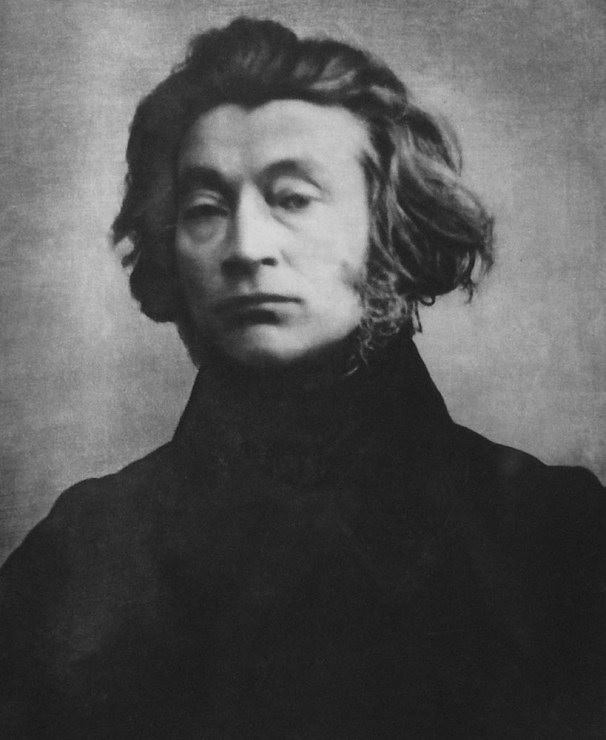
Adam Mickiewicz, perhaps the most important Polish poet, was one of the many influential literary figures who got to know Pavlova well. But somehow, she never rose to be as successful as they. Who, or what, is to blame for this?
But for Pavlova, there were only tears. Born Jaenisch in Yaroslavl in 1807 to a German professor, she was forced, a few years after the publication of A Double Life, to flee Russia to Dresden, where she lived for four decades in poverty, cut off from her home. At every turn she made enemies, such as when she initiated (perfectly justified) criminal proceedings against her husband for wasting all of her inheritance on gambling. Her dedication to her poetry made her an outsider – as a woman she was supposed to be raising children. Only Aleksei Tolstoy, himself a minor poet, was of any real literary support in her later years. When she died in 1893 she was already forgotten, waiting for the Silver Age poets to rediscover her poetry, and then critics like Barbara Heldt to rediscover her prose.
Conclusion
To say that Pavlova lived in a hostile environment would be a horrible understatement. Everyone, everything, men and women alike, conspired to insult and humiliate her and denigrate her poetic calling. Though she attempted to be stoical, no amount of character will let you withstand such hostility forever. I cannot fault her character, and I was truly shocked at her treatment. But heroism in life alone does not make for a good book.
A Double Life is not a great novel, Russian or otherwise. It has a number of faults that are simply impossible to look past. Its characters are poorly drawn, both the men and the women; the heroine is boring; the poetry’s repetitive; and the arguments are rarely subtle. In spite of this, you should definitely read it. It’s short, and it’s fascinating to see the world of ballrooms from a different perspective, even if Pavlova has an axe to grind. Pavlova is no Jane Austen – she lacks the subtlety of her characterisation and irony. But she is by no means talentless. A Double Life is at its best when it’s comic and satirical, rather than when it attempts loftiness. I really did laugh out loud at several moments.
Many diamonds in the rough can slip through literary history unnoticed, but rarely do truly polished ones. Ultimately, A Double Life is just the former, not the latter. So read it, but keep your expectations tempered, and you’ll no doubt enjoy it a lot.
It was through Dostoevsky that I first came to Russian literature, after a winter reading The Brothers Karamazov that changed my world and the course of my life. And for a while he was my favourite writer and the only person I could say I’d read nearly everything of. But once my own Russian skills were good enough to read him in the original, the disappointment was crushing. In English, with the kind help of a translator or, in some cases, two, Dostoevsky’s Russian can be hammered into a vaguely readable shape. But in the original, there is no such help, and the truth of it is that Dostoevsky is among the worst stylists ever to be elevated to the Canon. Random words, commas, ellipses – Dostoevsky’s writing in The Double is as mad as his subject matter, the mysterious (apparent) duplication of a civil servant.
A young Fyodor Dostoevsky. The Double was written and published in 1846 – before Dostoevsky suffered the imprisonment and exile that changed his life and made him the author we know today
The Double is not Dostoevsky’s best book, by any stretch, unless you’re Vladimir Nabokov (and he’s not the best judge anyway). It was also written before his mock-execution and years of imprisonment which led to the spiritual conversation that we have to thank for his mature work. Still, it’s on my Cambridge reading list because it’s shamelessly derivative of Gogol’s Petersburg Tales, which I’ve looked at here (“The Nose”) and here (“Notes of a Madman” and “Nevsky Prospekt”). Though Dostoevsky is very much influenced by Gogol – “We all come out from Gogol’s ‘Overcoat’” is a famous quote attributed to him – The Double is also Dostoevsky’s own work, and bears his own stamps too. In this case it doesn’t make for a good book, but it does at least make for an interesting one.
Translations from the Russian are my own.
A Brief and Rough Summaryof the Plot
The Double tells the story of a few days in the life of one Yakov Petrovich Golyadkin, a poor civil servant in early 19th century Saint Petersburg. On the day the story begins he decides to spend most of his savings on hiring a fancy carriage and a serious livery for his servant Petrushka, all so that he might look better off than he actually is. He then visits his new doctor, who he had already visited earlier that week for an unspecified illness. This doctor suggests that Golyadkin, who is introverted and has paranoia – even within the first chapter he feels he’s being watched – go out and socialize and thus prevent himself having a breakdown. Golyadkin, however, doesn’t leave until he has gone on an unprovoked rant about the “enemies” who conspire against him.
The extravagant spending is because Golyadkin is going, that evening, to the birthday party of Klara, the daughter of a more senior civil servant. But when he arrives, he is unable to enter the main hall – he’s too scared, and ends up just watching from a hiding spot until someone approaches and his cover is blown. He goes up to Klara, but finds himself tongue-tied, and she is led away from him – it is not the first time he’s bothered her. Ashamed, Golyadkin heads home in a snowstorm, and it is only then – a third of the way through The Double – that we actually meet the double himself, also called Golyadkin, first glimpsed as a figure in the night. Both of them are heading to Golyadkin’s house, and the hero offers to let the other Golyadkin stay over.
The next day at work Golyadkin begins to feel a great deal of
confusion, because he is the only person who recognises the double as being his
double, in name and figure. Every other worker doesn’t notice the complete
copying of him. That evening Golyadkin and the double, who appears meek and embarrassed,
have a long and heartfelt chat over tea – though only Golyadkin senior appears
to actually speak at length – and then they go to bed, having sworn eternal
brotherhood. But by the next day things are going terribly wrong for the
kind-hearted Golyadkin. At work he finds the double is finding all sorts of official
favour, and all of his old colleagues are turning against him. And what is worst
of all, the double himself scarcely acknowledges the kindness that Golyadkin
had rendered him the night before. Isolated, Golyadkin leaves in shame.
Next begins a flurry of letter writing, miscommunications – Golyadkin struggles to say anything in plain language and has various annoying verbal tics – and brief but painful meetings with the double. Nightmares keep Golyadkin from sleeping, but the next day he “discovers” in his pocket a letter from Klara, where she claims that only he can save her from her family, and that he must meet her outside her house at around 2am that day. Buoyant, Golyadkin has another meeting with his double, then eventually winds up outside Klara’s house, where a grand ball is ongoing. Though he tries again to hide, he is discovered, and his double comes and asks him to come inside. There he meets the doctor again, and is whisked away into the night, heading for an asylum.
Dostoevsky’s Touch – Sympathy in The Double
What Gogol manages in forty or so pages Dostoevsky needs almost two hundred in The Double for, and the reason for this, charitably speaking, is that Dostoevsky cares about Golyadkin, and wishes we did too. That is to say, the extra pages are all designed to make him deserve our sympathy, and have absolutely nothing to do with Dostoevsky’s uncontrollable verbiage… In considering Golyadkin as sympathetically portrayed, it’s best to compare him with Gogol’s best known Petersburg hero, Akaky Akakievich Bashmachkin of “The Overcoat”. In that story, there is a moment where poor Akaky Akakievich is being teased by his coworkers, only for one of them to have a sudden epiphany, in which they recognise for the first time that Akaky Akakievich is their “brother”. But this is just one moment, and for the rest of the story Akaky Akakievich is more the butt of a joke than sympathetic.
Dostoevsky takes us much more into poor Golyadkin’s head. We may not learn about his family, but we learn about the state of his soul. We are taken around endless laps of his repetitive thinking, eavesdrop on conversations he hopes will happen but never do, and hear again and again his various tics, notably the Russian “deskat’”, which means “well,” or “I guess” or nothing really whatsoever. By taking us into his head, we also get a better sense of the challenges he faces in life. When Akaky Akakievich has melon rinds thrown at him we can’t help but laugh, but in The Double we are too close to Golyadkin to idly watch as he suffers. His anxiety becomes, strangely, ours, just as his enemies become our own. And when his madness takes over we feel we’re mad too.
Nikolai Gogol, whose influence is found throughout The Double. His Petersburg Tales are in my view much more fun to read than Dostoevsky’s novel, but that’s not to say The Double doesn’t have things going for it. Dostoevsky’s sympathy for Golyadkin is one such thing. Gogol didn’t care as much.
Gogol’s Influence – Varieties of Madness
The Double is marked by strangeness right from the very first page, where Golyadkin’s room seems oddly filled with red and green objects. I read green as indicating envy here – for not only does it mark valuable objects, it notably is the colour of the briefcase belonging to Golyadkin’s superior which the double carries around important documents in. Golyadkin’s envy, perhaps, turns the case green. The Double also enjoys focusing on time. Golyadkin is always asking what time it is, but much as with Gogol’s Madman in the story of the same name his grasp of time soon collapses. Once he has received his letter from Klara and is standing outside in the snow, waiting for her, he has a moment of crisis:
“And what was more, maybe it was the case that the letter was written yesterday, and that it just didn’t reach me on time, and it didn’t reach me precisely because Petrushka – and what a rogue he is! – got into a mix. Or perhaps it was written tomorrow, which is to say, that I… that tomorrow I will need to have done everything, that is to say I should be waiting with the carriage then…”
The letter, of course, is also imagined, for it disappears from Golyadkin’s pockets as soon as he’s read it, much as with the “letters” exchanged between the dogs of “Notes of a Madman”. We also have Gogol to thank for the linguistic madness of Golyadkin – the way, that is, that he just keeps talking and talking, yet can never seem to convey anything akin to sense to those who are listening. I suppose it is similar to one whose brain is being destroyed by dementia or cancer and can no longer realise that what they are saying has no meaning.
And somewhere within this all there is a religious madness too. Dostoevsky takes from Gogol a number of small untranslatable signs indicating the presence of the devil through the whole text – for example, in both the Russian word for “black” (chyorniy) and for “four” (“chetyre”) there are most of the letters for the Russian word “Chyort”, meaning a devil. Meanwhile, Golyadkin sees himself a heroic figure, a saviour (like Christ) in contrast to the evil double, who he calls “Judas” and “treacherous” several times. And this ties in with the theme of sympathy too, for we alone pity Golyadkin in his delusion while the rest of society casts him out as a lunatic. Unfortunately for Golyadkin, his own truth and view of things is not one he, linguistically, is capable of sharing, and as language fails him ever more, his delusions only get worse and worse.
Modernity in The Double
But the thing that I’ve found most interesting, reading
through The Double this time round, is the way that it predicts a lot of
the tensions and difficulties faced by the average office worker (and, I should
add, the average student) in this day and age. I do not mean that Golyadkin has
to deal with the printer not working so much as the challenges of a hostile bureaucracy,
inexplicable social codes and endless humiliating grovelling before his superiors,
and so on. His anxiety is in a large part the anxiety of one suffering from
imposter syndrome – he’s frightened that people are watching him – and, indeed,
one of the things that the double does to further unhinge him is tell Golyadkin
that his paperwork is covered with stains (and thus embarrassing). The double
himself appears to embody Golyadkin’s fears of his own inadequacy – he is
popular, talkative, and successful.
But he is also young. In the narrative he is often referred
to as Golyadkin-the-younger, and the way he completely replaces – including in
the minds of his former friends – Golyadkin-the-elder I think expresses a frightening
(for some) truth of the modern workplace – that loyalty and time count for less
than they once used to, and that now all that matters is being talented at
sucking-up and appearing to be organised. What Golyadkin-the-elder witnesses is
a collapse of his worldview, as the simple values of working hard by which he
had lived are proved inadequate for reaching his goal – Klara and positive attention
from his superiors. Reality as he had understood it thus collapses, and with it
Golyadkin’s sanity does too.
In connection with this I also can’t help but find that Golyadkin’s attachment to his work, as is the case with Gogol’s protagonists, is a major reason for the ease of his collapse. We find a man with “no life”, someone without real friends, who sees love as a miraculous escape, fall into madness the moment he is rejected by that love and his accompanying delusions about the value of his labours shatter. I suppose Golyadkin and these other characters serve as warnings to those of us who invest too much of ourselves into one thing, because the moment those hopes and dreams fail, our entire identity can too. So there’s certainly room for a Marxist critique around here.
My Russian copy of The Double. I wanted to enjoy this book as much as I’d enjoyed Gogol’s stories in the original. But, man, Dostoevsky’s style just doesn’t make for fun reading.
Conclusion – Problems and “Problems” in The Double
Some problems within a work can make it interesting for the
critics who come afterwards, keen to carve out an interpretation of their own
using its ambiguities; other problems make the work unenjoyable and leave
people unwilling to pick it up again once they’ve finished. The Double has
plenty of the former type, but a disappointing number of the latter sort too. It
is far too long, for one thing – Gogol could pack into stories of thirty or
forty pages what Dostoevsky has managed here in nearly two hundred. And then
there is the language… I’ve read this in English, I’ve read this in Russian,
and at neither time have I enjoyed it. Repetitions, confusions, illogic –
madness does not make for fun reading.
I can forgive Dostoevsky’s style when it is conveying passionate belief, whether Ivan Karamazov’s or Ippolit’s or Raskolnikov’s – there, it seems to represent a kind of unrestrained self-belief worth admiring. But here Golyadkin is pitiable only. It’s hard to enjoy the way the text makes us aware of that. Still, there’s lots of cool stuff going on, which at the very least mean it shouldn’t be too painful to write an essay on The Double. My feeling now that I’ve been through the whole of the so-called Petersburg Tales is that one of the most interesting things uniting them is their early hostility to industrialisation and bureaucratization in Russia. All of these protagonists, working dead-end jobs under abstruse rules and regulations, eerily prophecy the challenges many of us face in the modern workplace and university. It’s hard not to feel there’s a bit of Golyadkin in all of us.