James Hilton’s Lost Horizon and the Problems of Peace

Introduction: Adventure and its Contexts

Lost Horizon is an adventure novel by James Hilton and the origin of “Shangri-La”, the mythic lamasery in the Himalayas. But as is the case with many of the best examples of this genre, though in Lost Horizon adventure means an escape from the everyday world it certainly doesn’t mean an escape from its concerns; instead, we find that it is only when we’re far away from the world that we can truly understand it, and indeed ourselves and where our place in it should be – in it, or out. For this isa book concerned at its heart with how far we can escape the world we all live in, and whether or not we should.

A painting of a few climbers above the ice on a mountain ridge.
A painting by Nicholas Roerich, a Russian artist working in India’s Himalayas at the same time as Lost Horizon is set.

The book was published in 1933 – the year that Hitler came to power in Germany – and the bulk of its action takes place in 1931, a year no more confident in itself. Wars between China and Japan, and the beginnings of the end of the British Empire, are also key points of context. But perhaps the most significant is the First World War and the experience there of grinding slaughter, which in large part contributed to a great feeling of decline, both cultural and spiritual, which permeate Lost Horizon. Our main character, an Englishman named Conway, suffers acutely from his time in the trenches. But more on him shortly.

Plot and Structure

Lost Horizon begins with a frame narrative, detailing an after-dinner discussion between old school friends that leads, as these things often do, to questions about mutual friends and what has become of them. Rutherford, a novelist friend of the narrator’s, enquires about a plane hijacking that took place in Baskul in Persia, and learns that – as he suspected – their mutual friend from Oxford,  “Glory” Conway, was on board. But nobody knows where the plane was taken to after it was commandeered – the passengers mysteriously disappeared. However, once they are alone the novelist confides to his friend that he does know what happened to Conway, and provides him with a manuscript recording what Conway told him when they met afterwards. This manuscript makes up the rest of the story.

Four people are on board the hijacked plane – there is a woman, a Christian missionary; Conway, a soldier who had taught at Oxford after the war and now aimlessly works in the Consular Service; an American businessman; and a young and impetuous soldier, Mallinson. Though they try to get into the cockpit, their pilot is armed and is able to defend himself, and eventually they leave off and enjoy the journey. They are flown high into the Himalayas, where eventually their pilot crashes in the middle of a high and alien plateau. Without food or water, and with the hijacker dying from his wounds, they await their own deaths.

But instead rescue comes in the form of a mysterious Chinese man, who introduces himself as Chang, and his servants who bear him on a chair. He offers to lead these helpless people to the lamasery of Shangri-La, where they have everything that the others could possibly want. With no other choice, all of the outsiders agree, and they undertake the arduous journey up to the lamasery with the group.

Shangri-La

What is the new world like to which the characters of Lost Horizon are brought? The first thing they notice is that the lamasery has central heating, which is quite extraordinary given its geographical isolation. But it offers much more than that. The central tenant, Change explains, of the lamas is “moderation”. They work, but not too hard; they obey the rules, but not all the time. They live in a world of ultimate relaxation, because their demands upon themselves are only “moderate” too. It is, from a mental point of view, already sounding like paradise. But things get better still – the lamas, who are all hidden within the lamasery, Chang not yet being fully admitted, are also gifted with extraordinarily long lives, further reducing the pressure upon them. They can take their time with their goals.

A Painting of a lama standing alone in front of some mountains as the sun sets
Peace and all the time in the world to read and think and enjoy life – this is what Shangri-La offers. But is it really “life” when it is so far removed from the outside world?

Each of the characters reacts to this little utopia in their own way. The missionary decides to learn Tibetan so as to convert the locals who live in the valley by the lamasery; the American decides to make use of the gold reserves of the valley, and its women – who are only “moderately” chaste; Mallinson spends his time planning his escape; and Conway seems to spend his time relaxing and thinking. In Shangri-La, hidden away, he has time for thought. He says that the whole place reminds him of Oxford, it doesn’t seem so far away from an ideal version of my own time at Cambridge either. I was in fact given Lost Horizon by a friend from uni as a parting gift, since both of us enjoy our studying too much, perhaps dangerously so.

Against the outside world, whose continuous decline towards coming cataclysmic war is evident to all the characters, Shangri-La offers a world without connections, without obligations. Nothing here has any effect anywhere else – nobody leaves, and the system by which the lamasery receives books and other objects from the outside world remains shrouded in mystery – but all this is its great weakness, just as it is its great source of strength. The characters learn that they will have to decide for themselves whether to stay, or to make the hazardous journey back to the rest of the civilized world. And it is not an easy decision to make.

“Glory” Conway and the legacy of the First World War

Conway’s nickname comes from his schooldays, when he was one of those talented, lovable people in private education who seem to be able to do absolutely everything that they set their mind to. But the war breaks him, leaving him mature before his time, and he hides among the ivory towers of Oxford afterwards. Then, when his stint in the Consular Service comes, there is still a sense of dislocation very much apparent. He floats between far flung territories without ever reconnecting with the world – he has no ambition to drive him in his work, and his relationships just fizzle out. Whether he is satisfied or not is hard to say, but it is clear that his glory days from school and before the War are behind him.

In Shangri-La he has a place where he can work to his heart’s content. He can study and learn and play music and make idle chit chat. He can do all of those things that he would do in the outside world, but in a protected environment where his actions would no longer be challengeable for being derelictions of his duty. If he stays in Shangri-La there is no duty, except to yourself and your own whimsy. And the world that such an attitude has created is wonderful – it is a place of bliss and peace. But we know from the frame narrative that Conway doesn’t stay, and the question then becomes “Why did he go?”

Values in a World of Decline

O Public School. I have good memories of Winchester, where in the toilets an oversized phallus could be scrawled next to the words “Sic transit gloria Monday” (a pun on “sic transit gloria mundi” – thus passes the glory of the world). The education I received went far beyond learning how to do well in exams – it also encompassed things like having an appreciation and understanding for culture in general. Though it is unfair that I received what others did not, I am certainly glad that I had the chance. I would not be the person I am otherwise.

A Painting of a blue mountain
The mountain that rises above Shangri-La is called Blue Moon by the locals. Here is perhaps how it would have appeared to the travellers.

Public school has not changed much since Conway was there, though the people who go there have. I mention all of this because in the battle to find something worthwhile in this world where everything is falling apart, Lost Horizon seems to hit upon public school and something akin to “British public school” values as the answer. Conway represents something of an enlightened representative of this group of old boys, able to indicate what is good and what is not good. He regularly comes down against racism and notions of racial superiority, and he is also critical of the attitude that the “bally Empire [be] the Fifth Form at St Dominics”.

But at the same time, it is notions of honour and duty that finally spur him out of his self-confessed idleness into action. All of us who have been to private school have the choice between hiding from the world and acting self-interestedly, or acting in service of the world out of respect for the gifts we have been given by our fortunate position. Shangri-La offers the best chance of achieving the former, but it cannot come without a sense of guilt, however small, for the duty we are failing to fulfil. The world may be approaching the greatest conflict it has yet known, but Conway is not going to avoid it by siting around in the mountains, pretending it is not going on. Such are the views and the values he choses to set his store by. I like to think he is right.

Conclusion

The other characters react in different ways, and Lost Horizon contains many more mysteries than those I have described here. It is also a surprisingly funny book, with lots of jokes about British attitudes and ways of thinking that made me laugh. It has its serious message about the dangers of turning our backs on the world, but if you just want to enjoy a story about a magical lamasery hidden in the Himalayas, then it absolutely works on that level too. It’s good fun.

My friend James, who recommended Lost Horizon to me, has a blog here. He’s very talented and has been doing this for much longer than I have
Crossing the Zbruch by Isaac Babel – Translation and Commentary

This is my translation of “Crossing the Zbruch” by Isaac Babel. It is the first story in Konarmiia, or Red Army Cavalry, a collection of his stories on the Polish-Soviet war in the early 1920s. In other translations it has been rendered as “Crossing the River Zbrucz”. Following the text there are a few comments on the meaning of the piece.

Crossing the Zbruch

The leader of the sixth division had announced that Novograd-Volynsk was taken this morning at dawn. The headquarters moved out of Krapivo and our convoy, a noisy rear-guard, spread itself out along the highway that runs from Brest to Warsaw and was built on the bones of countless peasants by Nicholas I.

Fields of purple poppies flower around us, the midday wind plays in the yellowy rye, and on the horizon the virgin buckwheat rises like the wall of a distant monastery. The quiet Volyn river bends, she flows away from us into the pearly fog of birch groves, she creeps among the flowery little hills, and with weakening strength she gets lost in the thickets of hops. The orange sun rolls across the sky like a head after a beheading, and a tender light illuminates the canyons in the clouds, as above our heads our unit’s standards blow in the sunset. The smells of yesterday’s bloodletting and dead horses drip into the evening coolness.

The Zbruch, now grown black, sloshes and twists the foamy loops of her rapids. The bridges have been destroyed so we have to fjord the river. A majestic moon lies on the waves. The horses, end to end, enter the water, its noisy currents trickling between a hundred horses’ legs. Someone goes under and loudly curses the Virgin Mary. The river is strewn with the black squares of carts; she is filled with murmurs, whistles and songs, rumbling above the lunar shapes and shining depths.

Late at night we arrive in Novograd. I find a pregnant woman in the flat that I’ve been allocated, and two ginger Jews with thin necks; a third is asleep, hiding his head and lying close to the wall. I find a looted cupboard in the flat I’ve been allocated, and on the floor scraps of women’s coats, human shit, and shards of pottery from the special crockery used by Jews once a year – at Passover.

“Clean it up.” I say to the woman. “How can you live in such filth, and when it’s your own home too…”

The two male Jews get up from their spot. They jump onto their felt soles and clean up the pottery from the floor; they jump around in silence, like apes, like Japs in the circus, their necks swelling and twisting as they go. They place a scruffy feather bed on the floor, and I lie towards the wall, right by the third, still sleeping, Jew. A timid poverty closes in around my pillow.

Everything is dead with silence, and only the moon, with the blue arms of night wrapped around its shining, carefree head, wanders above the window.

I loosen up my numb legs; I lie on the scruffy bed and fall asleep. The leader of the sixth division comes to me in a dream. He is on a heavy stallion and chasing after the leader of the brigade, and then he places two bullets into the other’s eyes. The bullets make holes in the brigade leader’s head, and both his eyes fall to the ground. “Why have you turned the brigade around?” Savitsky, leader of the sixth division, shouts at the wounded man… And there I awake, because the pregnant woman is groping at my face with her fingers.

“Sir,” She says to me. “You’re shouting in your sleep and throwing yourself around. I’ll make your bed up in the other corner, because here you are kicking my dear father…”

She picks up her thin legs and round belly from the floor and takes the blanket off the sleeping man. It is a dead old man that lies there, thrown onto his back. His throat has been torn out, his face is chopped in half, and dark blue blood lies in his beard, like a piece of lead.

“Sir,” the Jew says as she shakes out the feather bed. “The Poles cut him down, and he begged them: kill me in the yard outside in the dark, so that my daughter doesn’t have to see me die. But they did what they thought was necessary – he died in this room, thinking of me… and now I want to know,” said the woman suddenly, and with a terrible strength, “I want to know where else on the whole earth you might find another such father as my own…”

Commentary

The River: Border and Baptism

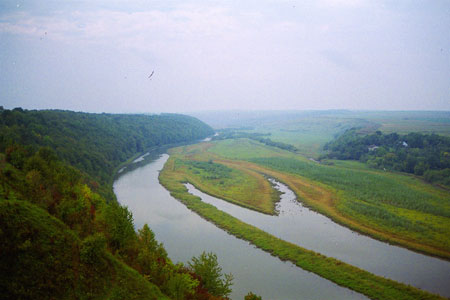
“Crossing the Zbruch” has also been translated as “Crossing the River Zbrucz”, and this is a good place to start when considering what exactly we can get out of the text. The river Zbruch is a river running in Western Ukraine, which at the time of Red Army Cavalry was part of Poland. For that reason, the title can use either the Polish name of the river, or the Russian/Ukrainian one. I chose the second primarily because that’s what is the case in the original, but in using the former option the sense of strangeness, of non-Russianness is heightened. Either way, we are moving, just as the Russians of the story do, from a familiar world into an alien one, both ideologically and culturally. Poland was a democratic country in the 1920s, and Western Ukraine contains a large number of Jews and Catholics compared to the East.

A Picture of the River Zbruch
The River Zbruch looking particularly mysterious and misty. Crossing this river brings the Soviets and their worldviews into a challenging conflict with the outside world.

The image of the river as a border has a long history. The Styx comes to mind, and the images of death as the army crosses, such as the dead horses, give this suggestion a particular resonance here. A river marks a division, and divisions are central to Red Army Cavalry as a whole. Partially they are cultural divides – between the old world and its culture as seen predominantly in the Jewish characters, and the new world of the Cossacks – but there are also divides between night and day, fathers and mothers, and plenty more besides. Entering the water also denotes baptism, made more obvious by the full immersion of one of the soldiers (who then curses the Virgin Mary in a reversal of the sacredness of the baptismal act).

Ambiguous Descriptions

What we have is a profane crossing and an entry into the unknown. The suggestion that the Soviets were in some way fulfilling a divine (or at the very least a fated – think Marx’s conception of historical development) role would have been welcomed in Soviet literature in the 1920s, but Babel undermines the purity of the idea by corrupting the Christian image. This is one of the ways he works in Red Army Cavalry – no image or idea is permitted without being questioned simultaneously. Indeed, one of the main metaphors employed by Babel in the collection is the idea of “rot” or “mould” – at the centre of what we take to be perfect there is a hostile element. Another example of this in “Crossing the Zbruch” is the standards. Though they suggest military glory, they are tainted by their association with the horrific decapitated head of the sunset.

A Divided Narrator: Misanthropy and Poetry

The narrator, who we learn later on in Red Army Cavalry is called Liutov, also seems uncertain in his role. We go from the formal language of the first paragraph into the lyrical second paragraph, and then back round again. The poetic beauty of the landscape is stressed, but then suddenly its horrors come to the fore. I take the image of the decapitated head to mean that it is impossible, even as you try to focus on the splendour of the natural world, to escape the violence and destruction that penetrates it throughout – even the sky is not safe from blood.

Liutov arrives at the flat he has been allocated, and here the main action of the story takes place. After the dream-time earlier on, where each paragraph seems to move at breakneck speed, here everything slows down. The formal tone returns as Liutov repeats the phrase “I’ve been allocated”, as if he is trying to take responsibility away from himself for what he sees and place it onto his superiors. The initial scene is dreadful, with only the image of the moon providing a sense that there is a better world out there. A sense of misanthropy permeates Liutov’s interactions with the Jewish inhabitants of the flat. He calls them “apes”, and when he describes the pregnant woman she seems to be a body before she is a human being – the image of her picking up her own body from the floor is particularly repellent.

Heroisms

But even here there is a tension. Liutov’s hostility towards the Jews is countered by his own Jewish nature, which is at this point only hinted at through his recognition of the Passover crockery. And even as he tries to order the other inhabitants of the flat around, his own nightmare makes his apparent confidence and leadership seem very much feigned, or at least unnatural. This is then contrasted with the pregnant woman. Her very nature as someone pregnant in a warzone suggests great suffering and asks questions about how she became so.

But instead of cowering away, she alone of the other characters is given a voice to express herself, and she does so at length and with self-assurance. This is in sharp contrast to Liutov’s speech, which is marked by the uncertainty of its closing ellipsis. She has experienced death – just as we, seeing her father’s body described in grim and unusual detail, have too – and for that she has come out stronger. Her own speech ends the story, and the message of her words is ultimately a positive one, stressing love for her father and also praise for his heroism. Her language, memorialising her father’s memory within the story, defends heroic death over cowardice, even as his body repels us. In Red Army Cavalry we see time and again that language’s power is transformative, giving us protection against the hostile world around us. It makes the woman herself a hero.

Conclusion

“Crossing the Zbruch” is the first story in Red Army Cavalry and it sets out immediately the main thematic currents of the collection. The nature of suffering and heroism in the form of the woman and her father, the dehumanising effects of war through the other Jews, and also the counterpoint to all this, the glorious loud and boisterous army – all are given attention. Key to the representation of all of these themes is Babel’s lack of judgement about them – the story, after all, ends with the woman’s words, not the narrator’s. As a result, the reader is forced to consider for themselves what they think the woman’s speech means – should we find it uplifting, or is horror a more sensible reaction? It is also important that images are always undermined, such as the connection between beauty and blood, and water and a distorted baptism.

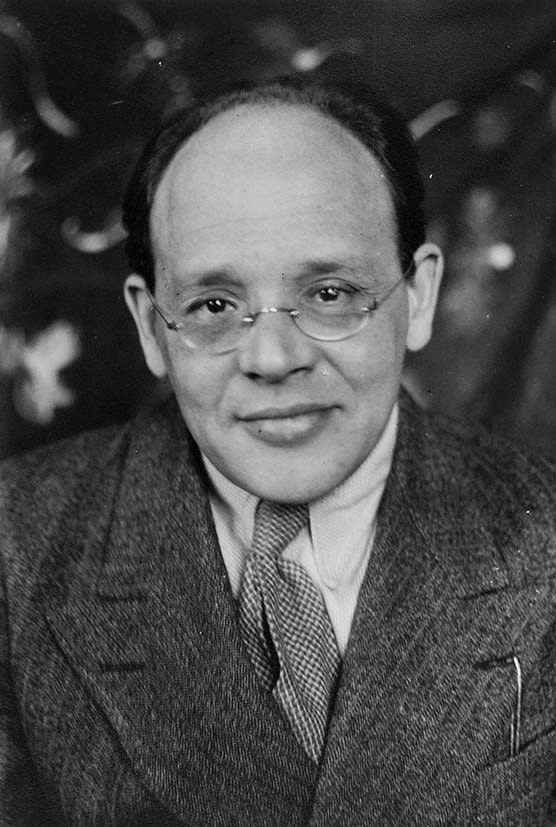
Picture of Babel after being arrested.
Ultimately Babel was murdered by the Soviet secret police for his writing. But Red Army Cavalry comes from an earlier time, and portrays an uncertain if cautiously hopeful attitude towards the Revolution.

Nothing is ever clear in Babel’s world. The challenge of finding one’s way in the new and tragically flawed ideology of the Soviet Union makes itself manifest in the competing impulses of the narrator of Red Army Cavalry and the collection’s world. But these confusions were present in Babel’s own life too, and his death in 1940 at the hands of the secret police. We have to make up our own minds here instead of going in with our opinions already iron-cast, and repeated readings of Red Army Cavalry only give more food for thought. The intelligence of Babel’s stories, and their ambiguity, is something that I hope is captured here in my translation of this one.

For my essay on Red Army Cavalry as a whole, look here. Another Soviet writer whose attitude towards the new state was dangerously ambiguous is Andrei Platonov – see my review of his Soul and Other Stories here. For more Russian translations, check out my work on a Tolstoy short story here, or some Leskov here.

Picture of the Zbruch by Arts at pl.wikipedia [CC BY-SA 3.0 (http://creativecommons.org/licenses/by-sa/3.0/)]; Picture of Babel after being arrested is in the public domain.

Red Army Cavalry by Isaac Babel – The Birth of a Revolutionary Culture

Introduction: Isaac Babel and his World

War is a time and space of rapid change, of unrivalled destruction but also of the creation and recreation that comes in its aftermath. In 1920 a young Russian Jew of Odessa accompanied the newly formed armies of the Soviet Union in their war against Poland. Isaac Babel, friend of Maxim Gorky, had been given the role of war correspondent through his connections to the other writer. Gorky saw Babel as needing first-hand experience to improve the quality of his writing. What came out of this time was a cycle of short stories, Red Army Cavalry (Konarmiia), a work of both beauty and brutality. Babel’s stories, published separately in the 1920s before being collected together, showed a new revolutionary world being born, and all the ambiguity it brought.

Picture of Isaac Babel
Isaac Babel (1894-1940) was one of the greatest writers of the early Soviet period. But like so many, he fell foul of the state and was murdered by the secret police.

Babel’s work in these stories is of vital importance to understanding Soviet culture because it contains within itself the two trends that were later to become dominant in it. The first, in works lying outside of state approval and published only clandestinely if at all, criticised the state for claiming to have made a utopia reality when in practice they had made a lie leading only to suffering; the second view, however, which developed into Socialist Realism, was one that promoted the Russian Revolution as creating a new and better world, which saw bright hopes and the chances to put them into action, and a new type of heroism, accessible to all.

Babel expressed both views with equal care, and for this his collection is important in a world where views of the Soviet Union tend to be particularly black-or-white. But these stories are also intellectually challenging, extremely well-written, and even at times entertaining. And that doesn’t hurt them either.

War and its Representation: The Structure of Red Army Cavalry

The great Russian war novel is the aptly titled War and Peace by Leo Tolstoy. At well over a thousand pages it conveys the totality of war by describing everything Tolstoy can think of that is connected with it. Red Army Cavalry is, by contrast, tiny. The stories themselves are only ever a few pages long, and the whole book in my edition is just over 150 pages. But Babel was a huge admirer of Tolstoy’s, and his influence is felt here, albeit in a sublimated form. Whereas Tolstoy aimed to write about everything, Babel felt that such an option was no longer open to him.

Faced with the horrors of war, and aware of his own limits as a witness, he wrote what comes together to be a fragmented novel rather than a short story collection. Characters recur, and each story chronologically follows on from the previous one, as the cheerful optimism of the Soviets is replaced by concern as they begin to suffer losses, and then fear as they are routed. The narrator is a man called Liutov, which was Babel’s own name while he was working as the war correspondent, and the two men share other similarities that blur together fact and fiction. Babel made liberal use of his diary for creating these stories, so that it is hard to tell where Babel ends and Liutov begins.

Picture of Red Army soldiers during the Polish War
Kalinin and Trotsky survey Red Army troops. The Polish War was an early failure of the new state, but at least it led to Red Army Cavalry.

By showing an individual’s challenges during war, Babel can focus on the reality of suffering rather than the abstractions that are inevitable when trying to paint a bigger picture. Liutov encounters many of those affected by the warring armies, from Catholic priests in Poland to smaller Jewish communities in modern-day Belarus, to simple peasant men and women. Even as an individual there is enough material to bear witness to. And whenever Babel wants to expand beyond this, he uses the Russian technique known as skaz, similar to free indirect speech it is where characters speak in language and styles clearly distinct from those of the author. For example, in the story “The Letter”, a young boy, Kurdyukov, dictates a letter for his mother to Liutov. In this letter he reveals the extent of his own, personal suffering in the war in a way that Liutov himself cannot express on his own, except by recording it.

The Prose of Sympathy and Absent Judgements

What Babel takes from Tolstoy is not a grandiose scale so much as a sense of sympathy towards the world and its inhabitants, and a lack of direct judgement on them. He takes time to focus on the specific and concrete casualties of the fighting in ways that challenge the simplistic metanarratives of war being merely a tug-of-war between opponents.

The first story, “Crossing the River Zbruch”, is representative of this. It begins “The leader of the Sixth Division reported that Novograd-Volynsk was taken today at dawn” (translations mine unless otherwise noted) – the tone here is formal and military. But by the second paragraph there is a shift from the objective towards a more subjective and poetic appraisal of the landscape: “Fields of purple poppies are blossoming around us, the midday wind plays in the yellowy rye, and on the horizon the buckwheat rises like the wall of a far-off monastery”. Death, hidden in official reports under mere statistics, breaks through in images like that of the orange sun that “rides across the sky like a decapitated head”.

After these lyrical moments the bulk of the narrative takes place. Liutov enters Novograd and is billeted in a flat with a pregnant woman and three Jewish men, one of whom lies on the floor and sleeps. The descriptions of the poverty within the flat indicate more than the narrator’s frustration ever could what suffering the war has caused. The floors are covered with human faeces, while the pregnant woman’s very existence demands the question – by whom is she pregnant? The lack of judgement by Liutov encourages the reader to search the text carefully to determine for themselves what it might indicate.

Picture of Anton Chekhov
Anton Chekhov (1860-1904) wrote stories which, like Babel’s in Red Army Cavalry, often end without conclusions. Through a lack of judgement both writers encourage their readers to come to their own conclusions about the meaning of a story.

This lack of narratorial judgement, analogous to the conclusions of Chekhov’s stories, is made even more glaring by the often horrific contents of the stories. At the end of “Crossing the River Zbruch” Liutov discovers that the pregnant woman’s father, who he’d thought was sleeping, is actually dead. “His throat was torn, his face was chopped in half, and dark blue blood lay in his beard, like a piece of lead.” This description of death is so different to numb cliché that we are forced to pay attention to it, to face the terrifying reality of war. Its presence invites judgement but does not make it. The pregnant woman has the final words of the story, explaining how the Poles killed him because it was “necessary”. Through his sacrifice she finds “a terrible strength” and pride in spite of her surroundings. Only in “terrible” is there hinted Liutov’s own reaction.

Culture Wars: Introduction

The world after the Russian Revolution was changing culturally just as much as it was technologically and politically. In some sense the change was a positive one, bringing art and artistic production down to the masses from being almost exclusively the domain of Russian elites in the capitals. Religion was dismissed as mere delusion, “the opium of the people” in Marx’s eyes, and science and rational thought were promoted as the alternative. Social progress on a grand scale, by the most forward thinking (in its own eyes) states ever to have existed, was the order of the day. A new type of hope was born, one that saw agency transferred from a mysterious God above into the hands of individual men and women.

But with all that there comes a question – what have we lost? Red Army Cavalry presents the two sides of progress’s coin through the times of the day, contrasting in daytime stories those who represent the new world with the characters of stories set at night, who represent an old world that, however irrevocably tainted it is, still retains something intangible and important for human life.

Culture Wars: Night and the Old Culture

Who are the people who lose out in the face of the Revolution and its consequences? Primarily it is the Jewish characters and the Catholics. Liutov himself is like Babel, Jewish, and thus as vulnerable as these others to the cataclysmic changes taking place. Within the stories the great representative of the old culture is the Jew, Gedali, from the story of the same name. In his story Liutov, late on the evening of the Sabbath goes out among the Jews of his current village, looking at the little stalls where they sell items like chalk to survive. The destitution makes him think of Dickens, and it is such appeals to an established literary tradition that reveal how culturally bound up in it he is.

Eventually he comes across the bench of an old man, Gedali, and sits down for a chat. At Gedali’s bench there are dead butterflies and other objects of fragile beauty. Yet with these symbols of culture there is a sense of its own negation, when Liutov smells “decay” underneath it all. Gedali is an educated man, and the two discuss the Revolution together. Gedali says he loves music and the Sabbath, but the Revolution tells him he doesn’t know what he loves. He talks of the violence the Revolution has led to and comments “The Revolution is the good act of good people. But good people don’t kill. That means that the Revolution makes people bad”. For all the idealism motivating the Soviets in this period, Gedali is concerned with its failed reality of it. In pain he famously asks Liutov “Which is the revolution and which the counterrevolution?”

Liutov has no real answers. His responses are pithy, thoughtless, as though plucked from a handbook on propaganda. “The Revolution has to shoot, Gedali… for it is the Revolution”, he says, obviously playing a different role to the one he plays in other stories. Soon enough he gets tired of his self-deception and asks where he can get some Jewish food and tea. Then he sets off to take part in the culture he was born into and cannot, though he tries to pretend otherwise with Gedali, escape. Meanwhile, Gedali goes to pray.

Closed indoor spaces, filled with decay and dust – these are the domains of the old culture. It is dying, certainly. There is a distinct sense of infertility in them, an absence of women and children. But for Liutov, and for other intellectual characters, it is absolutely necessary. It is a part of themselves that they cannot afford to lose.

Culture Wars: Sunshine and Cossacks in Red Army Cavalry

Loud and proud and colourful, the Cossacks stand out among the characters encountered during the day. They do not think beyond the present – neither past regrets nor the future hopes hold sway with them. They embody upheaval and joyous chaos. One of them is Dyakov, who was formerly a circus manager, and now is a soldier. He is described as “red-faced, silver-whiskered, in a black cloak”, as though he had never abandoned his roots as a performer. Colour is one way that the day-people stand out compared to the dull souls of the night. In their huge, larger-than-life poses and actions they are more than a little reminiscent of epic heroes.

Picture of a Cossack
Cossacks like this one pictured here were traditionally free of some of the administrative burden of the Russian state in exchange for aiding it militarily. They played key roles in the subjugation of the Caucasus, for example.

They have no culture of the sort comprehensible to Liutov. Instead, they sing and one of them, Afonka Bida, at one point tries drunkenly playing a church organ in an act clearly symbolic of the usurpation of old culture’s place by the new. Their vitality is overpowering, and is usually marked by connecting them to their horses. They are often shown having sex or seducing women, demonstrating the sheer magnetic attractiveness of their love of life. They do not care whether they live or die, so long as in every moment they are living to the full. In this sense, it is hard not to wish to be like them and similarly free from restraint and concern.

But their freedom and joy is only one side of them. They come at a cost – their violence and unpredictability sets them outside of society and civilization, and for all their heroism, such as squadron commander Trunov valiantly facing down a biplane on his own like a modern day Don Quixote, under its surface Red Army Cavalry questions what good these people will be able to do once the war has ended and it is time to settle down. These are people who, thinking back to Gedali’s words, have made the Revolution and made it in their own image. The violence with which they carry out the Revolution also shapes it, and hardly in a good way.

Liutov’s Among his Comrades

Liutov, of course, fits in uneasily among his comrades. Two stories illustrate this. “My First Goose” is one of Babel’s most famous ones. In it Liutov is first mocked by the Cossacks for his appearance – like Babel he wears glasses – and for his education. Savitskii, one of them, suggests he defile a woman in order to be respected by the rest of them. Instead, he goes and kills a chicken with a sword in a mockery of his own hopes of being heroic before giving it to its owner, an old woman, to cook. The woman repeatedly says that she wants to kill herself, but Liutov ignores her, returning to his comrades. Now that he has killed he is accepted by them and addressed as “mate”. But the act leaves him feeling guilty, and during the night he dreams of the blood he has spilled.

The second story, “The Death of Dolgushov”, further demonstrates his failure to fit in. Dolgushov, a Cossack, is injured and dying from his wounds, which are described just as horribly as they are in “Crossing the River Zburch”. He asks Liutov to kill him, so that the Poles don’t find him alive to torture him further. But Liutov, filled with compassion and the humanist values common among the night characters, is unable to do it – his care paralyses him. Instead Afonka Bida has to finish the other Cossack’s life. As he does so, he says to Liutov: “Get away or I’ll kill you! You, four eyes, pity our brother like a cat does a mouse”. Values that seem so effective in books fail Liutov the moment he has to put them into practice. By the end of the story he has lost the little all the respect he had gained.

Pan Apolek and the New Culture

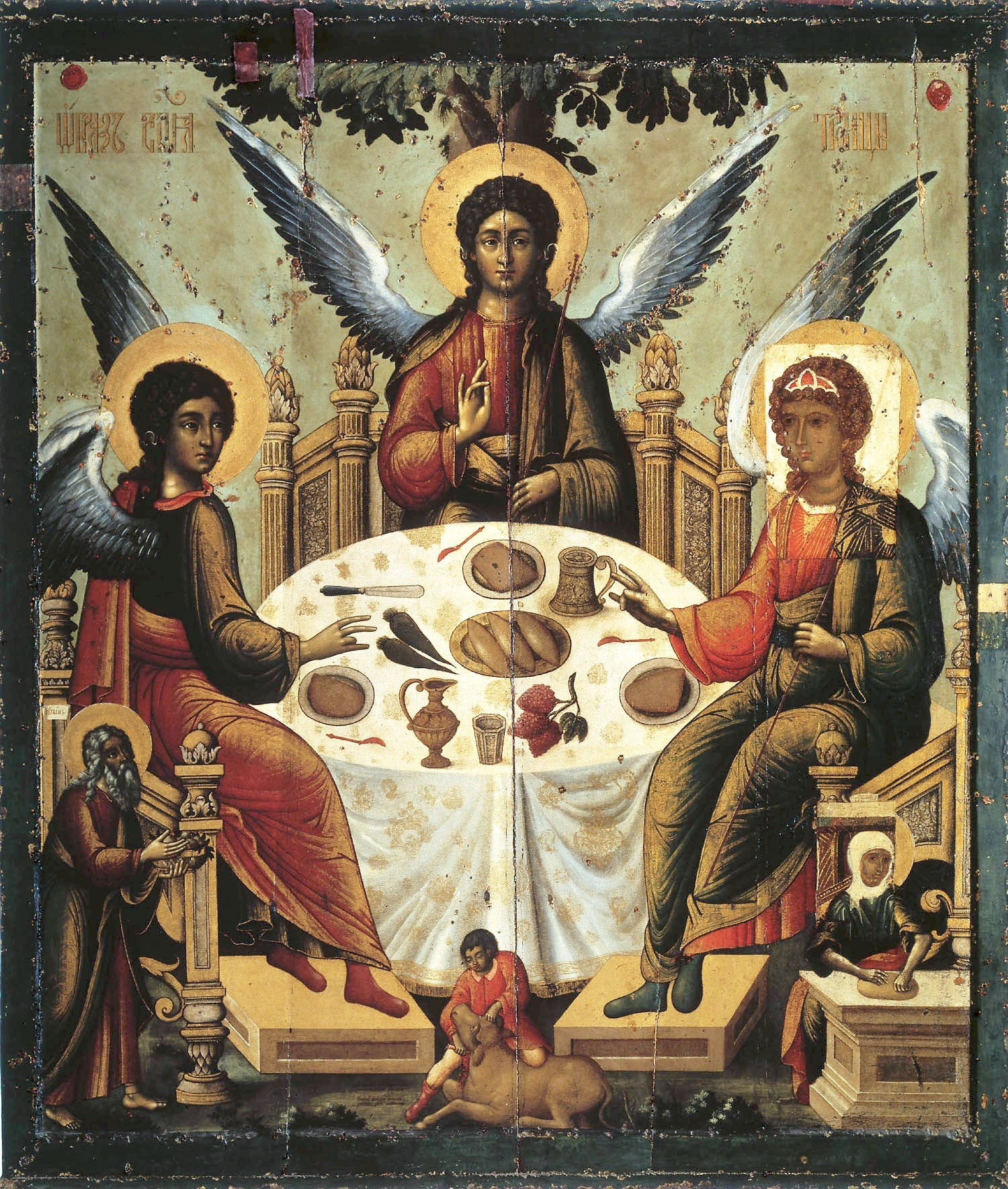
Pan Apolek is not a Cossack, but rather a Polish Catholic. Yet where the Cossacks fail to create a new culture out of the ruins of the old, Pan Apolek in his own story shows one way in which a potential synthesis of the old culture and the new is possible. Liutov first meets him at night, while he is having tea with his hostess, and then learns about his work. Apolek is a church painter, but with a difference. Traditionally such a person would go around trying to paint according to the strict rules of icon paintings, deviating as little as possible from an original image. Yet though Apolek paints Mary Magdalene, Jesus, and other Biblical figures, they are not modelled on originals but rather on local people. In this way he mixes high, religious culture with the low culture of normal people.

Picture of an icon
Icons like the one pictured here generally were painted according to strict rules. Pan Apolek instead democratises the whole concept of an icon, bringing poor peasants into a religious culture that otherwise would seem distant and cold to them.

Though he is branded a heretic, he continues painting. His subjects include such blasphemous pairings as having Mary Magdalene be Yelka, a local woman who has given birth to many illegitimate children. What Apolek does is bring the high culture of religion down into the world, and in doing so make it more accessible. More than the revolutionaries themselves, he brings their ideals into practice.

Conclusion: Writing and Synthesis

Liutov is not the only writer here. In the story “Evening” several other war correspondents are depicted, each of them marked by illnesses, with Liutov’s being his poor sight. In vain one of them tries to convince a girl in the camp to sleep with him, but she instead joins one of the Cossack soldiers, unattracted by statistics and historical figures. But the very existence of Red Army Cavalry is itself an argument about writing and its use. As much as the Cossacks see little need for fancy metaphors and complex structures, Babel still gives them to us. He gives us stories of night and day, evening and the dawn. By writing about so many people, those who suffer from the Revolution and those who are made great by it, he encourages us to consider it not as good or evil, but as a mixture of the two.

A great deal of culture was lost, a strain of humanism of value seemingly disappeared, but in its place was a new world, filled with hopes and vitality. Liutov may be scrawny and bespectacled, but in writing this book Babel has made him, too, a kind of hero, because through these stories their emerges an attempt to shape the direction of cultural production within the Soviet Union, and with it an entire society, for the better. Like Pan Apolek, in the stories of Red Army Cavalry Babel syntheses two worlds, instead of letting one or the other get the better of him. If only his work had found more success instead of repression, perhaps the Soviet Union could have been a different place.

For more early Soviet literature filled with ambiguity, have a look at my piece on Andrei Platonov’s Soul and Other Stories. Alternatively, if you’d rather look at the dark side of the Soviet system directly, Varlam Shalamov writes wonderfully and grimly about the Gulag here.

picture of Babel, picture of Kalinin and Trotsky surveying the Red Army, picture of Chekhov, picture of a Cossack, and picture of an icon are all in the public domain