A Catholic novel: Graham Greene’s The Power and the Glory – a Review

I am nominally a Catholic. Once a month as a boy my mother dragged me to a town hall a few villages away, and to a gathering of perhaps ten people a priest would do the honours. It was neither the glamorous service nor glittering golden church that most people associate with Catholicism. In the back room there was a table for table football, but as I was the only child there, I never had a chance to play. I remember little about the services themselves. All that I do remember was a feeling of unease when it came time to make my confession to the man behind the window who apparently had become God. I do not think I’ve made one since.

I remember being surprised at boarding school when I was told I was a Catholic. I’d had no idea. This meant that I had to go to Mass, rather than the normal Sunday services. And dutifully I went, at least at first. Later, I found someone to sign the attendance sheet for me and stayed in bed. I realise now that however nominal that upbringing seems to be, it’s not something I should take for granted. Once, almost everyone knew the major stories of the bible and bits and pieces from the gospels. This is certainly no longer the case – that common reference network is fading rapidly from collective memory.

A photograph of Graham Greene, author of The Power and the Glory
Graham Greene, our author. Famous for spy novels like Our Man in Havana, and more overtly Catholic novels like Brighton Rock.

The Power and the Glory is a novel by Graham Greene, a writer who was Catholic himself. It’s the second of his that I’ve read after Brighton Rock, which I read back at school. Greene didn’t like the appellation “Catholic Novelist”, but The Power and the Glory centres on a Catholic priest in Mexico and it’s easy to see where people might have got the idea from.

Introduction to the Plot

The Power and the Glory centres on an unnamed “Whisky Priest”, Greene’s own coinage for a priest who is rather poor at following the rules of his profession. He neglects his fish on Fridays, has a penchant for brandy, and has fathered a child. In the unnamed state of Mexico where the story is set, the governor has introduced a policy of extreme religious repression and priests are either forced to marry and surrender their profession or else face the firing line. We first meet the priest waiting for a boat that will take him away, but he is forced to abandon the plan when a child comes, informing him that their mother is dying. The priest grumblingly decides to go to help, even though he knows he will miss the boat. “I am meant to miss it”, he says to an Englishman he meets at the port.

Without the boat, the priest’s options are limited. He travels around the small state, trying both to perform his duty and to escape. He’s vacillates between the two options. Especially once the antagonist of The Power and the Glory, the lieutenant, introduces a system where hostages are taken from each village, who are then shot whenever it turns out that they did not give the priest up when he passed through, it becomes hard to justify his decision to put others at risk. But the priest, for all his failings of character, knows that it is his duty to stay. He thinks:

“When he was gone it would be as if God in all this space between the sea and the mountains ceased to exist. Wasn’t it his duty to stay, even if they despised him, even if they were murdered for his sake? Even if they were corrupted by his example?”

Suspense and Action

He stays, but with each day the challenge for him grows. At first villages welcome him, but by the time he reaches his old parish people have already turned cold. They receive him out of their own sense of duty, much more than from love. True to his talents elsewhere as a novelist of spies and action, Greene in The Power and Glory is able to write a story that has an excellent feeling of suspense and action throughout. I never knew what was going to happen next, but at the same time I constantly had the feeling that a net was closing in around our hero. Compared to many classics, The Power and the Glory is an exciting read as well as an interesting one.

A few times stand out, such as when the priest and a mestizo go together towards the priest’s home. The priest is certain the mestizo is only travelling with him to turn him in for sizeable monetary reward. But Greene keeps us guessing and unable to decide whether to believe the mestizo’s avowed Catholic faith or the priest’s own senses. Another time was when the police reached the priest’s parish just after he’d finished mass, leaving no time to flee. All of the townsfolk were lined up and asked to give away the priest, but their resolve holds and a hostage is taken instead.

A photo showing some Mexicans
The Power and the Glory is based on historical religious persecution in Mexico

The Lieutenant – an Enemy of the Faith

One thing I enjoyed about The Power and the Glory was the way Greene presents the lieutenant, the priest’s antagonist. Although he does introduce the hostage system, in other ways he and the priest are not so different. Both are driven by faith. But the lieutenant wants to destroy religious belief, so that people concentrate on the here and now. He wants to give people “the right to be happy in any way they chose”, but his methods ultimately end up restricting people.

All the same, he is himself a noble, virtuous man. He thinks it would be a triumph if he “could show [him]self superior on any point – whether of courage, truthfulness, justice”. He turns his hatred into a motivation for building up his character. Judging on that basis alone, the lieutenant is the better man. After a stint in prison the lieutenant even gives the (unrecognised) priest some money, forcing the latter to admit with astonishment “You’re a good man”. Unfortunately the ends the lieutenant aims for are undermined by the means he uses to try to reach them.

The Religious Mode – what makes The Power and the Glory a Catholic novel?

Every chapter in The Power and the Glory has a vulture somewhere in it. The great birds, hovering and waiting for us to die, are an obvious analogy for God, watching and waiting too. In The Power and the Glory we are presented with a world where God may well exist, and without bearing that in mind it is difficult to understand the priest’s actions. People die because of him – good people. He himself is no moral exemplar, so how can this be correct? Because he is a priest, and his duty is to help people to salvation of their souls, not their bodies. As the priest says, it doesn’t matter if he’s a coward – “I can put God into a man’s mouth just the same – and I can give him God’s pardon.” If we believe in the salvation of souls, we can accept the avoidable early deaths of bodies.

It is God who, the priest understands, is responsible for his continued survival and lucky escapes. “There was only one reason, surely, which would make Him refuse His peace – if there was any peace – that he could still be of us in saving a soul, his own or another’s”. In The Power and the Glory we are constantly faced with souls, hovering on the edge of damnation, including the priest’s own. However many people may die, so long as a few souls are saved, the sacrifice is worth it. It is a challenging idea for the unreligious, but without it it’s hard to see the priest as anyone other than a fool. I like that Greene focuses on the good of his characters. Images of faces and feet are all traditionally Christian and run through the whole book. They remind us that we’re all made in the image of Christ.

A Few Words on Style and Form

I’m not sure how much I’m a fan of Greene’s writing style. It’s very sparse, careful. The fact that he had a very methodical approach to writing is something you can feel. It gets the job done, no doubt, but I think it sometimes left emotions not as hard hitting as they ought to have been. And unlike Under the Volcano, another book I read recently which was set in Mexico, I didn’t really have much of a feel for the landscape of The Power and the Glory. There are moments of good imagery, though. For example, from the first chapter: “The vulture moved a little, like the black hand of a clock”.

Greene does make up for this with a good command of form – again, the evidence of careful planning and meticulousness. I liked the way that we are often seeing the priest from other eyes, showing how he changes externally as well as internally as the book progresses. I also liked the number of characters Greene includes. They were not all living and breathing, but they were all relatively fleshed out. The use of symbols and their development also made sense. What more can I say? Everything works as it needed to – the base that bears the story is sturdy enough.

Conclusion

The Power and the Glory is the first book by Graham Greene that I’ve read since I left school. It will not be my last. Although I’m not quite sure what I believe, it’s always important to see a different view of the world, and this is exactly what Greene provides in his novel. Whether the salvation of a single soul is worth more than the deaths of many, I’m not sure, but I’m glad someone is making a case for it. Too often it’s easy to forget the power and glory of the ideas that underpin religions. In The Power and the Glory Greene shows the dignity of faith, but beyond that he also reminds us of the dignity of everyone, whether atheist or faithful, child or adult. And whatever you believe, there’s always value in remembering that.

For more things on God, take a look at my post on rebellion against Him.

Progress and my Discontent – Sally Rooney’s Conversations with Friends

The trouble with going to a university like Cambridge is that I could review the Irish author Sally Rooney’s Conversations with Friends entirely through anecdotes and references to my own friends and acquaintances. Because if there is one thing this book does well above all else it is (re)create a certain type of person, one dominating English faculties the world over. It is funny that this even extends to the cover of my edition of the book. The two girls there look remarkably like an ex-friend of mine, and if you’re anyway connected to that world, you’ll recognize the hair and dress sense too.

A cover of Conversations with Friends shows a drawing of two women
The cover of my edition of Conversations with Friends shows two girls who look weirdly like a girl I was once friends with… It is a girl who populates humanities faculties the world over.

But anecdotes, probably, will not do. Rooney and her work are being praised the world over, a tv-series is in the works, and she’s not even thirty. The question, then, is whether this book is actually any good. At the end of the day, anybody can tape our banal dinnertime conversations, can write down a list of topics that come up again and again. To make a good book it isn’t enough just to capture reality; that reality needs to be transformed such as to give it greater significance. Given the context, it is a balancing act for Rooney. First, she has to show us that our conversations aren’t as significant as we thought, but then that our lives are significant precisely where we don’t expect it. That’s how the material can become truly transformative.

The Plot of Conversations with Friends

Frances is a twenty-one-year-old student in Dublin who wants to write. She’s rather cold and doesn’t have a huge number of friends. Her best friend is Bobbi, who is cool. Bobbi and Frances together perform in poetry readings. At one of these poetry readings they meet Melissa, a well-known journalist, who decides to write about them. At this point the two young women are taken into Melissa’s world, one from a higher class than what Frances is used to. At a party Frances gets to know Nick, Melissa’s husband, and they start sleeping together. But sleeping with someone, especially someone who is married, isn’t always a painless operation. This new relationship ends up straining Frances’ relationship with those around her and revealing an awful lot about herself that she perhaps didn’t want to know.

Thematically, Conversations with Friends does a lot of things. One of the main conflicts is between youthful idealism and aged experience. Melissa and Nick are a lot older than Frances and Bobbi, and their views consequently differ a lot. It’s one thing to talk about destroying capitalism; quite another to, when faced with the richness of its blessings, reject it once again. In the same way, an adulterous relationship is hardly the ideal sort of relationship for plenty of reasons, and Frances needs to move away from an intellectual view of the world to have any chance of enjoying it. Purity localised within yourself might work, but demanding the world be equally perfect is a recipe for disaster.

Form and Structure

Conversations with Friends reminds me, to a large extent, of Brett Easton Ellis’s debut novel, Less than Zero. Both of them take a youthful cast of characters and reveal the fault lines within their world. Both of them also share a similar pared-down style that lacks direct relation of the characters’ emotions. Conversations with Friends uses first-person narration, but Frances hides her personal views from the reader just as much as she does from herself, so that the narration feels strangely empty. There is also no use of speech marks. It is easy enough to tell who is talking and when, but it gives the effect of isolating Frances. It feels like we are only inside her mind, and that connections with other people are fleeting. I like it; it suits the idea of the novel. We may talk and talk yet never reach each other’s hearts.

Culture and Politics

A bit like Less than Zero, Conversations with Friends is full of those little cultural markers which, like spices, give their representation of reality its relevance and accuracy. Films, books, television series, and even games are all named in logical places. Rooney wants to show the kind of shared cultural milieu that her characters inhabit, and she succeeds. But the naming doesn’t just extend to cultural artefacts – the politics of Conversations with Friends is also decidedly locked into its time. News of Syria, police brutality, and so on all tie the work into the late 2010s. The characters are all politically radical, as we humanities students often are. Communism, anarchism, Gilles Deleuze, modern feminism – a common frame of political reference is established early on.

Mark Fisher, whose work I’ve written on here, certainly seems relevant in the context of the characters’ depressions and despairs under late capitalism. While I read, I also thought a lot about David Foster Wallace’s essay on Dostoevsky, where he talks about the kind of literature we need to write to be able to move on from the pervasive ironic unseriousness of the present day. Rooney doesn’t really move beyond this irony, but instead of attacking the systematic problems and inequalities in the modern state her targets seem to be the very people who think they are most against the state. I mean, it’s in the title – conversations dominate. And conversations achieve very little in this book. The characters, concerned as they are with everything that is wrong with the world, don’t seem interested in doing anything about it.

What really matters

In the end Conversations with Friends is about conversations with friends, and the friends and time the characters spend with them become far more important than their political views. It is not that politics divides us – the characters in the book are all on the same page – but rather that politics doesn’t bring the characters together. But speaking, revealing the truth of one’s heart – this does have the capacity to create a lasting and valuable relationship between people. Ultimately, the contents of the relationships prove less important than the relationships themselves. Frances goes from a position of apparently great academic knowledge but limited self-knowledge to almost the exact opposite, and she’s all the happier for it.

What I liked about Conversations with Friends

I ended up liking quite a few things about Conversations with Friends. For one, the book not only accurately portrays its chosen milieu, it also successfully satirises it. The book is, I mean, quite funny. “I said hello, though what I meant was: I hope you haven’t found out about me sleeping with your husband”. Frances’s deadpan style makes humour easy. The humour is biting and modern, and indeed another thing I liked about the book was that it really felt it was written in this century. Rooney successfully incorporates instant messaging, emails, and games in a way that is natural, instead of pretending they don’t exist.

I also liked the way that the people were also modern. Their concerns were relevant, their attitudes – this kind of particular middle-class guilt – are attitudes that really haven’t existed for very long. Rooney gives voice not to a people who have been traditionally voiceless, but to part of a new generation that hasn’t yet been given voice. In this sense, the book is pretty unique for the moment. Even the older characters were well done. I felt Frances’s fear when she went home to her alcoholic father’s house, and recognised my own father in the language of Frances’s.

The way that Rooney emphasises the importance of human connections and relationships is also something I liked. It’s not an original message, but it’s one we all need to hear. The incorporation of a little spiritual subplot wasn’t half-bad either, though Frances’ modern sensibility prevents this from going very far. As is, I suppose, reasonable enough. The book, for all its dryness – Conversations with Friends definitely came from under Raymond Carver’s Overcoat, so to speak – also has a few moments of surprising beauty, like this one: “Buses ran past like boxes of light, carrying faces in the windows”. It’s sometimes easy to forget that the world in front of us is capable of that.

What I didn’t like

“you have to do more than say you’re anti things” – Bobbi. Rooney is a self-professed Marxist, and Conversations with Friends does well in showing the complicated structures that reinforce unequal hierarchies, oppress certain groups, and all of that stuff. Frances claims she doesn’t want to work, but through connections ends up making quite a bit of money on a writing project. Everything works out in the end, but only because she is already, comparatively, well-placed within the late stage capital environment of modern Ireland as a middle-class white woman.

A photo of Sally Rooney
Sally Rooney was born in 1991, so unlike the people I’m usually reading she’s neither dead nor old. But she’s pretty cool! Photo by Alberto Cristofari—Contrasto/Redux via TIME

But though I appreciated the politics of Conversations with Friends, I felt the ultimate message was somewhat off. Rooney has written that she doesn’t know how to incorporate her politics into her work, and I completely understand the difficulty. But to reject politics in favour of the present moment and relationships (as the book’s conclusion seems to suggest) feels a lot like rejecting political action altogether. Talk accomplishes nothing, and since nobody seems serious about acting the overall feeling is that we may as well ignore the glaring problems we’re facing and hope they’ll just go away. I don’t really like the pessimism of this undertone; it sits uneasily with me.

Conclusion

I think I must have liked Conversations with Friends, though, in the end. After all, it’s a debut novel. It’s funny, at times even beautiful, and it hits close to home. The challenge of conveying radical politics within a novel while still making the novel compelling is a great one, and Rooney’s in no way to blame for not entirely succeeding. In fact, I’m glad that she at the very least reveals the degree of hypocrisy that underlines a lot of our virtue signalling these days. The value of our friendships and relationships transcends the political interests of the present moment, and hopefully always will. But we shouldn’t give up on change altogether. There is a compromise out there. The challenge of the great novels to come is finding it.

I’m looking forward to reading Normal People soon.

Update: I read it!

Kazuo Ishiguro’s The Remains of the Day – A Review

My friend James almost always brings up The Remains of the Day when we talk about literature. He’s a huge fan of Kazuo Ishiguro and rather thought the book would be my cup of tea. Well, at long last I’ve read the book and I have to admit that he was right. The Remains of the Day is a fascinating and sad story about the passage of time, and what we can salvage from the end of our lives, when it might seem that so much has passed us by. At my advanced age of twenty-two, it seems perfectly suited for me.

A photo of Kazuo Ishiguro in 2017
Kazuo Ishiguro is among the most celebrated authors writing in the UK now, and The Remains of the Day is probably his most famous work. He won the Nobel Prize in 2017. Photo by Frankie Fouganthin (CC BY-SA 4.0)

It tells the story of the life of a butler, Mr Stevens, who works in a great English country house, Darlington Hall, and the challenges he faces when he comes to look back on his past in his twilight years. For me the book is particularly poignant because of my own experience of the topics dealt within it, as my grandmother lives in a castle that is still served by staff (though they don’t live on site). Although it was published in 1989 and the action takes place in 1956, the questions and concerns of The Remains of the Day all remain vital and interesting now, and stretch far beyond the secret world of British upper classes it takes as its setting.

The Story

Mr Stevens, the aging butler of Darlington Hall, is presented with his greatest challenge yet when his new American employer suggests he goes for a car ride to get himself out of the house. The American is returning for a few weeks to his homeland and thinks that Stevens could use the fresh air. Stevens himself is not altogether for the idea, but he manages to convince himself. He has begun to notice certain mistakes in the running of the household, which he attributes to a lack of staff employed since Lord Darlington, the original owner, left. The trip can therefore be justified as a business one, for Stevens has recently received a letter from a former housekeeper, Miss Kenton, and he decides to end his trip with a visit to her home, hoping she will rejoin the household.

Though Stevens travels around the countryside, most of The Remains of the Day comes as memories Stevens reconsiders with age. The central tension in Remains of the Day becomes the one between what Stevens is willing to admit to himself, and what out of fear, or cowardice, or pride, he does not accept. The decline and death of his own father, the rise of fascism, and Stevens’ relations with Miss Kenton and Lord Darlington are all replayed to the reader, but only by looking at what is not said can we appreciate their significance.

The Style and Form of The Remains of the Day

The first-person narration of The Remains of the Day is deceptively simple. It certainly is deceptive. Stevens has been plucked perfectly from his upper-class milieu, and like the English upper-class, he rarely says what he means. It is only thanks to the vividness of his memories, in particular through remembered dialogue, that we come to see what is really going on in the past and in the present. To take one example, when Stevens finds that his father has died, he decides to continue working at an important international conference instead of taking a break. In the narration there is no hint that Stevens is suffering. The recollection is explained by Stevens as the apotheosis of his career as a butler, his ultimate mastery of dignity. But then we reach the dialogue of his waiting, and his desired impression comes under attack.

“Stevens, are you all right?”

“Yes, sir. Perfectly.”

“You look as though you’re crying.” I laughed and taking out a handkerchief, quickly wiped my face.

“I’m very sorry, sir. The strains of a hard day.”

Without narration to interrupt and reinterpret this exchange, we are presented with a direct glimpse of Stevens’ pain. But when the chapter ends he tries once more to control our interpretation of the recollection. “For all its sad associations, whenever I recall that evening today, I find I do so with a large sense of triumph.” Language is a tool for the expression of our selves, for communication. But it can just as easily be used for creating a false picture of the world. Stevens, as if to save himself from the truth of that day, from the rejection of his father on his death bed, uses language to justify his cold-heartedness, to turn defeat into a kind of triumph. “You see, I know my father would have wishes me to carry on just now.” He says. But we aren’t so easily fooled.

Love and Deceit

The language of The Remains of the Day, instead of revealing, conceals the true nature of what has passed. Through verbiage and excessive reasoning Stevens tries to fool himself and the reader. Miss Kenton and her attempts to flirt with Stevens are concealed in the narration by Stevens’ refusal to ascribe any kind of romantic meaning to them. They appear only as words, and we need to divine their hidden depths for ourselves. Likewise, Stevens structures his trip to Miss Kenton – he initially “forgets” that she’s married and now Mrs Benn – as a business trip. But to the reader it’s clear enough that there is a romantic interest involved too.

We would be forgiven for thinking that Stevens does not realise what he is doing, that he is deceiving himself. The truth is much more sad. As the book draws to a close we find Stevens, at the end of the day, sitting by the beach. As he talks with a stranger it becomes clear that he knows that his life has been filled with mistakes, and that he’s trying desperately to find something good in all of them. The ending at least gives us a glimmer of hope, that though Stevens is old, still he might yet change, and find joy in what remains to him, and what has passed him by.

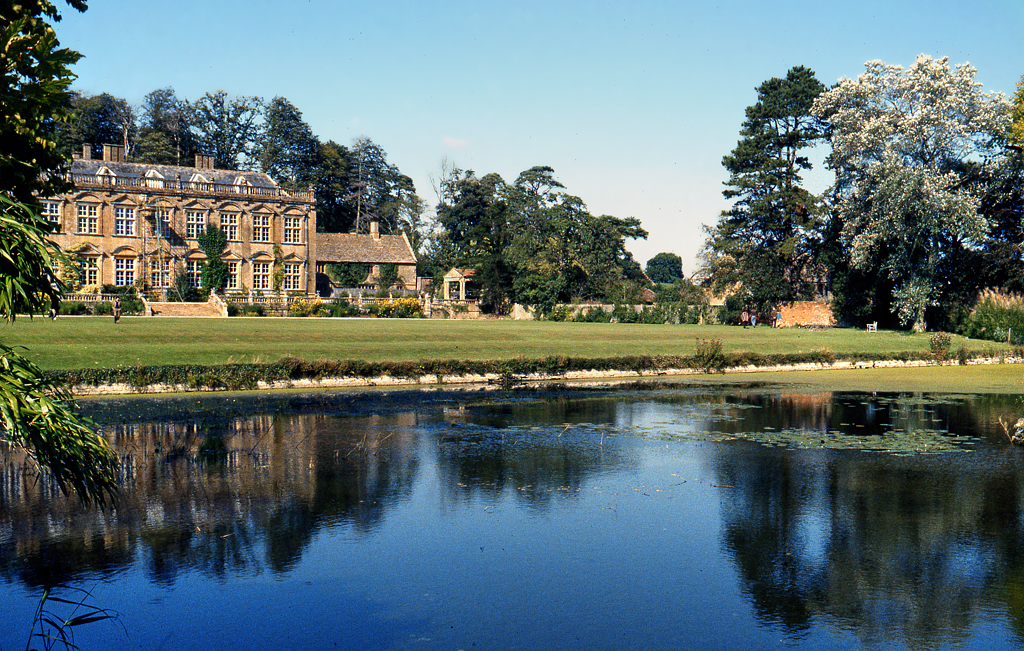
A photo of an English country house, located in front of a pond
An English country house, of the sort that Mr Stevens spends his life in. But is there something missing in that world and that life? photo by Ronald Searle (CC BY-SA 2.0)

The Great Butler and the Stiff Upper Lip

We English tend not to talk about our feelings, not even among friends. Stevens, one can tell, has never confided a thing to anybody. But though he has survived, The Remains of the Day raises the question of how far our English taciturnity is cause for celebration. Stevens is preoccupied with the question of “what is a great butler”, a question he explores with almost academic rigour. A large part of it is the stiff upper lip, what Stevens terms dignity. It is the decision never to let one’s feelings either show or affect one’s work. Stevens, in his own description of himself, asks the reader to consider whether he himself might be such a butler. For anybody who has been reading, his loyalty to Lord Darlington and his dignity in the face of his father’s death, are all compelling evidence of his “greatness”.

But Stevens never asks us at what cost this greatness has been attained. The Remains of the Day doesn’t just undermine Stevens’ narrative, it also challenges the very values he holds dear. What we see, even if he doesn’t, is that being a great butler attacks Stevens’ own humanity. The coldness, the dedication to one’s craft that Stevens practices, dehumanises him. He is unable to “banter”, to engage in the world and form non-professional relationships with other people. He suffers especially harshly at the hands of his new American employer, Mr Farraday, for whom bantering is second nature.

But Stevens also doesn’t appreciate beauty either. Although he claims to live in one of the most magical places in England, he rarely shows it. Whether the portraits on the wall or silver on the table, the beauty in objects simply becomes part of Stevens’ job – he must keep things clean and shiny. It is only extremely infrequently, and often in the company of Miss Kenton, that Stevens’ narration is forced, for a moment, to acknowledge the beauty of the sun setting or the grounds of the manor house. Stevens is a great butler, but for all that he’s lost his friends, he’s failed to find love, and he cannot even appreciate the beauty that lies in front of him. Truth be told, the cost of his excellence seems far too high.

The Glory of the Past

The common note in The Remains of the Day, even before Stevens’ personal failures are explored, is melancholy and decline. It is the gentle melancholy of Chekhov, seeing the world fall apart but not wishing to intervene. In Ishiguro’s novel this decline is primarily a decline of the worldview and corresponding world of the British upper class. We see this immediately at the novel’s beginning. Stevens has remained in the employ of the owners of Darlington Hall, but the Darlingtons are nowhere to be seen. Instead, an outsider – and American – has arrived, and most of the original staff have left. Americans in The Remains of the Day represent the future. Lord Darlington, dismayed by the cruel treatment of Germany with the Treaty of Versailles, hopes to change the treaty’s contents.

To this end, Darlington eventually organises a conference with major figures from all across Europe. The goal is to pressure their respective governments to ease the reparations demanded of Germany. It is a noble goal, motivated by honour and respect for the First World War’s defeated countries. However, it is a goal from a bygone age. An American in attendance stands and gives a speech where he attacks all of the Europeans for their foolish idealism, for their useless values and amateurism. What they need to succeed is cunning and professionalism. He is booed out of the conference. But Hitler succeeds precisely because he knew how to manipulate this idealism, how to appeal to the values of the British classes when encouraging appeasement. In the end, of course, the American is proved right.

The glorious past that Stevens loves is revealed, over the course of The Remains of the Day, to be ultimately an illusion. Darlington, with his conference a failure, dabbles in fascism and dies a disgrace. Antisemitism leads to the unfair dismissal of two maids, and Stevens – ever the professional – refuses even to comfort them as he removes them from their positions. Stevens is also a terrible elitist and snob without ever, really, justifying these views. As easy as it is to begin The Remains of the Day with a sense of nostalgia, it’s equally hard not to end the book with a feeling of disappointment in the world that lies behind us. Of course, there was a lot to value in some of the old British values – but there was far more that really isn’t worth our time.

Conclusion

It was interesting as I read The Remains of the Day to see how my attitude to Stevens himself changed. At first I thought of him as something of a buffoon. But then as time went on that bemusement morphed into sadness, disappointment, and finally a kind of anger. I was angry that Stevens was so obsessed about being a great butler that he came to neglect everything else in the world. I was angry that he spends the entire book lying to himself. It’s only at the very end that there’s a brief hint that all that might change. But I was glad of it, just as I was glad for Stevens. In truth, I pitied him.

the original cover of The Remains of the Day, showing a pocket watch on a black background
The book’s original cover.

The Remains of the Day is a lovely book. Its story of decline hidden under the façade of class glory rings true with my own experience of the declining position of old elites. It is wonderfully written – it is not beautiful, but it is the perfect blend of form and content. Stevens feels incredibly real, and his self-delusion seems strikingly real too. There are many of us who go through life trying to tell ourselves that our own course is the right one. But sooner or later the time comes when we must face the truth of our error. Even if we are already in the remains of our own days upon this earth, there is still great value in taking the step towards self-knowledge. In that sense, for all its melancholy, the message of The Remains of the Day remains an uplifting one. Check it out.

For more delicate treatment of the past, consider Salvatore Satta’s tale of the coming of modernity in Sardinia, The Day of Judgement, reviewed here; and also Svetlana Alexievich’s Second-hand Time, presenting in an interview format the collapse of the Soviet Union from those who experienced it, reviewed here.