Style of the Times: Sally Rooney’s Normal People

I wrote about the Irish writer Sally Rooney’s first novel, Conversations with Friends, at the beginning of this year. I didn’t think it was a bad book, but I wasn’t sure how far I agreed with the treatment of politics in it, either. I’ve now finished Rooney’s second novel, Normal People, which has recently been made into a TV show, and as before I’m left pretty unsure of what to make of it. Rooney has a huge amount of talent, especially for realistic dialogue and the little details that make life in the 2010s life in the 2010s. But I’m struggling to escape the feeling that all these little details don’t actually add up to a cohesive, worthwhile, package. I’m a little worried that Normal People is like a grand façade on an ancient building that a tourist excitedly enters, only to discover there is nothing inside but dust.

Below I want to explain what I mean.

The title card of the first episode of the Normal People TV show. I haven’t seen it, but I’d like to.

Hero and Heroine: Connell and Marianne

The first thing I noticed about Normal People is that we have two point-of-view characters, rather than the one of Conversations with Friends. Connell is from a working-class background – he doesn’t know his father, and his mother works as a cleaner at the house of the second character, Marianne. Marianne is our heroine, the daughter of two solicitors, and at the top of the socio-economic pecking order in the small village in West Ireland where Marianne and Connell go to school. The arrangement is effective, in part because Rooney draws both characters well.

By having a working class main character Normal People positions itself to go for a class critique, but by also having Marianne as a representative of a higher class Rooney can dispel, within the context of the novel, certain extreme views that a class-based viewpoint can tend to create. For example, Normal People takes pains to show that though Marianne has money, that doesn’t mean her life is smooth sailing – and not only because she’s weird and non-conforming, but also because of factors outside of her control, like a violent brother and a violent (though dead) father.

The plot of Normal People takes us from the end of the two’s time at school, right up to the end of their time at university. During that time they grow as people, both apart and together. At times they are in a relationship, at times they are barely speaking. Normal People is the record of their changing fortunes, faced with a world that doesn’t see either of them as normal, and of their attempts to fit in.

Class and Language

Normal People is a book that has a lot to say about language in it, just as Conversations with Friends did. Rooney has a great ear for subtleties. On the first page, when we meet Connell, who is the best in their group at school, his simple comment that “Marianne did pretty good too” is already enough to tell us that he is not on the same level in terms of class, however clever they both are. Another time where language serves to convey differences in position is when the two of them discuss how Marianne’s mother employs Connell’s mother, Lorraine. “I don’t think she pays Lorraine very well”, says Marianne. “No, she pays her fuck all”. Even though the language is simple, Rooney does a good job of showing resentment within it. Marianne is only intellectually affected by her mother’s decisions; Connell is directly, financially, touched by them.

Unlike Conversations with Friends, Normal People does not rely too much on text messages and emails. I think this is a good decision, not because we don’t communicate by them, but because they do reduce the immediacy of things that can be done in person – after all, it’s the job of the author to arrange their characters in such a way as to make the story lively. Too much veracity is always a bad thing. At one point, Connell thinks of writing a novel using only emails, but dismisses the idea. He decides, quite rightly, that it would probably be too gimmicky. Unfortunately we don’t use emails like we once used letters, and trying to pretend otherwise would be foolish.
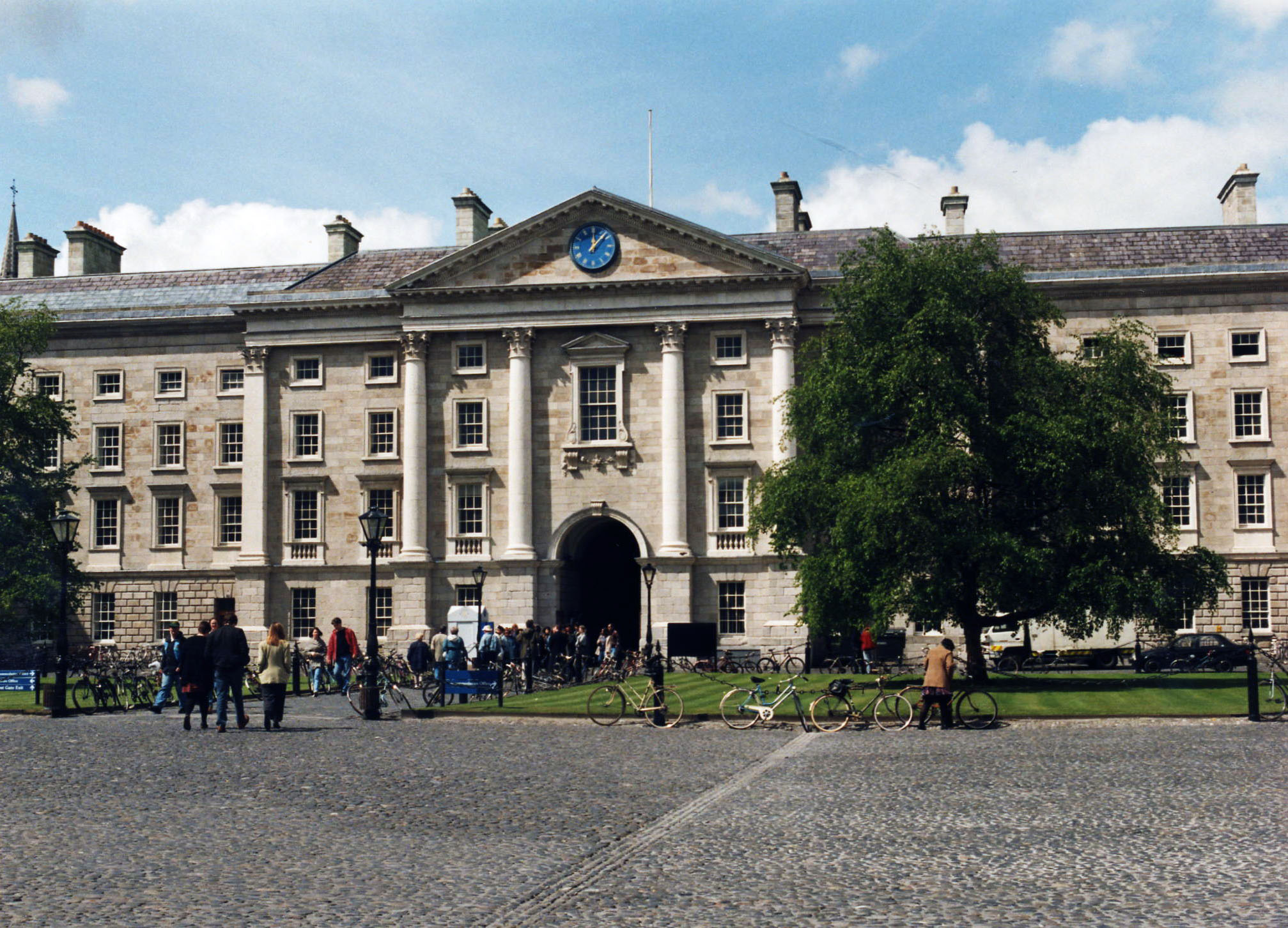
Trinity College in Dublin, the most prestigious Irish university. It is not Connell’s natural environment, not by a long shot. But for Marianne, who’s been brought up in a world of privilege, it’s easy for her to fit in.

The Lads and Sex

Normal People also has a lot to say about sex and violence. That’s probably good, because these things are rather important. One thing I liked is that Rooney does a lot to show that men can suffer from sexual violence, just as women can. Early on in Normal People we hear about a schoolteacher, Ms Neary, who has kept Connell back after class a few times, and once touched his tie. Connell feels he can’t talk about it with anybody, though, because “people will think he’s trying to brag”. Just as women often can’t talk about sexual assault for fear of their concerns being dismissed, so too can men struggle to be taken seriously. Connell later meets Ms Neary again, after his graduation, and she attempts to sleep with him. He manages to escape, but it’s a horrific moment in part because we know how alone he is against her.

Connell is part of a group of lads his home village and it puts him in an awkward position, especially once he starts meeting more intellectual people in Dublin, where he and Marianne both go to university. At one point a friend is showing him naked photos of someone they both know without her consent. Connell is forced into awkward silence, and when he doesn’t actively approve of his friend’s action the friend attacks him for it, saying “you’ve gotten awfully fucking gay about things lately”. Among the lads, of course, a misogynistic view of women is normal, and the response shows how much pressure someone like Connell is under to accept it – the alternative is being cast out. But again, things are more complicated than “boys just being boys”, because the same lad, Rob, dies later on, an apparent suicide.

There’s no defending his sexism. But as with elsewhere in Normal People we’re reminded that our outward expressions can be ways of hiding uncomfortable truths about ourselves. I remember at school when it occasionally turned out that the people who insulted others as “gay” the most were those most in danger of turning out to be so themselves. I don’t mean to say that Rob was gay. Rather, even though he wasn’t portrayed a good person, all the same we should understand that he would have had depths we could not see.

Violence and Humiliation

Rooney’s pared-down, numb style is particularly good at dealing with violence, thanks to its directness. When Marianne’s brother grabs her arm, there are no flowery metaphors to get in the way of the sheer unpleasantness of it. But far worse than that is when Marianne is assaulted at a bar:

Let me get you a drink, the man says. What are you having?

No, thanks, says Marianne.

The man slips an arm around her shoulders then.

The man eventually squeezes her breast, in public, without her permission. It’s a difficult thing to read because its easy to imagine how it was.

Marianne eventually ends up in a few equally nasty relationships involving humiliating sexual acts. The first is to a rich kid, Jamie. I was pretty disappointed with him, because unlike Connell and Marianne, Rooney’s depiction of the confident right-wing student was cliché-packed and depthless. Concerning a man who robs Connell, Jamie says:

“He was probably stealing to buy drugs, by the way, that’s what most of them do”.

Being someone from the same background as Jamie, I know plenty of people like him. I know plenty of people who think like him, but I do not know anyone who talks like him. In a sea of well-written characters, he sticks out as being a lazy caricature.

Marianne also has a sexual relationship with a Swede while she is on an exchange. This relationship also involves him humiliating her. Both of these relationships are the result of Marianne’s idea that she is a bad person and therefore deserves to be punished. Her sex with Connell is notable because of the absence, at least from his end, of any desire for violence to be involved. He is aware of the violence he, as a man, could wield against her, but the thought causes him disquiet rather than pleasure.

Time and Style

Normal People has a particular structure to it, one that I came to appreciate by the time that I finished it. Each chapter begins with a moment setting the stage for some event. For example, Connell is interrailing and he knows he will soon arrive at the place where Marianne is staying. Then we go back into the past, for a kind of flashback. These flashbacks all serve to add tension to the moments, to set the stakes. For example, why is their meeting likely to be awkward?

I think this has a particular advantage over a linear chronology. In a linear chronology we usually either have to wait to get to moments of great friction, or we end up reading a work that strains credulity through a clockwork use of scenes of scandal. Generally, our lives just go on smoothly. Representing this in a realistic novel would lead to a boring work. But by jumping forwards to a moment of crisis and then going back to explain why it is significant Rooney makes every chapter feel useful.

Except, this only goes so far. Eventually you’re left feeling dislocated, like you’re being jerked backwards and forwards on a broken-down train that’s trying to start running again. Rooney’s habit of making the time between chapters huge is also not something I like. It’s hard to feel close to people when we meet them once every three months. And it also kind of undermines the overall structure of the book. A bit like Nabokov’s Pnin, each chapter of Normal People feels more like a short story than a continuation of a novel. Connell’s relationship with Marianne is also so on-off that it feels you could mess up the order of the chapters and still get a workable novel out of it at the end. Perhaps that says something about modern relationships, though. Whatever the case, it doesn’t make for a particularly enjoyable reading experience.

And that’s in part why I haven’t spoken about the plot, because there isn’t really one. Connell dates a nice girl called Helen, but they fall out and break up (off the page! – another thing I don’t like is that Rooney uses time-skips as an alternative to actually writing important moments). Connell gets depression. Marianne goes to Sweden. Marianne has a fight with Jamie. Connell writes a story. People drink a lot and sleep around. The order isn’t quite right, but who cares. It’s not particularly interesting, and the fact of the time shifts means even serious topics, like depression, feel kind of temporary, something that we’ll forget about as soon as the chapter ends.

Conclusion

I get it. Normal People is the zeitgeist. People who are cool and I like have recommended me the same books that Rooney namedrops here – The Golden Notebook, The Fire Next Time. Normal People is also extremely difficult to criticise because a lot of the criticisms can be reasonably attributed not to the book, but to us. The jerky sense of time, the vapid content, all reflect a kind of modern condition. The book wouldn’t be popular if this hadn’t touched a real nerve.

But we need to move beyond describing our problems, and think about their solutions. Rooney’s language, I think, gets in the way of finding them. It is singularly incompatible with any kind of higher feeling. When we’re told, in a football match that,

Everyone screamed, even Marianne, and Karen threw her arm around Marianne’s waist and squeezed it. They were cheering together, they had seen something magical which had dissolved the ordinary social relations between them.

This is telling, not showing. The style doesn’t leave “showing” as a possibility. Real emotion, from the characters rather than us, demands either longform or dialogue. Rooney’s dialogue is fantastic, but not every experience can be spoken. Some can only be felt. The style is extremely limiting in this regard.

In the end, I suppose I liked Normal People, just like I suppose I liked Conversations with Friends. But I was left wanting something more. People need something more. I hope one day Sally Rooney will write a novel which will provide just that.
The Life of a Sculpture: Roderick Hudson by Henry James

Henry James is one of those authors who it is far more enjoyable to think about reading than actually to read. His reputation precedes him. He is perhaps the greatest sentence writer in the history of the English language. His novels are subtle explorations of the differences between the Old World and the New, and filled with moral murkiness. Who is not attracted by such a description? For anyone interested in writing, how can you justify not studying the sentences of a master?

When you actually read Henry James, though, it’s another story entirely. His sentences are long, and they are certainly complex. In a way, they are terribly beautiful too. But I cannot get pleasure out of reading them. In the same way, his stories, with their endless subtleties, often seem to be missing a soul to be subtle about. There are few writers who so successfully send my gaze away from the page and out towards the window.

A sculpture of a man looking at the ground
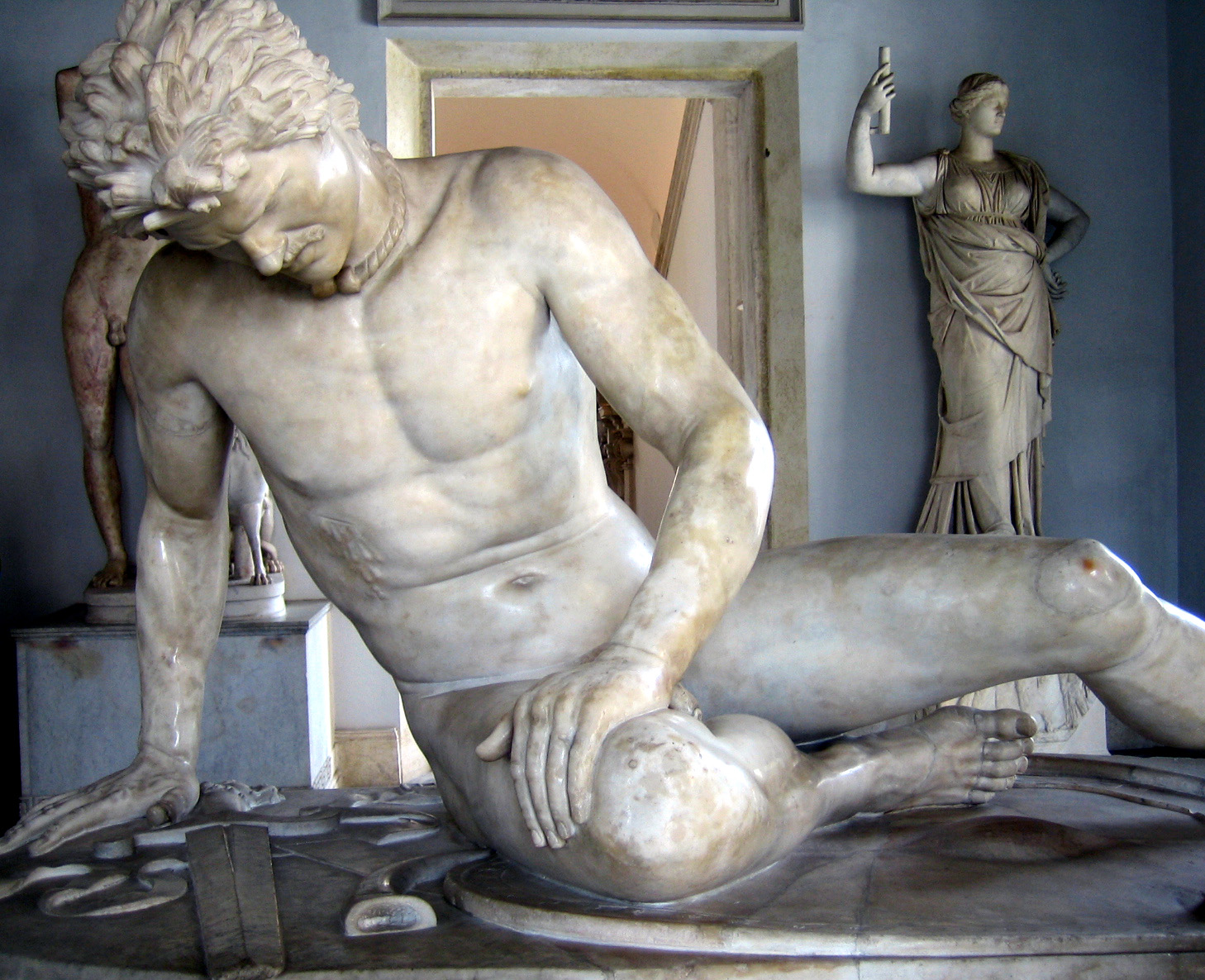
The Dying Gaul, one of the many sculptures that Roderick encounters during his time in Rome. Capitoline Museums / CC BY

Roderick Hudson is the story of a talented, perhaps even genius, American sculptor, the eponymous Hudson, who is taken to Europe by a wealthy patron, Rowland Mallet, to learn from the masters of that continent and their legacies. But Europe, specifically Rome, teaches young Roderick far more than simply how to sculpt brilliantly. In Europe Roderick encounters Christina Light, a young woman of great vitality and changeability, who makes a vivid contrast to the dreary Puritans of Roderick’s New England homeland. Roderick has left in America a fiancée, Mary Garland. Can there really be a danger in his acquaintance with Miss Light?

Roderick Hudson, Genius?

The character of Roderick Hudson is presented through the eyes of his friend Rowland. Though Roderick Hudson uses a narrator, he hangs behind Rowland’s eyes for the course of the novel. Where he comes in is to warn us of events to come, something which happens with some regularity. From early in the book we have a sense of coming tragedy, but what exactly will happen is left only as vague hints about future tears.

Roderick is a young man when we meet him. He is training to work in the legal profession, something one character wittily describes as “reading law, at the rate of a page a day”. The work is not for him. Rowland, who is not old himself and has plenty of money, decides, after seeing an example of Roderick’s work, to take him under his wing and go to Europe. His mother and cousin (soon, fiancée) are at first sceptical, but Rowland assures them that Roderick has real talent, and eventually they relent.

He does have real talent, and we are repeatedly told he is “genius”. But unfortunately, being a genius is not quite enough to be a great sculptor. What one also needs is discipline and hard work. Roderick, perhaps, is capable of these things. But Roderick Hudson is the record of his drifting away from them as other pleasures and other desires occlude his passion for work. For Roderick is a young man from a boring, Puritanical, New England world. It is a far cry from Rome, from unrestraint and luxury and excitement. Rowland worries, as he takes Roderick away, that perhaps he is making a mistake. The world they leave behind is one of “kindness, comfort, safety, the warning voice of duty, the perfect hush of temptation”. The one they enter turns out to be anything but.

Rowland and his Responsibility

Rowland is not a particularly forceful character. He has more money than he has ideas, and no talent whatsoever, which forces him to look to Roderick for anything like success or achievement in this world. Instead of trying to get a job, he goes to a place – Europe – where it does not matter whether he has a job or not. He falls in love with Roderick’s fiancée but spends the novel trying to prevent Roderick and Mary from breaking their engagement. He takes care of Roderick, but more financially than morally. Rowland seems to have an instinctive fear of involvement, of danger, of conflict. So he watches Roderick’s decline without stopping it. It is hard not to dislike him for this, for his unwillingness to get either his own life in order, or that of Roderick. I certainly was ambivalent towards him.

Unless you are Emily Dickinson, it is hard to be a great artist without some degree of experience, of mobility. Rowland is right to take Roderick away, to give him a chance. But he is wrong to think that Europe can only offer positive developments. At the end of the first chapter in Europe, Roderick declares he wants to go off on his own, and Rowland, who bankrolls everything, lets him. The next time we meet our hero, he’s already gravely in debt. “Experience” turns out to be women and gambling. “I possess an almost unlimited susceptibility to the influence of a beautiful woman,” Roderick declares. Rowland, who forgives his protégé everything, does not admit to himself the danger of the words. Instead, he thinks that Roderick’s engagement to his cousin, Mary Garland, is a sufficient guarantee of good behaviour. How wrong he is.

The Coloseum painted.
The Colosseum, and Rome in general, form the backdrop of Roderick Hudson. Europe is dangerous, but also alluring to young Roderick. Unfortunately he is unable to resist its charms.

Christina Light

Christina Light is the woman who provides the danger at the heart of Roderick Hudson. She is an American, but has lived her twenty years of life on the Continent. Compared to the Puritans that Roderick leaves behind, Christina is a breath of fresh air. But even Roderick perceives, at least vaguely, that she might prove a problem. If “Beauty is immoral”, he says upon first seeing her, echoing the views of his family back home, then Christina is “the incarnation of evil”. He does not seem to realise that in the words of the New Englanders there may be more than just a grain of truth.

Christina is extremely beautiful, but capricious. Her mother tries to control her, with partial success, and Christina makes use of scandal and flirtation as her one source of freedom. Roderick appeals to her, and they begin a long will-they-or-won’t-they that runs the length of Roderick Hudson. Roderick thinks of the young woman as his Muse, but it doesn’t take long for his feelings of jealousy and frustration to turn his Muse into the opposite, and for his inspiration’s flow to run dry. Christina’s mother is obsessed with finding a rich prince for her daughter, and Roderick is neither of noble blood nor in possession of a positive balance at the bank. But he is unable to see the impossibility of the situation, or that in some way Christina might be using him for her own ends. Alas, his love leaves him blind to the truth.

A Backdrop of Stability: the Artists and Puritans of Roderick Hudson

Roderick and Christina have stormy emotions but also a great deal of vitality. Roderick Hudson, however, by its end seems to pronounce judgement on their style of living, and that judgement is not a positive one. In our search for positive characters we must look at the Puritans of the novel, and the artists of Rowland’s circle. Mary Garland, Roderick’s fiancée, is the main representative of the former group. She is intelligent, which we see by her constant reading and questioning, and she is also natural and unaffected in style. This is in contrast to Christina, who is always described as playing a role or being “dramatic”. Mary is honest too, which leaves her less vulnerable to her imagination. She faces the world, instead of trying to flee it like her fiancé.

Of the artists, a group made of Rowland’s friends in Rome, Sam Singleton stands out as a heroic figure. He is a painter of small talent, but of hard work. We know that he does not produce masterpieces, but whenever we see him, he is training, learning, and active. Instead of waiting idly for inspiration to come as does Roderick, Singleton goes out to hone his skills to be ready for it when it does. Roderick describes him as “a watch that never runs down. If one listens hard one hears you always – tic-tic, tic-tic.” We know that if Roderick had even an ounce of Singleton’s work ethic, he would be a far better sculptor, but it is also true that he would be a better person.

Singleton is happy, calm, at peace, where Roderick is prey to the full force of his emotions. A great artist is the one who can master their emotions and set them upon the page or marble, not simply experience them. Singleton’s weakness is a lack of torrential emotions, but it is an artistic weakness, not a human one. By the end of Roderick Hudson it was clear which of the two artists I would prefer to be, however boring my choice is.

A photo of Henry James, author of Roderick Hudson
It is somewhat hard to believe that Henry James was in his early thirties when he wrote Roderick Hudson. Like everything he wrote it seems to be written by a serious old man, and is just as exciting.

Conclusion

I confess that by about the half-way point I was rather keen to get Roderick Hudson over and done with. That’s not to say that I didn’t like the book – it was thoroughly okay – but there are many other books, waiting on my shelf, which I’m quite certain I will enjoy more. By the end, reading Roderick Hudson felt like a kind of penance, a sign of deference to the Master, but certainly not an act of love or pleasure. There are various reasons for this, and in his preface James notes several of them for us.

For one, the story is rather too determined by “developments”, events that seem rather forced. The novel’s final section, in Switzerland, is particularly weak in this regard – suddenly all the characters from Rome meet again, and James simply expects us to take this on faith. When James has his characters exclaim “it’s like something in a novel” this is no excuse. In fact, this spoils the impression still further. Rather than drawing our attention to the artificiality of the structure, the structure itself ought to have been altered.

I’m also not a great fan of the characters. Perhaps the women of the late 19th century were all as flighty as Christina Light or as sombre and serious as Mary Garland, but I struggle to believe that people were that simple. Being changeable does not make for a great or believable character. And beauty is not a character trait – it is laziness. The men come off only slightly better, but overall, I found myself disliking most of the characters, which made it hard to care about any of them or their fates. Rowland is ineffectual; Roderick is just an idiot.

Roderick Hudson was James’s first serious novel. Though he revised it later, it still bears the marks of his youth. Whatever technical genius he already displays here – and there are some awe-inspiring sentences – his feeling for people still has a way to go. I had planned to read all of James’s novels one-after-another as a kind of project. Unfortunately, for now I feel like I’d rather just think about reading them all instead.

Footsteps: Adventures of a Romantic Biographer, by Richard Holmes

I was recommended Richard Holmes’s Footsteps: Adventures of a Romantic Biographer by my friend James, who was so impressed by it that his recommendation came to me all in caps. I don’t know what exactly the book is – Holmes himself calls it a “mongrel book” – but it’s awfully good. It is both a work of biography and a work of autobiography, and because of the approach to biography that Holmes takes, it is also a book of travel too. For the “footsteps” of the title are no measly metaphor, but real tracks in the ground. Holmes sees biography not merely as the result of months and years spent absorbed in dusty tomes, but as the fruit of reliving the life of a dead, retracing their steps through the places that had once charmed them so much.

It is this approach that makes Footsteps so special. For what the book really shows is a different way of reading to the usual, casual, one of reading and moving on. Holmes’s approach is marked by a passionate relationship with the author and his or her works. It somehow turns reading from a passive activity into an active one, a tussle with the past. Reading Footsteps, I thought back to the times when I myself had felt great passion for authors – for Tolstoy, Dostoevsky, Woolf, Conrad, Foster Wallace and Pynchon and many others – and I found myself wanting. I had not fanned the flame of my own desire, not dug deep into either the books or their authors, but rather been content to glide upon their surfaces. Most importantly, I had not slowed down. Following an artist’s footsteps forces us to stop, to breathe, to focus and enjoy.

Reading Footsteps, I saw how I should be reading. In some sense, the book and its approach are an antidote to the pressures of our time and our relentless rushing about. That’s why it’s so worth reading.

The Structure of Footsteps

Footsteps is divided into four parts, each taken from a different part of Holmes’s life and detailing his encounter with a different writer. These are: Robert Louis Stevenson, Mary Wollstonecraft, Percy Bysshe Shelley, and finally the French poet Gérard de Nerval. I can’t describe myself as “knowing” any of them well. I had read a story by Stevenson, a few poems by Shelley, and nothing by either Wollstonecraft or Nerval (the latter I’d not even heard of). But a familiarity with the writers is not a prerequisite to enjoying Footsteps, not at all. For Holmes is not offering an appraisal of their works so much as their lives. He uses their works, letters, journals, to emphasise the connection between the writers and the places they’ve been. He anchors each writer in their experience of a moment and place, rather than trying to grab hold of all of them at once.

Mary Wollstonecraft, one of the heroes of Footsteps. Holmes does an excellent job in making us interested in people we’d never been interested in before.

In each section of Footsteps there is a different question obsessing Holmes which he hopes to find the answer to. In Stevenson’s case, for example, Holmes soon discovers that some apparently simple travel writing about a journey in France is much more complex than it first appears. Instead of simply following Stevenson around, Holmes is forced to follow him into his heart, as the writer faces down his doubts about his love for a married American, Fanny Osbourne. In Percy Shelley’s case, Holmes wants to understand the nature of the relationship between the poet and Claire Clairmont, a woman who accompanied him and his wife, Mary, during much of their stay in Italy. In the case of Nerval, by contrast, who went mad and committed suicide, Holmes wants to try to salvage some kind of fact from the mass of fabrication and incoherence left in the poet’s wake.

These questions and focuses keep Footsteps from getting out of hand, as is perfectly possible with biography. (Holmes’s full biography of Percy Shelley is over 800 pages). Even in these comparatively short pieces we are introduced to a bewildering array of characters, and each of them seems deserving of detailed investigation. Holmes, who absolutely has done his research, is always able to approach his problems from multiple angles, through multiple voices. Alongside his physical tramplings, this polyphonic approach makes the past come alive not just as a single reanimated authorial figure, but as a vibrant crowd. It makes us aware of just how interesting even a minor figure is, and how we all fit together into a whole.

Mr Holmes

Holmes is a wonderful guide, though not just because he knows his stuff, is passionate, and writes well. He’s also a great guide because of his own almost confessional tone. Just as in Footsteps he draws us near to the dead men and women, so too does he draw us near to himself. It is this that makes the text feel so alive. When he cracks a puzzle, like why Wollstonecraft describes herself as seeing something from her rooms in Paris that ought to have been geographically impossible (it turned out her rooms were on the roof, not the fashionable front rooms biographers expected her to have been given), we share his joy. Likewise, when he is struck with grief – for example, when finding the bridge that Stevenson had crossed “broken, crumbling, and covered with ivy” and being forced to accept that he cannot follow him forever – we share that too.

His openness about the process of biography is part of this. Before Footsteps I had read very little biography, and never thought seriously about the form, especially in respect to other genres. Holmes readily describes the challenges of producing “the living effect, while remaining true to the dead fact”, and the way that unlike a novelist, “ordinariness… family intimacy, is the very thing that the biography… cannot share or re-create”. He made me aware of the genre’s limitations – for example, a happy couple will be mostly together, and less likely to write journal entries because each member will have each other, leaving a blank space where the biographer was hoping to find material. Then there is “the fatal past subjunctive” (would have), when the biographer is forced to claim what evidence cannot provide. All things I’d never considered.

Past and Present

Holmes’s active role in Footsteps is also important for another reason. It draws together the past and present (or at least, the latter 20th century). Holmes, who was in his twenties during the May 1968 protests in France, uses the experience of Mary Wollstonecraft and Percy Shelley in and after the French Revolution to illustrate his own generation’s ambiguous feelings towards the protests and what they achieved and failed to. Like any historian, Holmes naturally finds connections, and because of his focus on the personal over the general, these connections seem much more fresh and relevant, even to the modern reader, whose hopes for revolution may long have turned to ashes. They make the past immediate, and remind us that reading history is more than a school exercise, but rather gives us a new lens through which to view our own time.

In seeing how writers responded to their times, Holmes also gives us a new way of looking at more modern writers. How does Pynchon’s treatment of the 1960s and disillusionment compare to Shelley’s or Wordsworth’s once the French Revolution was done and dusted? Without biography, it can be hard to ask such questions – we don’t know where to begin.

A photograph of the poet Nerval, one of the subjects of Footsteps
Gérard de Nerval, a French poet whose madness alas was more permanent and fatal than that of Holmes’s. While I found the lack of translations frustrating, Holmes’s own increasingly deranged quest to understand Nerval more than made up for it.

Nerval – journey into madness

The treatment of the character of Gérard de Nerval – for where does the man Gérard Labrunie end and Nerval begin? – was for me the unexpected highlight of Footsteps. The poet himself I can’t say I encountered in any serious way, thanks to Holmes’s unwillingness to translate French quotes. What was interesting, however, was the way that as Holmes pursued Nerval through masses of confusing and often contradictory evidence, he himself began to feel that a normal biography would not be able to make sense of Nerval. Instead, there was an “overflowing of the irrational into the normal forms of biography”, in which Holmes began to believe that it was Tarot cards which held the key to the mystery, rather than books or facts.

In his search to “save” Nerval, Holmes finds himself “slipping further and further into a peculiar and perilous identification with my lunatic subject, as if somehow I could diagnose Nerval by becoming him”. When he finally finishes, he has seven different notebooks in seven different colours, like a kind of talisman. But he has found no answers. He has only succeeded, thankfully only temporarily, in losing himself. It is a final warning for us, that biography, like everything else, must be enjoyed in moderation. We should not seek to become our quarries, only to draw level with them. Otherwise we risk losing our very selves.

Conclusion – Following in Holmes’s Footsteps

I was recently at the museum-house of the poet and painter Max Voloshin, on the coast of the Black Sea. I had not heard of him, but at the museum we were given a detailed tour. He had built the house himself, and it is an insane mass of staircases and doors and secret passageways. One detail I loved was that the windows in Voloshin’s study were arranged so that the sunlight would get in his eyes at exactly midday, as a warning to the artist that it was time to take a break. I left that evening, determined to read him when I had the chance.

The next morning my girlfriend and I decided to visit Voloshin’s grave, which lies above the town at the top of a hill. The tradition is to bring a stone from the seashore up to him, and we both did. The walk took two hours as we fought sweltering heat and tumbling rocks to get to the top. But in the end we made it, and were met with his grave, covered with stones and pebbles, many of them signed with messages for the poet. We both added our own, then we went a little further, and sat down to enjoy the view.

The grave of Max Voloshin
The grave of Max Voloshin, covered with pebbles from the beach below. I was glad to make my own small literary pilgrimage, following in Holmes’s own footsteps.

I was glad, so soon after finishing Footsteps, to put into practice, in a small way, the ideas implicit in Holmes’s book. In climbing that hill I had made my relationship with an author, even one whose works I have not read, personal and active rather than simply passive. As I sat on the hill, looking out over the sea, I stopped, I thought, I breathed. And I felt grateful that I still have plenty of authors to love and plenty of time to love them. Read Footsteps, and then read everything else in the world!