The Life of a Sculpture: Roderick Hudson by Henry James

Henry James is one of those authors who it is far more enjoyable to think about reading than actually to read. His reputation precedes him. He is perhaps the greatest sentence writer in the history of the English language. His novels are subtle explorations of the differences between the Old World and the New, and filled with moral murkiness. Who is not attracted by such a description? For anyone interested in writing, how can you justify not studying the sentences of a master?

When you actually read Henry James, though, it’s another story entirely. His sentences are long, and they are certainly complex. In a way, they are terribly beautiful too. But I cannot get pleasure out of reading them. In the same way, his stories, with their endless subtleties, often seem to be missing a soul to be subtle about. There are few writers who so successfully send my gaze away from the page and out towards the window.
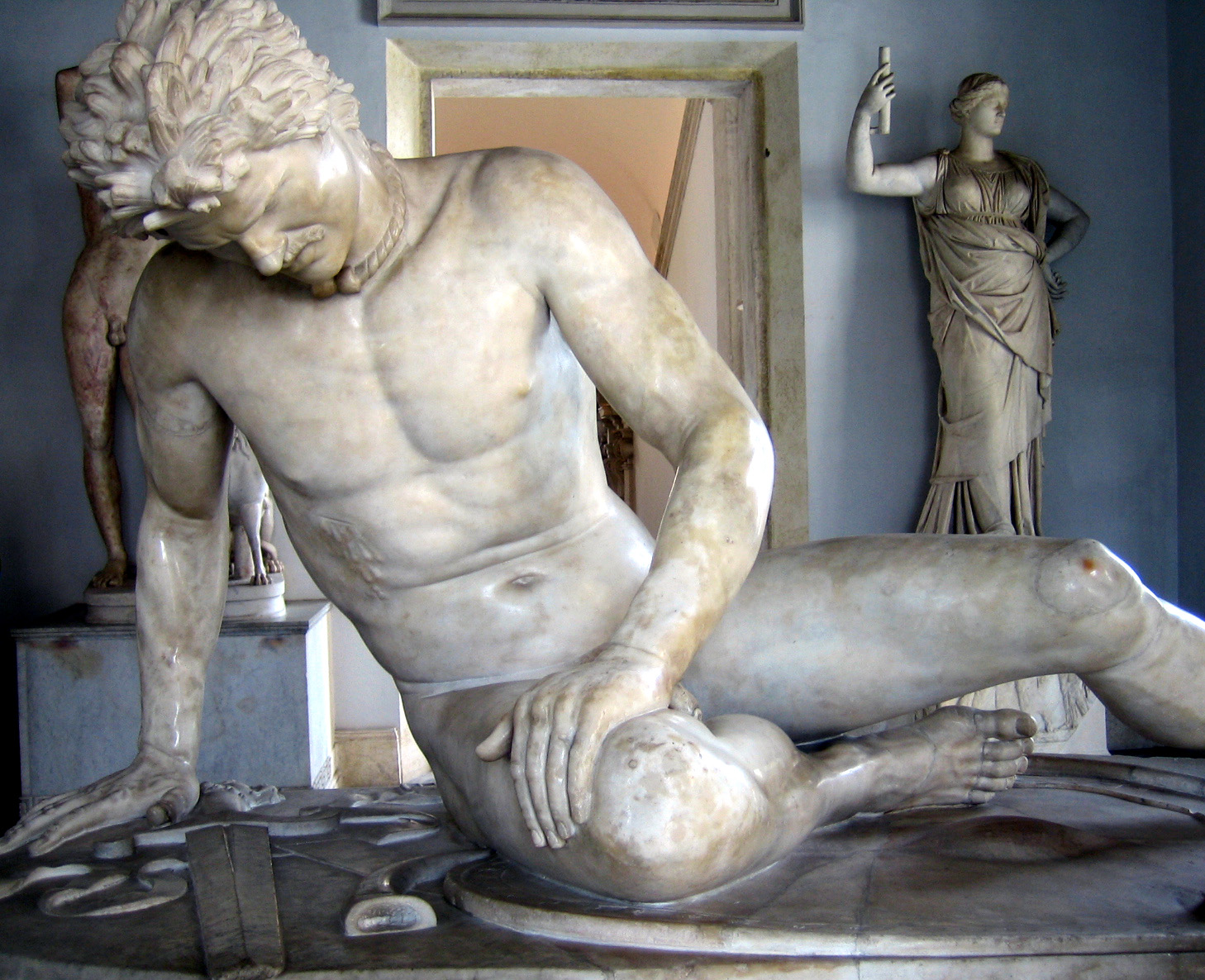
A sculpture of a man looking at the ground
The Dying Gaul, one of the many sculptures that Roderick encounters during his time in Rome. Capitoline Museums / CC BY

Roderick Hudson is the story of a talented, perhaps even genius, American sculptor, the eponymous Hudson, who is taken to Europe by a wealthy patron, Rowland Mallet, to learn from the masters of that continent and their legacies. But Europe, specifically Rome, teaches young Roderick far more than simply how to sculpt brilliantly. In Europe Roderick encounters Christina Light, a young woman of great vitality and changeability, who makes a vivid contrast to the dreary Puritans of Roderick’s New England homeland. Roderick has left in America a fiancée, Mary Garland. Can there really be a danger in his acquaintance with Miss Light?

Roderick Hudson, Genius?

The character of Roderick Hudson is presented through the eyes of his friend Rowland. Though Roderick Hudson uses a narrator, he hangs behind Rowland’s eyes for the course of the novel. Where he comes in is to warn us of events to come, something which happens with some regularity. From early in the book we have a sense of coming tragedy, but what exactly will happen is left only as vague hints about future tears.

Roderick is a young man when we meet him. He is training to work in the legal profession, something one character wittily describes as “reading law, at the rate of a page a day”. The work is not for him. Rowland, who is not old himself and has plenty of money, decides, after seeing an example of Roderick’s work, to take him under his wing and go to Europe. His mother and cousin (soon, fiancée) are at first sceptical, but Rowland assures them that Roderick has real talent, and eventually they relent.

He does have real talent, and we are repeatedly told he is “genius”. But unfortunately, being a genius is not quite enough to be a great sculptor. What one also needs is discipline and hard work. Roderick, perhaps, is capable of these things. But Roderick Hudson is the record of his drifting away from them as other pleasures and other desires occlude his passion for work. For Roderick is a young man from a boring, Puritanical, New England world. It is a far cry from Rome, from unrestraint and luxury and excitement. Rowland worries, as he takes Roderick away, that perhaps he is making a mistake. The world they leave behind is one of “kindness, comfort, safety, the warning voice of duty, the perfect hush of temptation”. The one they enter turns out to be anything but.

Rowland and his Responsibility

Rowland is not a particularly forceful character. He has more money than he has ideas, and no talent whatsoever, which forces him to look to Roderick for anything like success or achievement in this world. Instead of trying to get a job, he goes to a place – Europe – where it does not matter whether he has a job or not. He falls in love with Roderick’s fiancée but spends the novel trying to prevent Roderick and Mary from breaking their engagement. He takes care of Roderick, but more financially than morally. Rowland seems to have an instinctive fear of involvement, of danger, of conflict. So he watches Roderick’s decline without stopping it. It is hard not to dislike him for this, for his unwillingness to get either his own life in order, or that of Roderick. I certainly was ambivalent towards him.

Unless you are Emily Dickinson, it is hard to be a great artist without some degree of experience, of mobility. Rowland is right to take Roderick away, to give him a chance. But he is wrong to think that Europe can only offer positive developments. At the end of the first chapter in Europe, Roderick declares he wants to go off on his own, and Rowland, who bankrolls everything, lets him. The next time we meet our hero, he’s already gravely in debt. “Experience” turns out to be women and gambling. “I possess an almost unlimited susceptibility to the influence of a beautiful woman,” Roderick declares. Rowland, who forgives his protégé everything, does not admit to himself the danger of the words. Instead, he thinks that Roderick’s engagement to his cousin, Mary Garland, is a sufficient guarantee of good behaviour. How wrong he is.

The Coloseum painted.
The Colosseum, and Rome in general, form the backdrop of Roderick Hudson. Europe is dangerous, but also alluring to young Roderick. Unfortunately he is unable to resist its charms.

Christina Light

Christina Light is the woman who provides the danger at the heart of Roderick Hudson. She is an American, but has lived her twenty years of life on the Continent. Compared to the Puritans that Roderick leaves behind, Christina is a breath of fresh air. But even Roderick perceives, at least vaguely, that she might prove a problem. If “Beauty is immoral”, he says upon first seeing her, echoing the views of his family back home, then Christina is “the incarnation of evil”. He does not seem to realise that in the words of the New Englanders there may be more than just a grain of truth.

Christina is extremely beautiful, but capricious. Her mother tries to control her, with partial success, and Christina makes use of scandal and flirtation as her one source of freedom. Roderick appeals to her, and they begin a long will-they-or-won’t-they that runs the length of Roderick Hudson. Roderick thinks of the young woman as his Muse, but it doesn’t take long for his feelings of jealousy and frustration to turn his Muse into the opposite, and for his inspiration’s flow to run dry. Christina’s mother is obsessed with finding a rich prince for her daughter, and Roderick is neither of noble blood nor in possession of a positive balance at the bank. But he is unable to see the impossibility of the situation, or that in some way Christina might be using him for her own ends. Alas, his love leaves him blind to the truth.

A Backdrop of Stability: the Artists and Puritans of Roderick Hudson

Roderick and Christina have stormy emotions but also a great deal of vitality. Roderick Hudson, however, by its end seems to pronounce judgement on their style of living, and that judgement is not a positive one. In our search for positive characters we must look at the Puritans of the novel, and the artists of Rowland’s circle. Mary Garland, Roderick’s fiancée, is the main representative of the former group. She is intelligent, which we see by her constant reading and questioning, and she is also natural and unaffected in style. This is in contrast to Christina, who is always described as playing a role or being “dramatic”. Mary is honest too, which leaves her less vulnerable to her imagination. She faces the world, instead of trying to flee it like her fiancé.

Of the artists, a group made of Rowland’s friends in Rome, Sam Singleton stands out as a heroic figure. He is a painter of small talent, but of hard work. We know that he does not produce masterpieces, but whenever we see him, he is training, learning, and active. Instead of waiting idly for inspiration to come as does Roderick, Singleton goes out to hone his skills to be ready for it when it does. Roderick describes him as “a watch that never runs down. If one listens hard one hears you always – tic-tic, tic-tic.” We know that if Roderick had even an ounce of Singleton’s work ethic, he would be a far better sculptor, but it is also true that he would be a better person.

Singleton is happy, calm, at peace, where Roderick is prey to the full force of his emotions. A great artist is the one who can master their emotions and set them upon the page or marble, not simply experience them. Singleton’s weakness is a lack of torrential emotions, but it is an artistic weakness, not a human one. By the end of Roderick Hudson it was clear which of the two artists I would prefer to be, however boring my choice is.

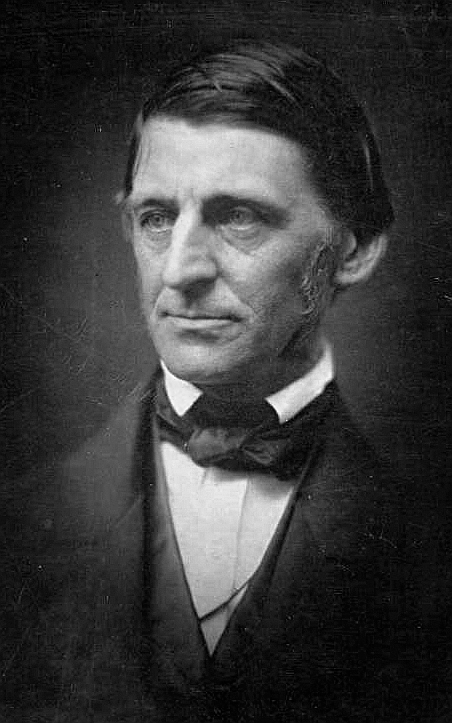
A photo of Henry James, author of Roderick Hudson
It is somewhat hard to believe that Henry James was in his early thirties when he wrote Roderick Hudson. Like everything he wrote it seems to be written by a serious old man, and is just as exciting.

Conclusion

I confess that by about the half-way point I was rather keen to get Roderick Hudson over and done with. That’s not to say that I didn’t like the book – it was thoroughly okay – but there are many other books, waiting on my shelf, which I’m quite certain I will enjoy more. By the end, reading Roderick Hudson felt like a kind of penance, a sign of deference to the Master, but certainly not an act of love or pleasure. There are various reasons for this, and in his preface James notes several of them for us.

For one, the story is rather too determined by “developments”, events that seem rather forced. The novel’s final section, in Switzerland, is particularly weak in this regard – suddenly all the characters from Rome meet again, and James simply expects us to take this on faith. When James has his characters exclaim “it’s like something in a novel” this is no excuse. In fact, this spoils the impression still further. Rather than drawing our attention to the artificiality of the structure, the structure itself ought to have been altered.

I’m also not a great fan of the characters. Perhaps the women of the late 19th century were all as flighty as Christina Light or as sombre and serious as Mary Garland, but I struggle to believe that people were that simple. Being changeable does not make for a great or believable character. And beauty is not a character trait – it is laziness. The men come off only slightly better, but overall, I found myself disliking most of the characters, which made it hard to care about any of them or their fates. Rowland is ineffectual; Roderick is just an idiot.

Roderick Hudson was James’s first serious novel. Though he revised it later, it still bears the marks of his youth. Whatever technical genius he already displays here – and there are some awe-inspiring sentences – his feeling for people still has a way to go. I had planned to read all of James’s novels one-after-another as a kind of project. Unfortunately, for now I feel like I’d rather just think about reading them all instead.

Did you find what you were looking for? John Williams’ Butcher’s Crossing

This is the real deal: Butcher’s Crossing, a Western by the author of Stoner, is a truly awesome book. Because although it’s deadly serious, it’s also a Western through and through. Adventure, violence, and the great outdoors are all here in abundance and lovingly described. The only difference between Butcher’s Crossing and more traditional examples of the genre is that Williams, through respect for it and its worlds – he himself grew up in Texas – shows that behind its clichés there lurks an untapped dread, horror, and depth. Just as Conrad cut incisively into the myths of Western Imperialism in works like Heart of Darkness, here Williams does the same for legends of America’s westward expansion. But instead of resorting to the fantastic brutality of Cormac McCarthy in Blood Meridian, Butcher’s Crossing works by being completely realistic. Its enemies are not superhuman judges but simple nature, harsh and incomprehensible.

The first edition cover of Butcher's Crossing, showing two crossed rifles and a buffalo.
The first edition cover of Butcher’s Crossing. In the story Western tropes are used to reveal the nihilism and terror lurking underneath our romantic view of the West. But the story itself is romantic, and that’s where its great power comes from.

A Hero and his Search

Our hero is William Andrews. A young man of twenty-three, he has done a few years at Harvard and had enough. Inspired by the lectures of Ralph Waldo Emerson (Butcher’s Crossing takes place around 1872), Andrews sets out West, to find… something. “It was a freedom and a goodness, a hope and a vigor that he perceived to underlie all the familiar things of his life, which were not free or good or hopeful or vigorous”. But the word “perceived” already clues us into Andrew’s uncertainty. We have no reason to doubt the goodness of his intentions, but every reason to doubt his surety in what they are. At the beginning of the novel Andrews blunders into Butcher’s Crossing, a small town dependent on the trade in buffalo hides. He has a letter of recommendation for a man there, McDonald, who knew his father.

Andrews is not heroic. He is terribly naïve and idealistic. He mistakenly identifies a local prostitute as the friend of a man he’s meeting in the saloon, rejects an offer of work from McDonald (“I don’t want to be tied down”) and almost immediately gets involved with a huntsman, Miller. This man tells him a story about a mythical, heavenly valley in Colorado Territory filled with buffalo, and Andrews can’t resist offering to help finance an expedition there. He’s attracted by Miller, a man of action who knows the land, and who seems to understand what Andrews is after. “A body’s got to speak up for his self, once in a while”, he says. Three men join Andrews on the expedition: a religious one-armed drunkard, Charley Howe; a coldly independent German, Fred Schneider; and Miller himself. For Andrews, this is the most meaningful time of his life.

But perhaps that meaning’s not what we’re really after.

Adventure and Style in Butcher’s Crossing

What does the feeling of adventure mean, and how do stories give us it? Perhaps it is feeling of seeing something new when it is balanced by the sense that this new thing is real and valuable. When we look out of the car window and see nothing except repeating suburbia, or an endless forest, it can feel like it’s not an adventure because we don’t want to find value in the landscape, though for someone with a different set of experiences, this suburbia or woodland could be exactly the novel world they are looking for. A writer of talent can make the familiar new and the unvalued valuable, but there certainly needs to be a journey involved in an adventure too. We need to feel a sense of movement, of progression in landscape or in knowledge.

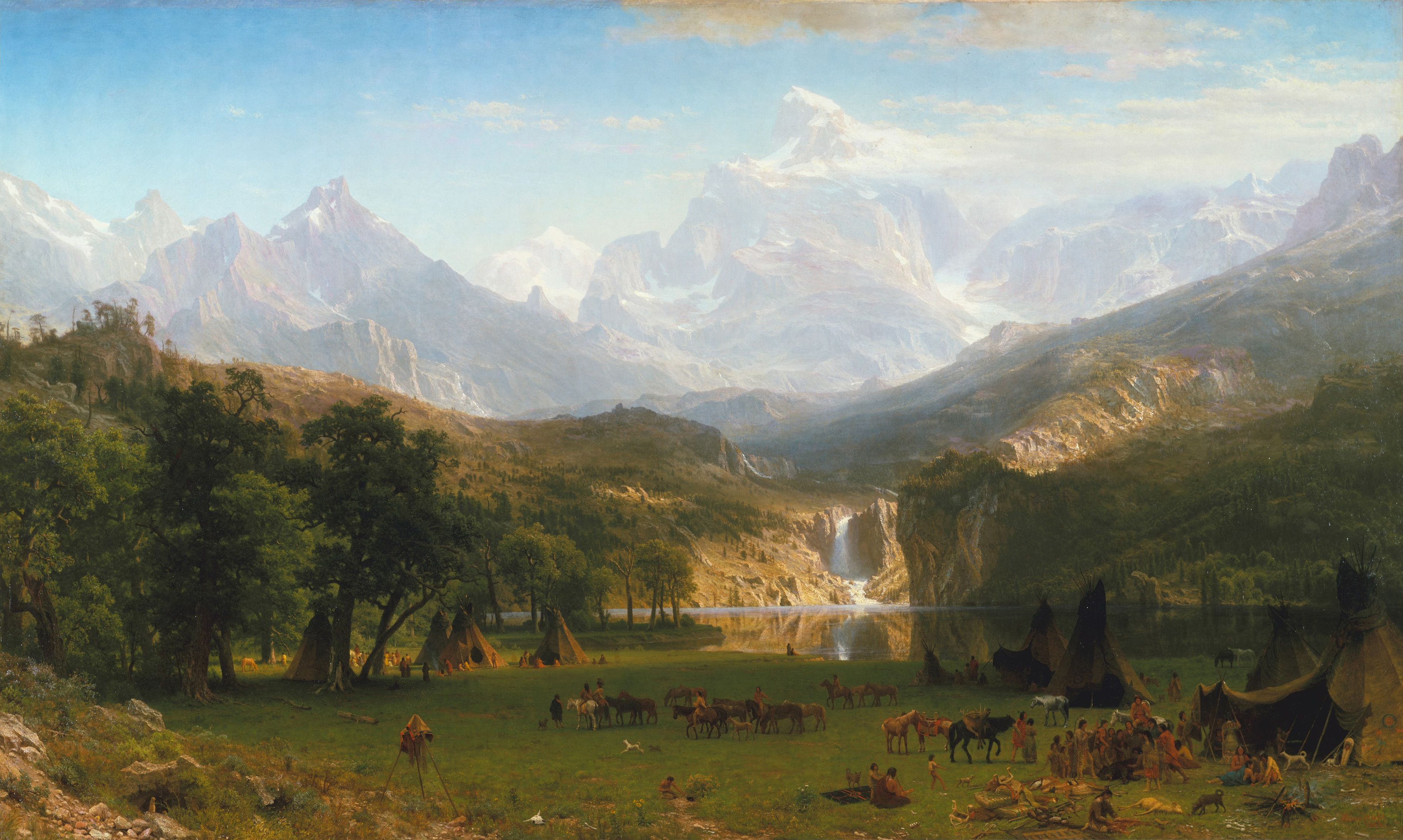
A painting showing a mountain, lake and forest
Albert Bierstadt – The Rocky Mountains, Lander’s Peak, used on the cover of the NYRB version of Butcher’s Crossing. The painting, like the novel, captures the beauty of the landscape.

The adventure of Butcher’s Crossing is a descent. I noticed that the characters of the book are almost always described as going downward in key moments. And this downward path is a moral one as well as a physical one. But long before the darkness creeps in, we are treated to a world of beauty. The world of Emerson’s “Nature” and picture books Andrews read when he was at home. And this beauty is described with a style that for me is incomparable. Williams is a master of the perfectly carved sentence, one neither too long nor too short. When you read him you have the feeling that he worked out every word and its position with the utmost care and long before he put pen to paper. An interview with his widow I read bears this out. But he is also meticulous – every action is described in detail.

“The rich buffalo grass, upon which their animals fattened even during the arduous journey, changed its colour throughout the day; in the morning, in the pinkish rays of the early sun, it was nearly gray; later, in the yellow light of the midmorning sun, it was a brilliant green; at noon it took on a bluish cast; in the afternoon, in the intensity of the sun, at a distance, the blades lost their individual character and through the green showed a distinct cast of yellow, so that when a light breeze whipped across, a living colour seemed to run through the grass, to disappear and reappear from moment to moment. In the evening after the sun had gone down, the grass took on a purplish hue as if it absorbed all the light from the sky and would not give it back.”

The Mountains: Buffalo Killing

A virgin land, the mountain valley, their goal – Miller’s suggestion that there is a secret paradise has a kind of mythic feel to it. Elsewhere, the buffalo numbers have already massively declined from overhunting. But the place is real, and soon the hunters reach it. “A quietness seemed to rise from the valley; it was the quietness, the stillness, the absolute calm of a land where no human foot had touched”. Andrews feels a sense of fulfilment as they approach the mountains, but as before this fulfilment is vague and nameless. Once more the narration refers to a “descent”. The hunters set up camp at the top of the valley, and then each day they head into it. Their aim is to slaughter and skin as many of the buffalo as they can.

A buffalo
However proud these beasts are when free to roam, dead and dying they have none of that grandeur to them. Death is emphatically deromanticised in Butcher’s Crossing, so that we see the hunters’ actions for what they really are – terrible, pointless, slaughter.

The killing is mechanised and pointless. Horror is something we need to imagine for ourselves, from sounds and images, like the sea of bones Miller talks about being left behind after the buffalo have been stripped and had time to decay. Williams’ characters don’t acknowledge it themselves. The buffalo they kill are strange creatures. It can happen that they go into what is called a “stand”, where they – deprived of a leader – refuse to move, even as they watch their brethren being slaughtered all around them.

“They just stand there and let him shoot them. They don’t even run.”

This happens in Butcher’s Crossing, again and again. Instead of showcasing nature’s nobility, we find nature’s stupidity, its incomprehension. The idealised joy of the hunt – of the chase, of the feeling of man vs beast – is relentlessly undermined by the way that the buffalo just let themselves die. And Miller is obsessive. He aims to clear the entire valley, killing thousands of buffalo even though they don’t have the space for all the skins on their wagon. His urge is frightening and destructive, but none of the other characters stand in his way. Instead, they watch and help. Andrews himself has a go with his own rifle, even as he admits to himself that “on the ground, unmoving, [the buffalo] no longer had that kind of wild dignity and power that he had imputed to it only a few minutes before”.

The Mountains: Nature and Identity

What meaning can be found in this slaughter? Is this what Andrews wanted, what he needed? Butcher’s Crossing is not a book to tell us what to believe. In fact, it is brutally anti-ideological, destroying truths rather than trying to build them. Andrews, because he is searching for a meaning, is susceptible to the meaninglessness around him. Instead of filling the absent centre in his heart, the slaughter hardens it. It says that there is nothing good here, and the world is simply amoral, empty of any kind of truth. In some way, his journey reminds me of that of William in the first season of Westworld. In both cases, the person that we find in the search to find ourselves isn’t who we wanted to be at all. But by that point it’s already too late to change.

Ralph Waldo Emerson, in a black and white photograph. Butcher's Crossing attacks many of his ideas.
Ralph Waldo Emerson. His essay “Nature”, with its benevolent view of the natural world, is subject to an implicit attack in Butcher’s Crossing. Here nature is anything but peaceful.

Nature cannot passively take beatings forever. At some point, arbitrarily, the tide turns on the hunters in their mountain paradise. Snow begins to fall. And what once was going to be the easiest hunt of them all quickly descends into hell. With snow, there is no way out of the valley, and the same battle for survival that the men prepared for the buffalo, now nature prepares for them. And the battle is worth waiting for, though I shan’t spoil its outcome here. The climax of the book’s second act is something to behold. It takes the Western genre and builds from them something every bit as horrific and beautiful as Blood Meridian. But here it is a thousand times more real – and for that, perhaps even more frightening.

Conclusion

I read Stoner a whole ago, but for me Butcher’s Crossing is the better book. Everything about it is awesome. The style is a model worth studying, of clean sentences and powerful images, but what really sets it apart is the story. Butcher’s Crossing is an adventure, taking those simple Western tropes that many have taken before, but unlike those predecessors Williams’ builds from them a work that is thematically dense and demands close attention. Andrews’ story of self-discovery and its dangers is one that has only become more relevant as time has passed and our culture has moved more and more towards self-creation, and the story’s fundamental lesson – that the person we find in extreme situations is not “real us” so much as only a possible version of “us” – is one that everyone can learn from.

But most of all, Butcher’s Crossing is a Western – exciting, adventurous, and fun. It’s a joy to read, and I thoroughly recommend it.

Have you read Butcher’s Crossing or anything else by Williams? What do you make of him? Leave a comment below!

Dec 2020 Update: I have now also put up a review of Augustus, Williams’ unbelievably awesome final completed novel. I think it’s even better than Butcher’s Crossing.

Nabokov’s Professor Pnin and the Pain of the Past

Pnin is a novel by Vladimir Nabokov, written at the same time as his more famous Lolita. But Pnin is, to my mind at least, a much more enjoyable book than Lolita is. It is helped in this by its protagonist, the lovely and lovable Professor Tim Pnin, an American of Imperial Russian extraction like Nabokov himself, but one whose success in falling into American culture, his naturalization notwithstanding, has not been nearly so successful.

What this leads to is a series of comic misunderstandings and slapstick humour, bad accents and worse grammar, all of which ultimately make Pnin an almost light-hearted and innocently enjoyable book. But beneath the surface there is an unmistakable note of sadness, a mourning for the past that Pnin has left behind him in his homeland and is unable to forget altogether, and a sense of narrative sympathy towards all those who history treats as pawns or playthings of its grand designs. Once the laughter has stopped, then it’s time for the tears.

A photo of Vladimir Nabokov looking ready for a fight
Our author, Vladimir Nabokov. Pnin is in many ways similar to Nabokov. Both were Russians of noble birth who ended up in America in academic institutions, but Nabokov is a far more cunning man than dear Pnin ever could be, and much better at English

Tim Pnin’s Origins and Ancestors

Let’s begin with Pnin. Pnin is a Russian from a good family of minor nobility, not that that matters when bombs start flying in Saint Petersburg and the rest of the Russian Empire. He escapes to Europe, his family die, and when Hitler gains power and starts using it Pnin makes the journey to America, where his Russian wife (but met in Europe) leaves him almost at once. There, with the help of old-world knowledge and the network of fellow intelligent Russians that soon formed in the United States, Pnin ends up at Waindell College, a small university in a small university town, and settles down to teach and become a real American.

We first meet him on the train, because his life is one of movement, often involuntary. And we meet him on the wrong train because he is a fool. He has used a timetable that is five years out of date. In this moment the problem that is doomed to plague Pnin for the whole book is made clear – he is out of touch, and doesn’t seem to know it. As a result of all this, and his poor English and worse social skills, he becomes a comic figure in the vein of Gogol’s civil servants and Chekhov’s banal mediocrities. He struggles with teaching and academic intrigues, with finding places to stay, and even with driving. And wherever he goes and whatever he does, somehow memories of the past he has lost find a way of returning to him, for better or for worse.

Poor Pnin – Sympathy and Comedy

It is perhaps as a teacher that Pnin is at his most comedic. He is not the proud leader of a Russian department but rather slotted in, through academic jiu-jitsu, as part of the German Department in some kind of comparative role, and he has only a few students at the best of times. He is not a good teacher, by any stretch of the imagination, but he is one of those who we tend to look back on fondly. I know that I remember the teachers with heart and humour far better than I do the cold, bespectacled men who got me to Cambridge and then vanished into an almost-robotic silence in my memory. Pnin not like them – he is a fun teacher, beloved for “those unforgettable digressions of his”, and “what his listeners politely surmised was Russian humour”.

Against his pupils, brimming with ignorance and at best a secondhand passion for such books as Anna Karamazov, Pnin espouses in broken English the love that he cannot truly hope to translate, and fails dramatically at teaching anything akin to grammar or vocabulary. Poor Pnin at first veers uncomfortably between being the permanent butt of a joke and someone we can at least extend some sympathy to, but by the end of the book he has managed to acquire a sort of heroic dignity. Not that that stops him from regularly falling downstairs, mistaking one professor for another, and various other mishaps.

Pnin and his novel seem to bring over to American literature that very Russian mood of “smekh skvoz’ slyozi”, or “laughter through tears”, where comedy can at any moment transform into the deepest sadness and pity.

One example of this is Pnin’s purchase of a football for the son of his ex-wife and her second husband. Viktor is coming to stay with Pnin at his ex-wife’s behest. At first the whole idea is comic – Pnin goes to the store, has some difficulty with the American conception of “football” (“No, no,” said Pnin, “I do not wish an egg or, for example, a torpedo. I want a simple football ball. Round!”), but eventually gets the soccer ball he wants to give out of kindness alone. Yet when Viktor actually arrives, he reveals, unwittingly, that he doesn’t like sport, and Pnin’s mood is as deflated just as much as any ball could be, and he throws the ball out of the window when Viktor isn’t looking. The final scene of the chapter has the ball rolling through a windy night, alone and prey to the elements. Poor Pnin.

History’s Pnin-pong Ball

But all this pain is most in evidence whenever the novel deals with the theme of history itself and its effects upon the individuals who get in its way. I noticed that each chapter begins, more or less, with comedy, but ends with bleak rumination and the lonely exploration of Pnin’s memories. Pnin and his fellow Russian nobles left Russia under threat of death, and tried, some with success, some without, to establish themselves in Europe, and then when that dream failed due to Nazism, they headed West once again, to America. Some died in the struggle. Pnin’s first love was among those who were put to death in the concentration camps – she was a person who through the lens of memory becomes a symbol of a more innocent time, of peace and honesty as opposed to the serial adultery of his actual wife.

One recounted memory that I remember particularly strongly is of Pnin, the girl, and a few other young Russians putting on a play in an aristocratic estate in one of the Baltic parts of the Russian Empire. We don’t see the play in any great detail, but the image of its performance is a strong one. For those Russians, in the period of their youth before the Revolutions came, life was merely a game, a play, with no true conflict and no chance that history might turn against them and scatter them like leaves in the wind. Of course, their attitude towards life is not something to be applauded, but the tragedy that took place is something that within the context of their own lives ought to be lamented. Their peace turned out to be only a dream, and they were ill-prepared for the reality.

A picture of a country estate owned by the Nabokov family. In such a place Pnin would have put on his play
One of the Nabokovs’ estates in Russia, lost in the Revolution. In such a place it is easy to relax and believe that the world will sort itself out, and the most stressful part of the day can be just putting on a play. The play Pnin was in would have taken place in a similar such location.

What I liked was that Nabokov doesn’t stop with just criticising the Soviets and the Germans, the low-hanging fruit of the Second World War. He also suggests, with ever more urgency as the book goes on, that McCarthyism in America is another such dangerous and hateful trend. Pnin’s unpopularity as a teacher is, yes, partially due to the fact that he can’t exactly teach, but it’s also increasingly due to a cultural shift that sees everything “Russian” as being “commie” and dangerous. Even though he has escaped to America, Pnin can’t escape the hands of fools who wish to turn ordinary people’s lives into tools for political games. We as readers can only hope that he and the other Russians escape the worst years of American repressions intact.

Language in Pnin

Nabokov is a master wordsmith – everybody knows as much – but Nabokov’s language in Pnin is also, surprisingly perhaps, another place where sympathy can be located. Pnin is introduced as something of a fool when he speaks, spouting Russianisms and using idioms wrongly. At first we laugh, because such moments are indeed very funny. When he discovers that he is on the wrong train at the novel’s beginning we hear: ““Important lecture!” cried Pnin. “What to do? It is a catastroph!”” Having spent a lot of time among Russians with varying levels of English, I find Nabokov’s portrayal leaves nothing to be desired. As the novel goes on, Pnin’s English continues to be serviceable but broken, Russified, and occasionally plain wrong. We laugh and continue to think of Pnin as an affable old fool, as out of touch linguistically as he is culturally.

But then, when Pnin is at a retreat for fellow Russians in the American countryside, Nabokov takes his foot off the breaks and Pnin begins to speak. He does not lurch in broken sentences, but words – intelligent, reasonable, words – flow warmly from his mouth. And suddenly we realise that the fool we thought we saw, the bumbler who can scarcely speak, is not the real Pnin, but just the shadow that he is capable of translating. And we feel sad for him, so often isolated from his true self. He talks of beauty and of literature with wit and character, and we can only wish that his English were good enough to get the words out at other times – for his students’ sakes, at the very least.

Another moment that truly humanises poor old Pnin comes at the very end of the novel, when the narrator is relating Pnin’s courtship of his future ex-wife, an artistic young poet who is a member of fashionable social circles where Pnin would never end up in a million years. And yet Pnin writes her a letter where he bares his soul and asks for her hand. We see Pnin as he really is, not barred by language or custom – we see him free and in love. “I am not handsome, I am not interesting, I am not talented. I am not even rich. But Lise, I offer you everything I have, to the last blood corpuscle, to the last tear, everything… I may not achieve happiness, but I know I shall do everything to make you happy”. The language is poetic, the sentiment heroic. This is the true Pnin.

Conclusion

Nabokov is famous for his formal trickery, unreliable narrators, and gameplaying, and in Pnin this is not limited to bad puns alone. The book ends with one of those classic reversals of postmodern ingenuity that no doubt will leave an eventual rereading of the book all the richer by undermining a lot of the narrative that has gone before. In other words, the ending does cheapen the rest of the book, no matter how much it does give you things to think about. To each their own, but personally I’m content just to enjoy the rest of the book without overthinking the implications of the closing pages. A second time through, no doubt, I’ll see everything a little differently. But for now, I’ll save myself the trouble.

Pnin is a short book, which makes it easy to recommend. However masterful its prose, I enjoy how much attention poor Professor Pnin receives. Like him, the book is funny and a little twee. But also like him, underneath the bumbling exterior there lurk depths that are worth looking into, and reveal a sadness and isolation that lend Pnin’s story a tragic note. Alongside the laughs there are also the tears that come from an understanding of another’s suffering, a suffering that until we have taken a trip through Pnin’s world may well have been completely unknown to us. The book summons up sympathy, and that’s a very valuable thing, especially in our modern world, where history continues daily creating playthings of individual lives. Perhaps you have already met your Pnin – perhaps your meeting is still to come. But now, at least, you’ll be ready for him.

For my rather more lukewarm response to Nabokov’s Strong Opinions, follow this link.