The Meaning of Working Through the Past by Theodor Adorno – Summary

Introduction: Adorno and his Aims

Theodor Adorno, a real curmudgeon of thought if ever there was one, is well-known for his sceptical attitude towards such modern inventions as “jazz” and mass culture. But then again, the professor had plenty of reasons to be. Reaching academic maturity in the years after the end of the Second World War Adorno, as a German and Jew, was determined in his critical writings to outline the ways in which the society and culture of postwar West Germany left open the door to a potential resurgence of fascism, so that such problems could be dealt with before it was too late. As he wrote in “Education after Auschwitz”: “The premier demand upon all education is that Auschwitz not happen again”, and he does everything he can in his own work, including “The Meaning of Working Through the Past”, to body forth that very idea.

Adorno’s essay „Was bedeutet: Aufarbeitung der Vergangenheit?“, translated as “The Meaning of Working Through the Past” by Henry W. Pickford in the collection Critical Models: Interventions and Catchwords, has as its primary target is the ways, most of them unhealthy, that we try to deal with the past. In this it has relevance not just to German history, but also to America’s relationship to the destiny it once so gladly made manifest, and the United Kingdom’s often ambiguous attitude towards its colonial past, to give a few examples. Yet the focus remains on Germany in particular, and the way that Germans fell under Hitler’s spell, and could perhaps again. What follows is a summary of the piece, alongside the important contexts for it.

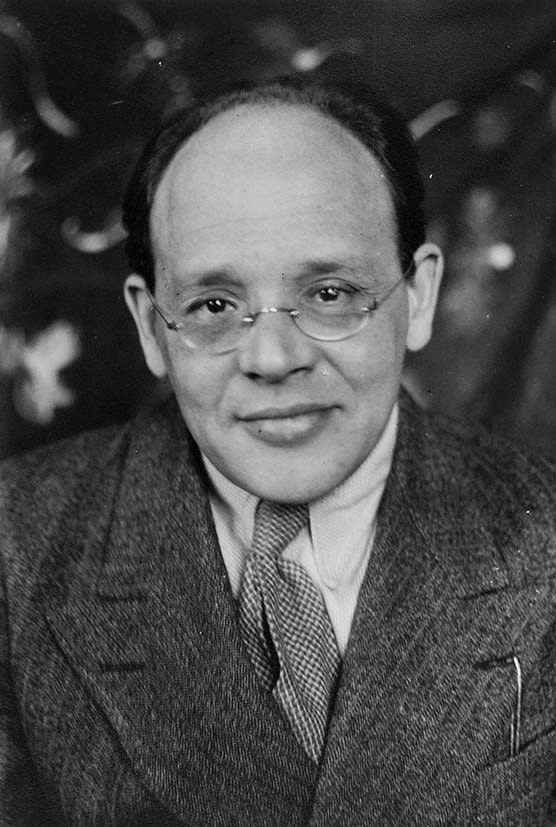
Picture of Adorno
Theodor Adorno (1903-1969) was one of the leading members of the Frankfurt School of German thinkers, alongside Herbert Marcuse and others.

Context

“This day” being 1959, when the lecture was given. It was a time of crisis in the newish country of West Germany. The grand coalition of the CDP and CSU led by Konrad Adenauer, which had run the Germany since 1949, was sustaining a great deal of negative public attention after it emerged that  Theodor Oberländer, one of the major ministers, had committed war crimes for the Nazis. It raised questions throughout the whole of West Germany about the way that the government, socially and economically conservative, had been dealing with the past. The problem was that it had not been dealing with the past at all – rather, it had done its best to treat the events of the Holocaust and the Third Reich almost as if they had not happened, in what Adorno called “collective amnesia”. And this, naturally, once it was revealed publicly, led to pressure for change.

The Social Democrats in Germany, long unpopular for stances such as being in favour of unconditional reunification with the Eastern part of the country, saw the failure of the grand coalition to answer for the past as a potential weapon to boost their own popularity. Adorno’s essay thus came at a time where it was particularly relevant to public discourse. Not only in this way did it seem timely though. Shortly after the essay was given for the first time, in December 1959 in Cologne a synagogue was daubed with a swastika and the words “Juden raus” (“out with the Jews”), proving Adorno’s fears of lingering fascist elements within German society to be completely justified.

The essay was given as a lecture, but it was also given over the radio too. Adorno’s saw his work, in spite of its academic style and nature, as important to the average German citizen because of its educational content. Through this essay and others given in the radio format he hoped to help Germans learn how they themselves can identify the signs of fascism, both within their own thoughts and actions and in those of other people. Though it is philosophy, it is manifestly practical too.

The Essay

Language as a Way of Hiding from the Past

One of the major arguments of “The Meaning of Working Through the Past”, and the one that begins it, is that language is very much a potential tool that can aid the survival of fascist tendencies, even as in other hands it can be used to stop them. One need only think of the great heights reached by Joseph Goebbels as Reich Minister for Propaganda under Hitler for an example of language’s recent abuse for evil. Adorno begins his piece with a much finer distinction however: the difference between “Aufarbeitung” and “Verarbeitung” in German. By the time of the essay, public debate was already primarily using the first term. In Adorno’s mind this is a mistake, because the former term suggests “the intention to close the books on the past” rather than the idea of carrying through a consciousness of the past into the present of the latter term.

As a result, the word “Aufarbeitung” is associated with “the unconscious and not so unconscious defensiveness against guilt”. Adorno’s point here is that by moving on too rapidly we run the risk of avoiding the very guilt we should be confronting. For, although moving on seems like the rational thing to do, “because the past that one would like to evade is still very much alive” we cannot yet pretend that it is simply history and not still in some form present today (in 1959). This is especially important because the people who most loudly call for the country to move on often turn out to be those people who are most guilty and in need of working on their own past.

Adorno points out that even the term “guilt complex” is dangerous. The phrase undermines itself because “complex” suggests that there is no real guilt but rather just a psychological problem. Furthermore, it also suggests that healthy people do not look towards the past, but only towards the future and present moment. With the threat of fascism still present ignoring the past instead of trying to understand it is not a healthy attitude at all in Adorno’s view.

Changing the Subject

This is not the only way that language was used dangerously in the in the years after the War’s end. Adorno singles out various other ways that language helped Germans to avoid the past. First among them is the use of euphemisms like “Kristallnacht” to refer to the pogroms against Jews throughout Germany in early November, 1938. In English the phrase “The Night of Broken Glass” is sometimes used – like the German phrase it too distracts attention from the potentially 100+ Jewish deaths by focusing on abstract objects. A better name, in Adorno’s mind, would force its user to reflect upon the nature of the event with each utterance. Thus calling it a pogrom is much better than referring to it by means of a euphemism.

Another linguistic method often used by Neo-Nazis in our own time is creating an argument out of specifics. By forcing a discussion to focus on whether, for example, it was five or six million Jews who were murdered by the Nazis, acknowledgement of the reality of the huge death toll – whatever its specifics – is sidelined, and sometimes even ignored together. In the same way, when people talk about “the balance sheet of guilt”, such as by claiming that the bombings of Dresden and other German cities may mitigate Auschwitz, what they actually do is avoid facing the reality of German guilt by changing the subject. No doubt the bombings were bad, but they are neither here nor there when it comes to the fact of the Holocaust.

People might also try to suggest that they had no idea that something was happening to the Jews, which Adorno finds to be a poor excuse given that Jews were literally disappearing in broad daylight. Sometimes “a lax consciousness consoles itself with the thought that such a thing surely could not have happened unless the victims had in some way or another furnished some kind of instigation”. This attitude is idiotic because even if a small number of the Holocaust’s victims were in some way guilty, that in no way justifies the mechanised slaughter that faced them. Moreover, focusing on potential guilt of the victims is once more a way of changing the subject from the certain guilt of the perpetrators.

Who is to Blame?

Well-intentioned people when talking about German postwar guilt tend to focus on those people who tolerated Hitler’s rise and later on claimed blamelessness because they were merely “following orders”. While it is undoubtedly true that these people must admit and bear their share of the guilt, Adorno is keen to point out that this approach nonetheless can sometimes lead us to forgetting about those who enthusiastically cheered the Nazis on. Even before Hitler became Chancellor, in the (free) Federal Election in November 1932 the Nazi Party was receiving 37.27% of the popular vote. With propaganda on his side the number of Germans who actively supporting the state would have grown even higher by the time of the war, and so it is foolish to pretend honest supporters of the Nazis did not exist in large numbers.

“But what about the Autobahns and the Soviets?!”

Another dangerous trend in thinking about the Nazi era is the tendency to think of the time after Hitler gained power as being one of mass oppression and suffering. Moving on is easier when we think that the past is no longer attractive, but trying to conceal the truth of the matter is even more foolish. The Nazi era was an awful time for minorities, especially Jews, within the German borders. It was a bad time for non-straight sexualities and for communists. But for the average man and woman, NSDAP member or not, it was not so bad. As Adorno writes, “terror’s sharp edge was aimed only at a few and relatively well-defined groups”. Hitler came to power at the tail end of a huge economic downturn, and thus much of his time was marked by a massive recovery, which brought huge benefits to the German people.

Picture of the Wilhelm Gustloff, a cruise ship that was used by the Nazi's for state-organised recreation
Germans under the Nazis used to be able to go on cruises on ships such as this one, the Wilhelm Gustloff. Adorno is keen to stress that though not everything about Nazi Germany was bad for everyone, that’s no excuse to want to return to fascism.

Large scale building projects like the Autobahn system suggested a new and modern Germany. After the social alienation and mass political disillusionment of the Weimar era Nazi Germany brought the “warmth of togetherness”. Public gatherings and group trips with the famed Kraft durch Freude (Strength through Joy) state leisure organisation all meant that for most of the people left in Germany to discuss Nazism as it had appeared before the war began the period had not been in any way a bad one. More importantly still, the contemporary Cold War between the West and the East seemed to vindicate Hitler’s concerns about the Soviet threat.

To ignore both of these aspects is, to Adorno, fatal. If we pretend that the Nazi era was bad instead of acknowledging its ability to bring benefits to much of the German population, then it provides an easy opportunity for someone arguing against us to begin undermining the rest of our argument too. If we are wrong about one thing, then we may be wrong about other things. And if Hitler was right about the Soviets, our opponent might argue, perhaps he was right about other things too. Adorno thus wanted to focus on conveying as much of the reality of the past as possible, instead of concealing that which doesn’t fit into easy arguments. For it soon turns out that much of what was seen to be so good about Hitler and his time actually wasn’t. For instance, economic “recovery” was really down to rearmament and unsustainable without war.

What Remains of the Conditions that Caused Fascism in Germany?

The reason that Adorno is so concerned about fascism is “the objective conditions of society that engendered fascism continue to exist”, but what were these conditions? One of them is that both in the home environment and in school obedience was promoted and praised above and beyond autonomy. This produced good worker drones, but it also produced people who would easily be led astray by a charismatic leader like Hitler. Because it encouraged obedience, it was thus inherently conservative and supportive of the status-quo. This meant that once society was changed towards totalitarianism these people would see little reason to complain about the new status quo that would have emerged. Such a system fosters what Adorno terms “the authoritarian personality”, that is people who “identify themselves with real-existing power per se, prior to any particular contents”. It is these people who are vital in the running of a totalitarian system.

The causes were not merely educational – they were also economic and political. Here Adorno’s membership of the Frankfurt School of thinkers comes into play. Though he was no supporter of the USSR, he found a number of faults within laissez-faire and other forms of unbridled capitalism that meant they were vulnerable to fascism. Economically, Germans were still dependent on conditions beyond their control and thus they were politically immature, seeing democracy as “one system among others” rather than as the ultimate system of organisation. Adorno was thus not worried about neo-Nazi organisations so much as the trends within democracy that could lead to fascism becoming dominant again. He mentions as an example the way that many Germans hoped that Black Friday 1929 and its economic trauma would not happen again. Adorno notes that the hope contains within itself the belief that a strong state would protect Germans economically once more.

It is the individual’s impotence on the one side and the massed power of the state on the other, that leads towards totalitarian forms of domination in Adorno’s view of the matter.

Nationalism Nowadays

A key part of Nazism was the idea of returning to an ideal specifically German past. Though Hitler’s defeat ought to have broken Germany’s belief that it could conquer vast swathes of Europe, instead it had the opposite results. The “collective narcissism”, as Adorno calls it, that manifested itself as national vanity and exceptionalism, carries on in the form of “chimerical hopes.” German nationalists thus fall into “an illusory inner realm” where they can construct “reality itself as though the damage never occurred” to begin with. Instead of being focused on one idea, nationalists now seek anything that seems to conform to the idea of German greatness. Nazism’s hopes of creating a great German nation remain, even if their form has changed. Thus, with the right leader, these hopes could be focused again and millions mobilized to try to achieve “goals they cannot immediately identify as their own.”

Nonetheless, nationalism has lost a lot of its power and charm. Though it “does not completely believe in itself anymore”, still it remains a political tool to make people insist on conditions that otherwise they would not tolerate. Thus it is “both obsolete and up-to-date”. It is obsolete because clearly, with NATO and the Warsaw Pact the truth was that countries were now organised into military blocks under the most powerful; yet it was and is up-to-date because it continues to have psychological power and the force of tradition behind it. Still, Adorno writes that the countries that now are most vulnerable to fascism are actually the less developed ones – those victims of Western imperialism who want some of the West’s previous power for themselves.

Solutions: Education for Self-Reflection

Still, the focus of the essay is on Germany its own dangers, and Adorno here proposes a few solutions. Chief among them is a change in education, of the sort he writes about in more detail in “Education after Auschwitz”. I mentioned the problems of education towards obedience above, so Adorno instead wants to educate people towards something different. In the same tradition as thinkers like Immanuel Kant, Adorno sees education’s goal as “Mündigkeit” – maturity. What this means is that students must be taught how to think for themselves instead of falling into whichever collective appeals to them the most. In the first appendix printed in Critical Models: Interventions and Catchwords there is a discussion of the lecture between Adorno and some of his students. It is here that he explains that people must “be led to self-reflection and thereby be prevented from becoming blind victims of… instinctual impulse”.

Part of this means an increased emphasis on psychoanalysis in schools. Children must be able to analyse themselves so that they can be aware of the cognitive biases that they are vulnerable to, and thus prevent themselves from acting from pure or manipulated emotion rather than reason and logic. This education would also include a focus on propaganda, and how to identify and avoid it so that Germans would be better able to come to their own conclusions regarding how to live. What this means ultimately is not a focus on facts, but rather on understanding oneself and one’s motivations. Adorno writes that “a working through of the past understood as enlightenment is essentially such a turn towards the subject, the reinforcement of a person’s self-consciousness and hence also of his self.”

Difficulties: Anti-Semitism the Appeal to Self-Interest

Perhaps all this is too optimistic, and indeed Adorno admits as much. The difficulty of dealing with anti-Semites and other people who reject rationality is precisely the way that they reject logic. For example, Adorno write that “panegyrics to the Jews that isolate them as a group already give anti-Semitism a running start”. By encouraging us to see the Jews as different, we allow anti-Semites to start thinking of them as different in a bad way. Another method that Adorno is sceptical of is using individual examples to educate anti-Semites. Anne Frank, probably the most famous of those murdered in the concentration camps, can thus be seen as a tragic exception, rather than one guiltless individual among many others, none of whom deserved to die. “I have a black friend” does automatically mean you are not a racist; it may just mean you have taken your friend as an exception.
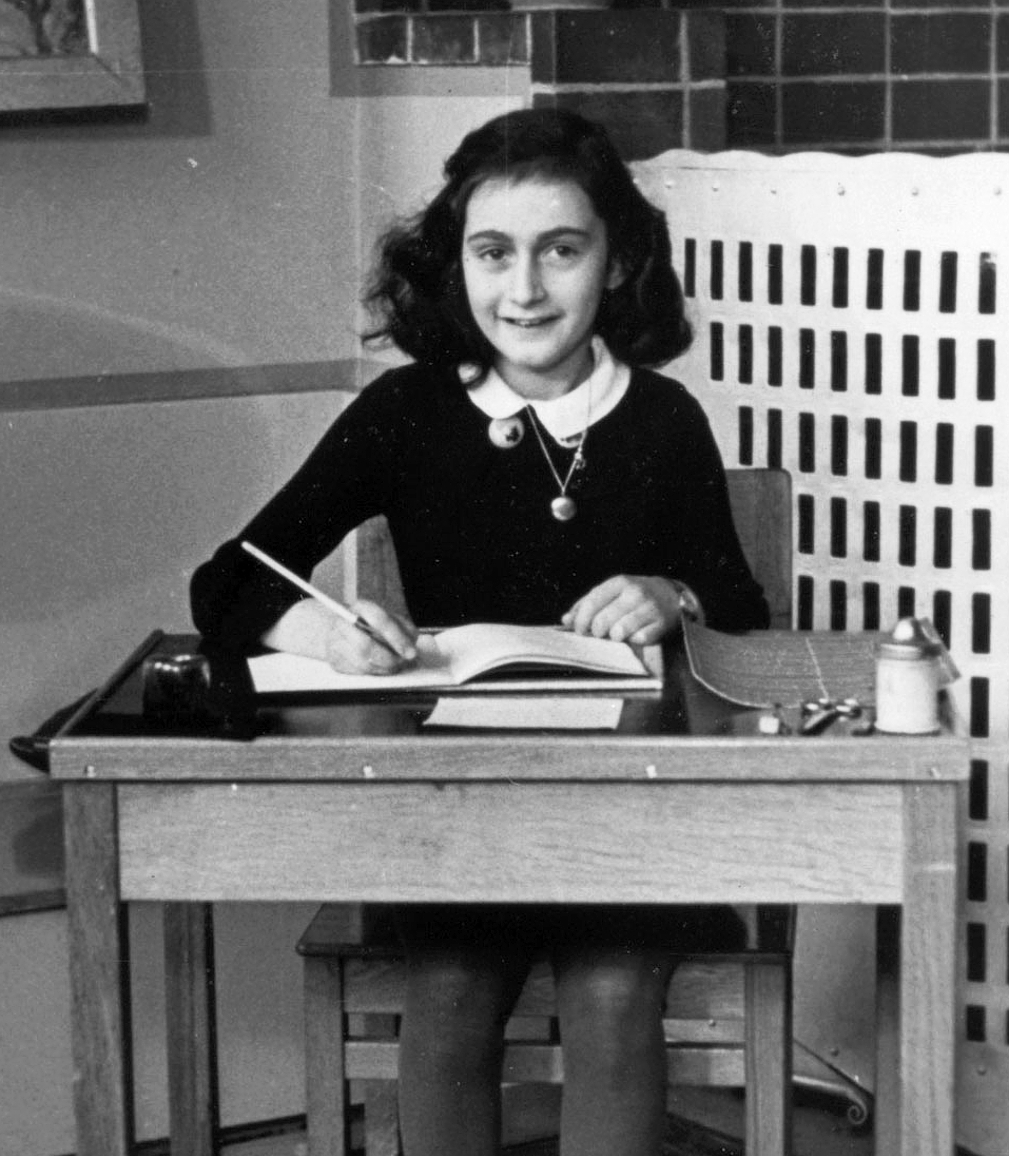
Picture of Anne Frank, one of the many murdered in the Holocaust
Anne Frank, pictured here, may help us to understand the human face of the Holocaust’s victims. But at the same time, focusing on her can lead to us inadvertently singling out victims like her as exceptions, rather than the rule.

Indeed, even trying to introduce anti-Semites to Jews in the hopes of demonstrating to the first group that the latter are humans just like the rest of us is not necessarily the best argument against the fascism that can result from anti-Semitism. Anti-Semites, Adorno writes, have “an incapacity for any experience whatsoever”. Instead, ultimately what he suggests we ought to do when arguing with people who have rejected self-reflection and are acting against reason and logic is actually simple: “the most effective antidote is still a persuasive, because true, demonstration of their own interests and, moreover, their most immediate ones”. Appealing to eternal values like equality and freedom, or even to the huge suffering views like anti-Semitism can cause, is far less effective than simply explaining to the anti-Semite in question that fascism means war, it means you might lose your house or money or family. Everybody listens to that.

Conclusions

“The Meaning of Working Through the Past” is ultimately a demonstration of way we ourselves might do the same self-reflection that Adorno advocates. It shows the ways, linguistic and otherwise, that we might avoid facing the truth of the horrible consequences of Nazism. It also shows us how to argue with those who might be unwilling to admit or acknowledge that Nazism was an awful mistake. In this way, it does everything it can to educate its readers in how they might avoid fascism’s recurrence, just as Adorno wanted.

But it is not only relevant in the context of Germany in 1959. The piece is relevant to any country which has a past that it needs to come to terms with. The deliberate starvation of certain parts of Ukraine and Kazakhstan in the early years of the USSR; and European, American and Japanese colonialism, are all unpleasant pasts that countries deal with in different ways, some more healthily than others. And in a world where nationalism and the far-right are on the rise again, Adorno’s exhortation towards self-reflection and his warnings about propaganda have never seemed less timely.

For more German thought, check out my piece on Walter Benjamin’s “The Storyteller”. For a more practical look at the consequences of living under a totalitarian regime, my review of Varlam Shalamov’s Kolyma stories, detailing his time in the Soviet Gulags, is here.

Picture of Adorno by Jeremy J. Shapiro used under [CC BY-SA 3.0 (http://creativecommons.org/licenses/by-sa/3.0/)]; Picture of the Wilhelm Gustloff comes from the Bundesarchiv, Bild 183-H27992 / Sönnke, Hans / CC-BY-SA 3.0 [CC BY-SA 3.0 de (https://creativecommons.org/licenses/by-sa/3.0/de/deed.en)]; and Picture of Anne Frank is in the public domain.

Before the Law by Franz Kafka – Translation and (brief) Analysis

This is my translation of Franz Kafka’s story “Vor dem Gesetz”, which also appears towards the end of The Trial. After the text there are some casual comments on the meaning and on reading Kafka generally.

Before the Law

Before the Law there stands a gatekeeper. And to this gatekeeper comes a man from the country and asks for entry into the Law. But the gatekeeper says that he cannot grant him entry. The man thinks for a moment and then asks whether he will be able to enter later on. “This much is possible,” says the gatekeeper. “But not now.” Since the door onto the Law stands open as ever and the gatekeeper stands to one side of it, the man bends forward so as to see through it into what lies within. When the gatekeeper notices it, he laughs, saying: “If you’re so allured by what’s inside, why not try going through in spite of my forbidding it? Be warned, though: I am mighty. And I am but the lowest of the gatekeepers. From each hall to the next there are gatekeepers, each one mightier than before. By the third one I cannot even bear his sight.” Such difficulties the man from the country has not counted on. Surely the Law, he thinks, ought to be accessible to all people and at all times. But as he looks more closely at the gatekeeper in his fur coat, with his sharp nose and long thin black beard like a Tartar’s, he then decides he had better wait until he received permission to enter. The gatekeeper gives him a little stool and lets him set himself down on the side by the door. He sits there for days and then years. He makes many efforts to be let in and tires the gatekeeper out with his requests. The gatekeeper every-so-often engages to give him little interrogations, where he asks the man about his homeland and about plenty of other things. But they are lifeless questions, however, of the sort that great men ask, and in the end he tells him once more that he still cannot let him in. The man, who had prepared a great deal for his journey, uses everything he has, whether valuable or not, in order to bribe the gatekeeper. The other man takes everything from him, but says as he does so: “I am only taking these from you so that you don’t think you haven’t tried everything.” During the many years the man observes the gatekeeper almost without a moment’s pause. He forgets about the other gatekeepers, so that this one seems to him the only obstacle preventing him from entering the Law. He curses his misfortune, at first heedlessly and loudly; then, as he grows older, he just mutters to himself. He grows childish and, since from his years of study of the gatekeeper he has come to recognise the fleas in his felt collar, he asks the fleas to aid him in changing the gatekeeper’s mind too. At last his sight grows weak and he is unable to tell whether it is really getting darker, or if it is just his eyes deceiving him. He does recognise well, however, a radiance shining forth in the dark, one that escapes inextinguishably from the door into the Law. Now he has little time left to live. Before his death all the experiences of the whole time gather themselves inside his head into a single question, which he had hitherto not asked the gatekeeper. He beckons to him, for now he can no longer hold his head up straight. The gatekeeper has to bend himself deeply to lower himself down to him, since the height difference between them has greatly changed to the disadvantage of the man. “What do you still want to know?” Asks the gatekeeper, “You are insatiable.” “Look, if every man strives after the Law,” says the man. “How does it happen that in all these years nobody but myself has demanded entry?” The gatekeeper recognises that the man has already reached his end and, so as to reach him through his failing hearing, he shouts to him: “Nobody else could obtain permission here. This entrance was destined only for you. And now I am going to shut it.”

Comments

I’ve never been much of a fan of German, either as a language or as a literature, in comparison with others. I guess I’ve struggled to see the beauty in the words, and for a long time it seemed that German literature was a lesser copy of the Russian version, but without the redemptive hope of national faith. That is, simply a little grim and depressing. But Kafka has always been an favourite exception, in part because he has never fit snugly into the classification of “German literature”, being a Jew in what is now the Czech Republic, which even in the early 20th century was not exactly the centre of German culture. Yet Bohemia produced, in some way or other, Kafka, as it did Rilke. No matter my misgivings about the wider literature, misgivings which truth be told time and experience are quickly changing anyway, it’s hard not to feel grateful for those two.

Picture of Franz Kafka
Franz Kafka (1883-1924) is perhaps the most widely read German language author outside of the German-speaking lands, and just as ambiguous a fellow as is his work.

Even so, “getting” Kafka took a long time. I’ve read The Metamorphoses two or three times now, in both the original and in translation, and have struggled to enjoy it. Only recently, under the full weight of various critics’ opinions, did the work begin to open up to me. But in spite of that misfire, other parts of Kafka’s oeuvre have more easily reached and crashed against the inner shore of my soul: “In the Penal Colony”, “A Hunger Artist”, and both The Trial and The Castle are among them.

It is perhaps foolish to have people in schools read Kafka because often they haven’t themselves lived in any serious way. It was certainly my problem when I started out. Without experience, it’s hard to appreciate the absurdity, because the stories seem simply absurd, as opposed to that Kafkaesque standard – absurd yet constantly revealed in our own lives to be entirely real. Within school and even, to be fair, university, usually we can only look at them clinically, rather than personally – that is, we can only appreciate, rather than truly enjoy them.

Kafka’s Train Ticket

My first experience of Kafka’s world being transported into my own came with receiving a penalty fare while trying to take the train home after having had dinner with a friend. I had bought a return ticket at the same station a few hours earlier, but unfortunately after going through the turnstiles I had thrown away the return ticket rather than the outbound one. When I arrived that evening the ticket office had closed, so there were only machines for buying tickets still operating. But I didn’t have a card on me, so I couldn’t buy a new ticket. I waited on the platform for the train to arrive, hoping to buy a ticket on board. Instead, what happened was that one of the railway workers came up and asked to see my ticket beforehand.

I explained what had happened and why I was unable to buy a replacement ticket, then asked to buy one as I saw that the worker had a ticket dispensing machine on her. I said that I had more than enough money in cash to buy the ticket. She told me to be quiet and asked for my ID. She then began writing me a penalty fare for trying to travel without a ticket. I tried once more to explain, and indeed I asked the worker to go and speak with her co-worker – the exact person I had bought both tickets from only a few hours previously – who I could see a few meters away.

Yet again, though, and against all that could be called reasonable – given that I had plenty of money and my receipts and an eyewitness in addition to everything else – I was told to stop being rude and to write down all of my details. I was then told that I had a month to pay the inflated price of the ticket she was giving me, or else I would be forced to go to court. Unexpected and in part inexplicable exercises of power and an illogical and cruel bureaucracy are all mainstays of Kafka’s world, but here they had been transported into my own. In a particularly sour mood, I eventually got my train back home. The penalty fare had cost about £5. The damage to my pride and dignity had cost considerably more.

There was a silver lining to this tale, though: it was the key to understanding Kafka. This, of course, turned out to be a great overestimation on my part, for as with the many doors of “Before the Law”, there are many different Kafka stories and each of them is be opened up by a different experience or several. But this was the first of many, and over time I’ve begun to enjoy Kafka more and more. What at first was simply a cold academic understanding of possible meanings is now a personal understanding of a few meanings.

Before the Law

“Before the Law” is probably my favourite of Kafka’s parable-like shorter stories. In part this is because it is simple linguistically and, like anyone who reads in a foreign language they are not yet the master of, I much prefer those works I feel I fully understand, even if the works themselves are perhaps on some other scale less great or complex. But the fact that it’s easy to read is not the reason it’s my favourite. No, I love it because it uses its simplicity not to leave its meaning concealed, like some abstract postmodern text, but rather to multiply its potential meanings, so that each new reading and each time it reappears in one’s mind is accompanied by a new thought, a new guess at one of its many possible truths.

Some Interpretations

I mean, in a sense you can list the things it might be about. It may well be about Gnosticism. It may also be about trying to reach God through a faith that never seems sufficient. Here in Cambridge it seems to me to be at least partially about the struggles of learning, how in spite of our best efforts we can waste away on a goal of knowledge that turns out to be entirely illusory, or at best the first door when there are many others left to come. Or maybe it is more broadly about any of those goals or ideals that become so great that we fail to live as a result of our quest to grasp them and even give away all that actually can give our life happiness and meaning instead – the equipment the man from the country has with him.

I mean those are just some ideas. As part of the translation process I had to make decisions that undoubtedly also contribute to the meanings you can locate in the text. Capitalising “Law” is a little controversial because it undoubtedly makes it harder to imagine that the story as simply being about trying to reach a lawyer for some advice. That said, I think by capitalising it I make it more clear that the Law is itself a symbol, and worth substituting if you feel like it. Another thing is the translation of “bestimmt” as “destined” when talking about the door itself. This reinforces the suggestion that perhaps the story as a whole is a way of looking at our relationship to fate. We need to accept it as personal and at the same time immutable. The man is a fool for wanting to change it by entering.

We do talk about the “laws of fate”, after all.

Conclusion

But there are so many meanings that going on would be foolish. What is true without a shadow of a doubt is that this is a wonderful story in the way that Walter Benjamin conceived of the term. I narrated it to a friend as we both went out for a burger and with my own retelling it took on newer meanings while still retaining the heart of Kafka’s work. “Before the Law” is special precisely because its size and interpretative potential mean that wherever it goes it can have its impact, and that repeating it is like simply adding a new flavouring to a dish. That’s the best argument for reading it and retelling it, again and again and again.

What do you think the story is about? Let me know in the comments

Photograph of Franz Kafka taken by Sigismund Jacobi is in the public domain.

Soul and other stories by Andrei Platonov – A True Soviet Believer?

Andrei Platonov is not well known in either his home country or the West, but he is perhaps the most interesting of the Soviet writers I’ve encountered over the course of this academic year. He was recommended by my favourite Russian professor in the context of a lamentation that so few people read him or wrote on him, for to her mind he was certainly worth the trouble. Since my exam this term is flexible enough to let me write on anybody, so long as I can answer the question, I went and sought Platonov out in the library, to see what I could find.

The Perfect Soviet Writer?

Andrei Platonov was born the son of a railway worker in 1899 near Voronezh. He started work aged 13 as a clerk at an insurance company, and throughout his life he tried many different jobs. When the Russian Revolutions started he began studying electrical engineering at university, then once the Civil War broke out he helped deliver supplies to the troops. As he was a young man there was little reason for him not to support Russia’s new Bolshevik leaders, who claimed to be bringing the recently-created Soviet Union into a new age of technological and cultural vitality. Until 1922 Platonov worked as a journalist as part of the Union of Communist Journalists and wrote some fiction and poems, but he abandoned all this in the wake of the drought and famine of 1921 to work on land reclamation and electrification projects so that such catastrophes could not happen again.

A photograph of Andrei Platonov
Andrei Platonov (1899-1951) had all the makings of a perfect Soviet state writer. But he couldn’t betray the reality he saw before him for a lie.

All this is to say that Platonov was a serious Communist, someone who acted for his beliefs as well as just writing about them. With his humble origins and history of hard work in the service of the state he was on paper the perfect writer for those Soviet authorities who wanted to create a new literature to go alongside their new country. But Platonov’s experience, which made him so acceptable to the Soviets, was a double-edged sword. He saw first hand the results of the New Economic Policy, and the hypocrisy of local Communists, and it left deep marks upon his fiction. For what he presents, time and again in these stories, is the collapse of the idea in the face of reality.

Socialist Realism and the Realistic Soviet Writer

At the time “Soul” and the other seven stories of this collection were written the Soviet Union had, after a period of limited censorship in the 1920s, decided upon the values which every book aiming to be published within the country ought to reflect. These were, broadly put, Pravdivost’, Narodnost’, Klassovost’, Ideinost’ – or, translated, Truthfulness; Accessibility to the common people; Free from class influences and belonging to a classless society; and in accordance with the Party line. Each of these terms is heavily loaded – for one, Truthfulness doesn’t simply mean showing what you see, but rather showing how what you see is in accordance with the development of Communism before our eyes. That is, it is contradictory – if you don’t see reality to be in accordance with this, you must distort reality so that it is. Soviet fiction became, then, as much about shaping reality than displaying it.

In practice, what this meant was optimism, forced or unforced, and settings that focused on the common worker to elevate his or her standing into something akin to heroism. From the ballrooms of 19th century we enter the city streets, farms, and remote railway villages. Flowers, youth and sunlight were celebrated, as were the new technologies of aviation, electrification, and trains. Heroes became those who, as in a Bildungsroman, moved from unenlightenment into knowledge, but here that knowledge was of a particular sort – it was acceptance and understanding of the fact that the Soviet system was the greatest such system to ever exist. All of this places a great demand on the writer to believe in what he or she was writing – the optimism could not be tempered, if one wished to be published. Support for the Soviets counted for little if it wasn’t matched with purity of optimism.

Platonov and friends

Platonov doesn’t fit well into the categories that a cursory look at Soviet literature tends to result in. Those people who we praise and rank so highly in the West, rightly or wrongly, are those who stood outside of the system and wrote against it. Mikhail Bulgakov, Varlam Shalamov (whose stories I look at here), and Anna Akhmatova are names that immediately come to mind. Or else people who died for their writing, like Osip Mandel’shtam, Daniil Kharms, or Isaac Babel’. We read them, at least in part, because they confirm the simplistic notion that the Soviet Union was a terrible place and gosh darn aren’t we lucky that we didn’t live there, eh? They give us a smug satisfaction, besides their entertainment value.

Those writers who truly gave themselves over to Socialist Realism, and its dream, are mostly forgotten. In Russia, a few of them are still struggling on in school syllabi. Fyodor Gladkov’s Cement, or Nikolai Ostrovsky’s How the Steel Was Tempered, are pretty much the only ones I can think of people I know having read. Vladimir Mayakovsky is remembered more for his poetry before the Revolution than after it. And Maxim Gorky is perhaps better known for what he did as a political activist than for what he wrote. The good writers, we like to say, died, left, or wrote in secret.

Photo of Maxim Gorky
Maxim Gorky (1868-1936) was instrumental in the formalization of Socialist Realism as a genre and a writer in his own right.

But then there is Andrei Platonov. Though he was friends with Nadezhda Mandel’shtam, the centre of the web of writers and intellectuals who were not in support of the state, Platonov never abandoned the beliefs that the Revolutions in his youth had brought to life in him. But what his fiction displays is the divided impulse between the belief in Communism, and the belief in the importance of Truth, of showing what actually was taking place in the countryside, and how there was suffering yet in the utopia-come-early the Soviets had created. He tried to publish, again and again, and unlike the first group of writers above, he succeeded from time to time. Yes, he was usually forced to make amendments, and yes, it did happen that a few of his works were simply too radical to see the light of day, but the very fact of publication shows that he was unique among the Soviet writers. He had his own Truth, and it was not as far from the Soviet dream as we might want to say.

Soul and other stories

“Soul”and the other stories of this collection were written in the late 1930s, with the exception of the final story, “The Return”, which was written in 1946. Though they vary in setting and theme, they are all tied together by Platonov’s concern with the idea of the Revolution. That is, the hope of a new and better world.

“Soul”

“Soul”, the title story, is the longest, taking up almost half of the book. Set in the deserts and drylands of Soviet Central Asia, it follows the return of Nazar Chagataev to his homeland. He belongs to the Dzhan nation, whose name means “soul”. They are an itinerant, nomadic group who he had been sent away from by his mother so that he might receive an education in Moscow. His task as he comes home is to bring Communism to this people, but the simplicity of the statement distorts the nebulous nature of the job itself. The people are scattered, and it is only through constant searching that Chagataev is able to locate a few of them, including his own mother. The nation is spiritually broken, after hundreds of years of cruelty and starvation, and no longer wishes to live. Platonov painfully describes the way that men and women had to keep reminding themselves to breathe, lest they drift away by accident.

Chagataev’s goal is only on the surface to bring Communism to his people – more crucially it is to return a sense of life’s purpose and happiness to them. Thus begins a journey to gather together his old acquaintances and teach them to move on from scavenging into living full lives, eating well and living in houses. Platonov describes in detail the starvation of the characters, the constant recourse to the barest of grass soups, and the way they are forced to suck the blood out of each and every animal they meet. Platonov’s world, much like Varlam Shalamov’s, is one of survival at all costs. Animals are given a special place in it, but it seems not to be because they are human-like, but more because the humans have entered such a fallen state that the differences between them are scarcely marked. Chagataev’s own mother scarcely remembers him, and many of the people are struggling with deformities, or have gone mute.

Photo of the desert in Central Asia around the Aral Sea.
The desert of Central Asia where Chagataev finds himself is far less bountiful in “Soul” than in the photograph here.

At one level Platonov’s story is about Chagataev’s struggle to recreate civilization, but Platonov’s stories always work beyond their surface level as well. Soul is no different. Chagataev becomes over the course of the work a father to his nation, just as Stalin was styled in the Soviet Union. His successes – and his failures – become implicitly a critique of the man himself, and his own nation-building process. There is another Communist in the story, a man sent to the Dzhan people a few months before Chagataev was. This man is dangerous and cruel, and the relationship between the two educated men in their remote wilderness reminds me more than a little of Joseph Conrad’s Heart of Darkness, another work that asks whether the civilizing mission is ultimately worthwhile.

The Other Stories

“Among Animals and Plants” is another story where the layering is important. On one level it is about a railway worker in the remote forests of the north who is hoping to go and work in a nearby village, and listen to music and educate himself. On another, familiar to any reader at the time but now revealed (at least to me) only by the lengthy introduction and notes to the edition, the work is about the slave labour existent under the Gulag system. The village where the worker wants to be is so cultured precisely because it is full of educated prisoners. But there are plenty of other hints in the work that all is not as it seems. The sounds of whimpering in the forest, or considerations about punishment as the worker’s mind wanders off, all take on a bleaker tone once the reader is aware of the second level of meaning. This was a story Platonov struggled to get published.

Perhaps the two most well-known stories here are “The River Potudan” and “The Return.” Both of them deal with a homecoming – the first, after the Civil War, and the second, after the Second World War. The act of returning home is hugely significant. Through going back to our homes after time away we always encounter that sudden jolt of disassociation as we find that our memory and the reality are not entirely in line with one another. In “The River Potudan” Platonov shows how Nikita Firsov, after time spent fighting in the war, deals with the difficulty of reconstruction at home. Though he finds himself a wife, a hard working young lady, their marriage is unhappy and unconsummated. It is also marked by the death of her young friend, a girl who was studying hard for a new life in the Soviet world. As is the case elsewhere, it seems that the people who suffer most are those believe in the Soviet ideals the most.

Eventually, Firsov flees his home out of shame and starts to live in another village, doing menial tasks to support himself. It is only when he meets his father unexpectedly at the market that he considers going home, all the more so when the man tells him that his wife has attempted suicide by drowning herself in the river of the title. Firsov does return home, and together with his wife they succeed in forming a more successful, consummated, marriage than there had been before. But the conclusion is hopeful, optimistic more because of Firsov lowers his utopian expectations of the world than because these revolutionary hopes were met. The new world will take a long time to make.

“The Return” is similar to “The River Potudan”. Here, a soldier returns to his wife after a long absence. After spending time flirting with a girl from a nearby village he leaves the train they were both on to walk home. There he finds wife and his two children much as before. But the children reveal, unintentionally, that their mother has sought the comfort and protection of other men while their father was away. Caring little for hypocrisy, the father brutally insults his wife, before being reprimanded by his own son, a boy who has totally absorbed the teachings of the CPSU. Angry at his reception at home, the father leaves the next morning, hoping to find the girl from before. But as the train is departing his town he sees his two children running after him and his conscience takes control of him, making him jump from his carriage down to them.

In both stories Communism, and belief more broadly, are revealed to be of little use. In “The River Potudan” it is guilt that makes Firsov return to his wife, not ideals, just as in “The Return” the man’s son’s Communist ideas are worthless in convincing him to stay. If anything, the son is shown as a ridiculous figure, unable to understand his parents’ quarrel even as he thinks he understands the statutes of the CPSU. No, what makes the man return home for the second time in “The Return” is the realization that he must move beyond his own pride. Nothing more, and nothing less.

Judgements and Conclusions

Platonov writes in a simple way, but his concerns are serious. Ultimately, they are about the spiritual future of humankind under the Soviet system, indeed about whether spirituality will survive at all. Using clever allusions and vast learning he is able to keep the reader on their toes and constantly challenged. But that’s not to say these stories are perfect. In fact, there were a lot of times when I found myself struggling to keep going. Like his contemporary, Isaac Babel, Platonov is an intellectual writer at heart, and just as with Babel I found myself unsatisfied by the stories themselves, once their animating ideas had been scraped out of them. Platonov doesn’t really write with urgency, leaving many moments of action or climax a little unconvincing. In a sense he’s, disappointly, more enjoyable as someone to write essays on, or to think about, than to actually read.

Isaac Babel (1894-1940) is another writer who, like Platonov, deals with the complex cultural and spiritual consequences of the Revolution. But that doesn’t always make for compelling stories. My review of Babel’s Red Army Cavalry is here.

But he is worth reading. In fact, I’d go so far as to say it’s important to read him. Platonov is a key representative of the middle ground between writers who were against the state, and those who functioned as part of it by following closely the demands of Socialist Realism. He widens our awareness of Soviet literary culture from the stereotypes we’re so used to in the West. But there again, I’m almost recommending him as education rather than pleasure. There is pleasure to be had, and most of these stories do work as stories, and some of them are even good as stories. But I can only recommend the collection with these warnings, lest a reader expect to be gripped by the stories in any way other than an intellectual one.

Isaac Babel is another challenging, ambiguous, and highly intellectual chronicler and interpreter of the Soviet Union’s early days – my review of his Red Army Cavalry is here. Alternatively, compliment Platonov’s ambiguous portrayal of Soviet life with Varlam Shalamov’s bleaker tales of the Gulag here.

Photo of Platonov comes from Maria Andreevna Platonova; Photo of Maxim Gorky is in the public domain; Photo of the desert by Dmitriy A. Pitirimov is also in the public domain; Photo of Isaac Babel is also in the public domain