Two “Losers” – Bellow’s Seize the Day and Eisenberg’s A Real Pain

Recently, I happened to read a novel about one loser and shortly afterwards watch a movie about another. In Saul Bellow’s Seize the Day, we have one day in the life of a man, friendless and in crisis. Meanwhile, in Jesse Eisenberg’s 2024 film A Real Pain the focus is on two brothers on a memory tour of Poland, both of whom are in their own ways losers. What is interesting, in both works, is the way the stories frame their losers. In both, but in different ways, we are made to challenge and ultimately modify our understanding of how these characters really live, and who among them really deserves to be called a loser.

Saul Bellow’s short novel Seize the Day is the second of the writer’s works which I have read, after Herzog. It follows Tommy Wilhelm at the height of his midlife crisis (wife gone, job gone, money gone, aging tyrant father decidedly not gone) as everything comes together to slap him spectacularly in the face one fine day in 1950s Manhattan. Wilhelm is gullible, innocent, naïve, and totally incompatible with his world.

We can contrast Wilhelm with Benji Kaplan, from Jesse Eisenberg’s 2024 film A Real Pain. Also innocent, also emotional, also Jewish, the key difference between the portrayals of him and Bellow’s hero is the worlds these luckless figures wander in. In Eisenberg’s film, Benji and his brother David are on a Holocaust tour in Poland. Where Tommy’s environment conspired to crush him, Benji’s encourages us to view him more positively – at least at first – as he charms the viewer and other characters with his positive, can-do attitude.

Seize the Day

Tommy Wilhelm is a loser. “The type that loses the girl”, he is told by a potential movie agent, he has signed over control of his last few hundred dollars to a charlatan to invest in lard, and he has lost his wife and children and his work. The reasons for this are not too complicated. The man is delusional, naïve, childish. When a sprinkle of nepotism means he needs to share his job with a director’s relative, Wilhelm resigns without a backup plan. When his wife demands he pay huge amounts of money for maintenance without letting him get a divorce, he just reaches for his chequebook. When Dr Tamkin, a (quack) psychiatrist, tells him to sign over his money to him to invest for a huge return, of course he does that too. He is “a man who reflected long and then made the decision he had rejected twenty separate times.”

The narration of Seize the Day reflects Wilhelm’s own failure and hardly ever seems willing to give him a break. Listen to the brilliant opening:

“When it came to concealing his troubles, Tommy Wilhelm was not less capable than the next fellow. So at least he thought, and there was a certain amount of evidence to back him up. He had once been an actor – no, not quite, an extra – and he knew what acting should be. Also, he was smoking a cigar, and when a man is smoking a cigar, wearing a hat, he has an advantage; it is harder to find out how he feels. He came from the twenty-third floor down to the lobby on the mezzanine to collect his mail before breakfast and he believed – he hoped – that he looked passably well: doing all right. It was a matter of sheer hope, because there was not much that he could add to his present effort.”

Whenever we have a statement, we backtrack. “No, not quite”, “he hoped”, “so at least he thought.” Here is a narration that is hostile to Wilhelm’s delusions and never lets them stay for long. It laughs at poor Tommy by refusing to do him the littlest courtesy – that of letting him off the hook for being wrong by not mentioning it. At one point later in the book he has a disastrous phone call and gets so upset he flees the booth, but not before the narrator can step in to tell us how he left most of his remaining coinage just sitting there on the side.

The narration seems cruel, but quite quickly we see that it’s also the whole world around Wilhelm that is cruel. During the novel, Wilhelm is staying in the same hotel as his father. This man, in his eighties, seems to have chosen a form of existence similar to dried meat – by removing all moisture, or in his case kindness, from himself he has prolonged his own life. Wilhelm desperately needs his father’s financial support, or even emotional support. Instead, the man is all rugged individualism – “carry nobody on your back.” Not even, as it turns out, your own children. Besides the father, there’s Wilhelm’s wife, and Dr Tamkin, who eventually absconds with all the money Wilhelm has left.

Central to the novel is the idea of the market, where Wilhelm gambles away his savings on lard futures. It is here that Wilhelm is a loser in the purest sense – in a game of luck, he has none of it. But the market also represents that unkind, cold world. Its movements are, to Wilhelm, utterly unpredictable. It seems also to be connected to violence – Mr Rappaport, one of the characters there, has made his fortune slaughtering chickens – and, furthermore, it is totally inescapable. The market creeps into the language of the book, with money as a proxy for status (one of the only times Wilhelm’s father seems a little uncomfortable is when he has to lie about Wilhelm’s employment history to big him up), but it goes further than that. We read that Wilhelm has failed at the “business of life”. Regardless of whether you place the emphasis in that phrase on the first or third word, it’s true. But we might also add that if life itself is a “business”, then there’s no way ever to escape the market – it truly is all-pervasive.

Everyone laughs at the loser Wilhelm, so obviously unsuitable for the world. Those laughing includes the reader too, for Seize the Day is a hugely funny book. But then, some two thirds of the way through the book and just as the humiliations are piling up so high we almost can’t see over the top of them, something shifts and the narration begins to change. A few days earlier, we learn, Wilhelm had a kind of revelation, one of those “subway things”: “a general love for all these imperfect and lurid-looking people burst out in Wilhelm’s breast.” It doesn’t last, but he remembers it. Just like he remembers God, who lurks in prayers at the ends of chapters when things are really bad. The revelation connects Wilhelm to something authentic and higher, which nobody else in the book has any knowledge of.

Wilhelm is flawed and deluded, but so is everyone else. His father rejects him, his wife rejects him, his trusted investment partner runs with the money. All of these people choose to disconnect and trap themselves within their own sensibilities. But only Wilhelm connects with others through his heart, however briefly. It is he who ends the book sobbing over a stranger’s body, something it is impossible to imagine any other character doing. For that, he appears more noble, even if it comes as his abjection reaches its peak, than all the rest.

A Real Pain

In A Real Pain, through the cousins Benji (Kieran Culkin) and David Kaplan (Eisenberg himself), we have another treatment of the idea of a loser, or failure in life. In the movie, the cousins come together to go on a tour of Poland’s Jewish legacy using some money left by their grandmother Dory after her death. Where Wilhelm is alone and competing against an ideal and successful version of himself, the central dynamic in A Real Pain is the real comparison between the two cousins. David is married, with a child and a high-paying job. (Albeit one – working with advertising banners – which Benji is quick to dismiss.) In comparison, Benji is emotionally variable, pot-smoking, and not quite employed.

Of the two, Benji is the obvious loser, with David the sensible family man. Money is less important than in Seize the Day, but it’s still there – Benji is a failure because he cannot hold down a job, David a success because he has a good one. The conversation where Benji dismisses David’s occupation is one of the film’s first ones, just as the one where Benji talks about his future employment without reference to anything more concrete than helping out a friend is one of the film’s last ones.

With the two men this idea of “loser” is questioned almost immediately in a way that it never is in Bellow’s novel. At one of the first scenes in Poland, at a memorial to the Warsaw Uprising, Benji runs and poses next to the sculptures in a way that David considers disrespectful and hence cannot fathom doing himself. Yet with his positive attitude and ebullient personality, Benji persuades the other guests on the tour to join him in a little reenactment, with David left – alone – holding the camera. If Benji is a loser, this is a strange idea of one. It is serious, dorky, David, who is left out.

This line of argument – that the intellectually or financially less blessed may yet be talented or wonderful in their own way – is not new. But rather than labouring it, A Real Pain takes the topic in another direction. Much like Wilhelm, in a number of incidents Benji appears naïve, inarticulate, emotional. When the tour travels to Lublin he complains about them being in a first-class coach, when fewer than a hundred years ago people like them would be herded like cattle into the train’s rear compartments and sent to their deaths. Then, at a cemetery, he complains to the guide that he doesn’t want to hear any facts and that instead they should be silent. He feels strongly, but his delivery turns the others in the group a little against him. At a dinner where he once again unnerves everyone before leaving to the bathroom, David confesses that Benji had tried to end his own life only a few months before – further evidence that his charm is only one side of a more complex and tragic figure.

A Real Pain is not ultimately Benji’s story. Like Wilhelm, he rages, he shows his positive sides, but by the end of the film he is exactly where he was when the story began – sitting in an airport. In this sense, regardless of whether loser is the right word for him, Benji stays one. David, the mirror – awkward, jealous of his cousin’s charm – is instead the person who grows. He comes to realise two things. The first is that he should not question his own life too much – he has a family, he has his job. One of the final scenes has him coming home to that happy little world, in contrast to Benji’s continued loafing around at the airport. David, in other words, has a destination. The second thing that David realises is that he must do more to help Benji, but he cannot save him on his own. That is the significance both of his inviting Benji to come round for dinner in the closing moments – and of his acceptance of Benji’s decision to stay at the airport instead.

Whether you want to call these works stories about losers or use a more nuanced term, the fact remains that for all their humour and wit, the strugglers stay where they are. Benji doesn’t grow, and while Wilhelm might feel connected to the world and have demonstrated to the reader that he’s a decent chap, he still ends with no money left and little prospect of getting some besides selling his car. The narration in both works doesn’t try to save these people from themselves – perhaps the creators thought that would be cheap. Instead, it shows them to be complex, human, individuals through both their flaws and good qualities.

The growth is elsewhere. In Seize the Day, it is for the reader, seeing the bad cruel world surrounding Wilhelm; while in A Real Pain it’s mainly for David, who sees that he was not the loser after all.

Concluding Comments

Your blogger is neither very experienced at writing about film nor at doing comparisons like this. To be honest, it feels a disservice to works that are both individually worth reading and seeing to give them each half a post! For example, given both are, at least in the background (in the Bellow), about Jewishness, I haven’t given it nearly enough space as I perhaps should have.

Then, with Bellow, there’s the prose. Plenty of people have said Bellow has great prose, but I really noticed it here and would have loved to delve more into that. Here’s just one shockingly lovely sentence:

“Light as a locust, a helicopter bringing mail from Newark Airport to La Guardia sprang over the city in a long leap.”

It does nothing except make you swoon.

I also would have wanted to write more about Dr Tamkin, who is one of the funniest characters I have yet encountered in fiction. Again, the pleasure would be in letting him speak for himself, rather than actually talking about what he had to say. (Bellow comes the Nabokov school of anti-psychoanalysis, which quite frankly is not interesting to me at all, so long after people have stopped taking Freud seriously except in literature departments.)

Still, both works are fun and interesting, and I hope I’ve succeeded in commending them to you.
Ambiguity, Class Conflict and Mental Health in Joker

I watched Todd Phillips’ Joker yesterday and it may well have been the best film I’ve ever seen – but then, I’m not exactly a film person. When I watch films, I generally balance out my serious reading by choosing light-hearted movies. Joker shows an alternative path forward for the ever-popular comic book movie genre – one that says that films about costumed heroes and villains can be every bit as introspective and challenging as other “serious” films. Indeed, given the violence, destruction, and brutal origins and lives of many comic book heroes and villains, perhaps the films should be.

 Joker is also a highly political film, as much of the more negative media coverage of it has indicated, but the suggestion that Joker supports the cause of “incels” is to my mind very much a misplaced one. Instead, using ambiguity as its guiding principle, Joker carefully explores the connections between class, violence, and mental illness. In this way, I’d like to use it as a companion piece to explore a few of the ideas I mentioned in connection with Mark Fisher’s Capitalist Realism, which I looked at here.

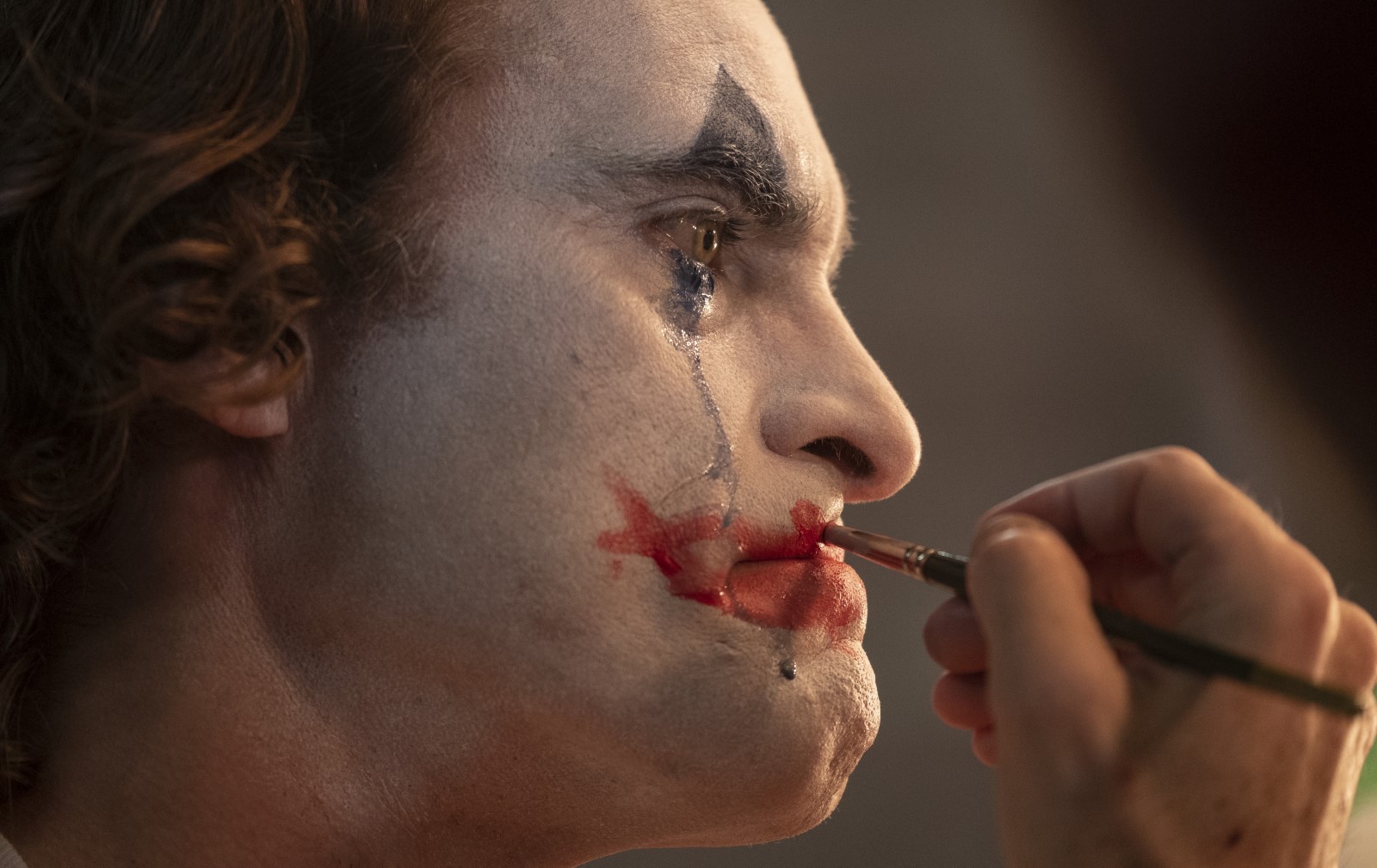
A film still showing Arthur putting his makeup on while crying
Joker asks us to consider how whether our own seemingly benign actions, whether at the ballot box or on the street, may have real and painful consequences for people like Arthur Fleck, the Joker.

Medication and Meetings – Austerity in Joker

At school I ended up doing some community service. I’m pretty sure it was there only because it’s one of the things private schools in the UK need to do retain charitable status. Either way, there were various activities on offer, ranging from picking up litter to looking after our (private!) library… I, however, somehow ended up doing one of the few serious activities – I chose to help a local theatre company teach people with Down’s and autism how to act. It lasted about half a year and was a life-changing experience. Never before had I spoken to anyone with Down’s. I remember the unease I felt on first entering the school buildings they used for the training. I’d thought these people were monsters. And when I first went to the bathroom and heard one of them noisily coming in a felt a real fear come over me.

Luckily, all that passed. With time I got to know each of the people there. Not well, but enough to realise that my preconceptions of them had been completely out of touch. They were, even though they often needed help, people like the rest of us, with their own passions, loves, and sadnesses. But I mention all this for another reason. One session one of our acting tasks was to pretend we were in a political rally. Obviously, the whole idea was strange for a bunch of boys who saw nothing amiss in the current system. But the others were excited. Each and every one of them chose the same topic for their protest – cuts to their benefits, challenges in getting medication and access to counselling when they needed it. It was a humbling moment to realise that these peoples’ entire lives were actually affected by our votes and politicians.

I couldn’t, after that, consider blindly the consequences of austerity and cuts the same way. Joker likewise features relatively prominently those political-economic decisions that can cause real consequences for our mental health. The first scene in the film features Arthur Fleck, the future Joker, having a meeting with a mental health worker. Although she doesn’t much care for him, she at least tries to help by encouraging him to open up and organising his medication. But when they meet again, later on in the film, she announces that her department’s budget has been cut. She can’t help him anymore, and he loses access to his medication. The film doesn’t suggest that she is doing a good job – in fact, Arthur gets angry at her for ignoring what he says and just repeating the same questions – but it’s undeniable that he suffers when her support is removed. Politics has human victims.

Violence in Joker – Purpose and Effect

The high point of the film’s early stages and the first decisive moment in Arthur’s transformation into Joker is his killing of three young men on the subway. They are well dressed but drunk, and turn out to be employees of Wayne Enterprises. After verbally abusing a young woman they turn on Arthur and begin – randomly – beating him. However, using a gun given to him for his protection, he shoots two of them and finishes the third off as he tries to escape. The murders – as determined by the media, and by Thomas Wayne himself – are politically motivated. Such “clowns” are simply envious of the rich for being more successful than they are. Wayne’s remarks lead to a general increase in civil unrest. What was not a murder to begin with – it was self-defence – is morphed into a symbol of class conflict by Wayne’s ignorance.

Violence as a Reflection of Moral Decay

Joker is a violent movie, but its violence is brutal and infrequent rather than sustained, as in a superhero movie. It’s important, considering the criticism of the film, to note that all of the violence serves a thematic purpose. There are a few scenes I’d like to mention and explain why the violence is, in its way, necessary. The first scene, which features in the trailers of Joker, involves the theft of Arthur’s sign by a few children. After chasing them through town they eventually hit him over the head with the sign and begin kicking him while he’s on the ground. The violence is unmotivated and pointless – its purpose in the film is to show the state of moral decay into which Gotham has fallen at the film’s beginning.

In the film, Thomas Wayne enters the mayoral race with the aim of bringing prosperity back to the city. He comes at it from a standard right-wing perspective, arguing that what will work for his business is bound to bring happiness and economic rejuvenation back to the people too. I’m not an economist by any stretch, but I’m willing to say that his view is dangerously simplistic – (just as opposing views from the left can be). Wayne himself is a big fellow, the very model of a serious capitalist. He encounters Arthur once in the film, in a bathroom at a theatre, where Arthur claims he is Wayne’s son and begs for kindness – more on that later. Wayne’s reaction, however, is to punch Arthur to the ground. As soon as he realises that Arthur won’t accept his answer, he resorts to violence. A simple solution, but not the moral one.

Does Violence Have to Beget Violence?

When violence is undertaken by the representative of the status quo in Joker instead of a search for a peaceful solution it becomes clear what kind of moral decline Arthur’s world is undergoing. One of the most poignant moments, if I’m remembering right, is when Arthur declares to the talk-show host Murray Franklin that if people only showed a little human decency then he himself wouldn’t have turned out the way he was. But instead, violence often begets violence, as Arthur discovers when he learns from a trip to Arkham Asylum that as a child he was physically abused. In fact, his recurrent uncontrollable laugh turns out to be due to head trauma undergone during that time.

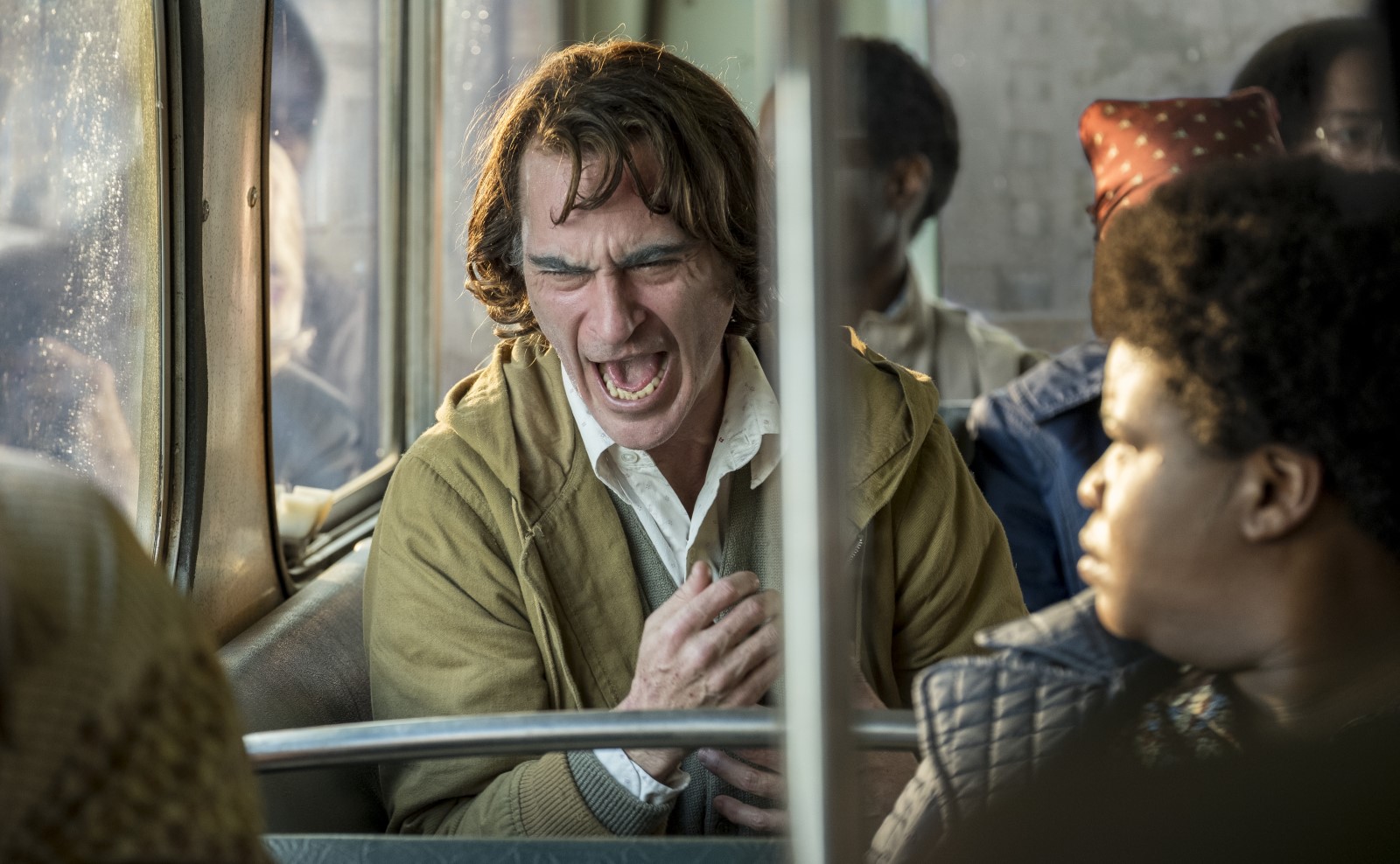
A still showing Arthur laughing
Arthur’s uncontrollable laugh is the result of childhood trauma. But it is the cruelty of those around him who humiliate and denigrate him that leads to his own violence, and not the initial trauma at all.

But it’s interesting the way that the abusive childhood trope is used in Joker. Instead of simply becoming bad because of his brutal childhood, Arthur is left damaged – with his laugh – but able to live normally and kindly. It is only the endless mocking of his laughter by other people that leads him to violence, rather than the original abuse. The responsibility for his murderous madness becomes (partly) that of those who mocked him instead of showing warmth. He could easily have turned out differently if they had. When Arthur murders one of his old colleagues, Randall, but spares another – Gary – for treating him kindly, it isn’t madness on his part so much as the only possible action given a world in which violence becomes acceptable for solving problems. It’s difficult not to look at Joker’s violence and find that Arthur’s actions are the necessary results of his surrounding world.

Capitalist Realities – Who Decides What’s Real?

I found Joker at times difficult to watch, and not just for the violence. To me it ended up echoing a world that I was all too familiar with myself, growing up in highly privileged circumstances in the UK. The challenge of Joker is that it forces us to become aware of the multiple “realities” that exist in the highly unequal societies engendered by capitalism, and the way that they are easily manipulated. The manipulation of reality by the rich that is most interesting when comparing Joker with Mark Fisher’s Capitalist Realism. I’ve already mentioned how Thomas Wayne, using his influence and the media, creates a reality in which the deaths of the three businessmen is as a sign of class resentment instead of self-defence or simply a mystery. This idea of jealousy comes up again and again from his mouth and that of other wealthy characters like Murray Franklin.

But what the film is equally clear about is that this idea is a lie. There is resentment against the inequality, but it is in no way from jealousy. What the film instead shows is the way that, carelessly, the rich can hurt the poor without realising it. From cuts to mental health services to Murray’s television show, where he plays a clip of Arthur’s bad stand-up to laugh at him, there is a sense that the although the rich think they understand the poor, by their actions they repeatedly deprive them of their dignity. When Arthur tells Murray that his show humiliated him for entertainment Murray’s response is that “you don’t know me”. But the evidence of Joker is enough to condemn him, just as it condemns Wayne. It reveals a disjunct between their self-perceptions and their actions that they refuse to acknowledge.

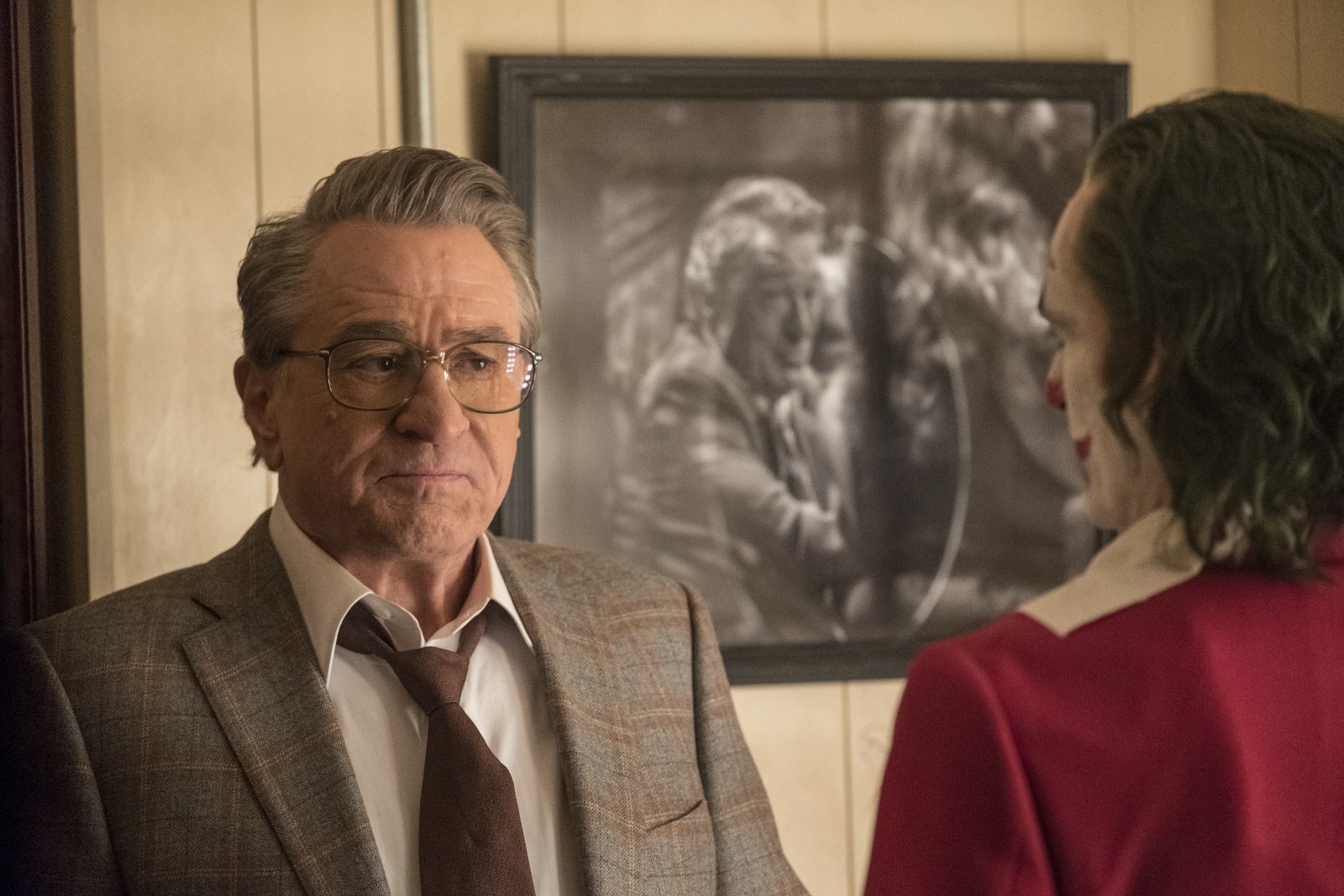
A still showing Murray meeting Arthur
“You don’t know me” – Joker showcases the disjunction between Murray’s view of his actions and the real, harmful, results they have on people like Arthur.

Of course, this idea of the accidental cruelty of the wealthy towards the poor out of ignorance is a simplification made inevitable by the length of the film. In the real world we are a little more lucky with our rich people, if only a little. But the point remains a valid one. Without trying to understand people through talking with them – and in doing so, respecting their dignity as individuals – we can’t avoid ignorance of our actions’ consequences, however well-intentioned we are.

Parentage

Arthur lives with his mother, Penny Fleck. There’s no sign of a father, and for most of Joker the comedian, Murray, is his surrogate father figure. His true parentage is only revealed later on, probably. Arthur opens one of the many letters that his mother writes to Wayne – she had once been employed by him, and trusts to his goodness to help an old employee out – and learns that Wayne is in fact his father. Arthur then heads to Wayne Mansion, outside of the city, where he encounters the young Bruce and a his guardian in the grounds. The guardian has a loud and violent argument with Arthur, who says he wants to see Wayne because he knows the truth.

But the guardian says that Arthur’s wrong, that there was no relationship, and that his mother was instead crazy. This is the officially accepted story, and, seeking the truth, Arthur goes to Arkham Asylum, where he steals his mother’s medical records. He learns that he was adopted and that his mother has Narcissism and various other disorders. Now there are two conflicting truths – the one that his mother possesses, and the one that the rich have determined. At this point it’s impossible to know who is right. But later on, we find a photo of Penny as a younger girl and see that it’s signed by Wayne. To my mind, this is proof that her story is the right one. Wayne used his power to have Arthur made an adopted foundling and have his mother discredited, all to protect himself. Through connections and power, Wayne’s reality comes to dominate.

Arthur’s hallucinations

An interesting point of comparison is between Arthur’s own hallucinations and the reality-shifting antics of the rich. For much of the film Arthur believes that he is dating a single mother who lives down the hallway, but as the film reaches its conclusion, we learn that he had hallucinated the whole thing. The moment of realisation is terrible. He enters her flat in complete despair and hoping for support but instead she asks the stranger to leave her house. All of this points to a sad truth – all of us are capable of creating our own realities, but only those who are given power are able to expand their realities beyond themselves. Wayne can erase his illegitimate son’s existence and make it something everyone accepts, but Arthur cannot count on even one other human heart to accept his need for comfort.

A still from Joker showing Arthur's imagined girlfriend.
Arthur’s imagined girlfriend in Joker. Our minds can sometimes offer comfort, but when we need a real hug and a pat on our back the illusions we create prove inadequate – unless we have the power to make them be considered reality.

Overall, what all of this serves to do is make us ask questions about what we believe, and how far we can trust the reality of things as it’s shown to us. It’s easy to believe that the political actions of the privileged rarely have consequences, but Joker shows that for people living in a different, harsher reality, the consequences are real. But without any listening – whether it’s Arthur’s psychiatrist or Wayne himself, this gap of experience and privilege cannot be bridged, and we talk and act past each other. And so, the film ends in a violent cacophony. It may inspire some youthful would-be revolutionaries, but the final scenes really shouldn’t. The pointless violence may be a release of pent-up energies, but rioting achieves nothing and shows as little respect for the rich as the rich of Joker show to the poor.

Joker is clever enough to raise its questions while discrediting the easy answers it puts forward. It doesn’t advocate violence, but it forces us to ask whether or not we ourselves have a hand in creating a world in which violence is inevitable.

Conclusion

Joker is simply a fantastic film. Joaquin Phoenix and Robert De Niro give excellent performances, the music is perfect throughout – the score by Hildur Guðnadóttir takes us right into the mind of Arthur, whether we want to be there or not. It raises the questions of social inequality’s connection to mental health and violence and in doing so gets us talking about topics both taboo and rarely raised in polite discourse.

It is true that the film’s politics can, as happened with Fight Club, create its own clown-sympathisers and imitators. But I’m not sure how far we should let that turn us off the film. It’s far better to have the courage to raise the questions, even if we don’t know the answers to them, than to pretend that the problems Joker depicts – the effects of cuts to social welfare on the people who need it most, and the dreadful consequences of inequality and class conflict – don’t exist.

To devalue Joker for its politics is to do exactly the thing that Arthur warns us about in his rant to Murray when he compares killing the young businessmen to being killed himself. If Joker had only been about how being “crazy” leads you to murder then we wouldn’t be talking about it. Like a beaten madman on the street it’s easy to nod and accept such a moral and move on. But when, without excusing Arthur’s actions or suggesting that they are caused by capitalism alone, Joker shows us that our own system and its politics can exacerbate our mental illnesses and bring a man to violence – this provides a challenge to our mental status quo that we can’t just ignore in the same way.

The answer is not class violence, but – perhaps – rather a newfound sense of responsibility. We have to do our best to listen to those we’d otherwise pass over without a second glance. Otherwise, we ourselves become to blame for when they can take our neglect no longer. Ultimately that is the central message of the film – to listen and care – much more than any anti-capitalist note. And luckily, it’s a message that’s easy to accept and worth every effort to act on.

For my piece on Capitalist Realism, click here. If you’ve seen Joker and have your own view whynot leave a comment of what you thought of it and my own ideas on the film?